
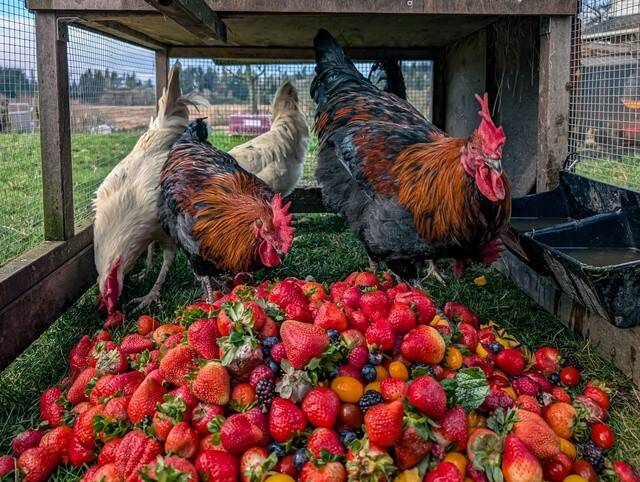
A South Whidbey nonprofit is doing its part to reduce, reuse and recycle deliciousness.
For the past few years, Ballydídean Farm Sanctuary in Clinton has worked with nearby grocery stores to take unsellable produce, which would otherwise be headed for the landfill, and feed it to rescued farm animals.
Ballydídean currently collects food waste daily from The Goose Grocer and biweekly from The Clinton Foodmart. In addition, Whidbey Island Nourishes, a nonprofit providing meals for children in need, recently started providing food waste five days a week. This results in 2,000 pounds each week.
Ducks and chickens feast on ripe berries as brightly colored as gems; goats and geese enjoy lettuce that is only slightly wilted. Once vitamin-deficient waterfowl are now bright-eyed and shiny, while pigs’ teeth are healthy and strong from chomping on large vegetables.
“It’s good for us because our animals get to have a variety of foods,” Sarah Santosa, who founded the farm sanctuary with her husband Ansel, said. “To me, that is the greatest reward, seeing how happy and excited the animals are.”
Whidbey Climate Action, another nonprofit fighting against climate change, recently awarded a $5,000 grant to Ballydídean for its food waste recycling program, which is titled “From Waste to Wonderful: Diverting Grocery Garbage into Rescue Animal Feed.” According to the grant application, the farm sanctuary has diverted 105,000 pounds of produce from landfills since September 2024.
“In 2021, the EPA estimated that 549 pounds of food per person per year is sent for disposal,” the application stated. “That means that Ballydídean’s food waste program offsets the food-waste carbon impact of 548 people, about half the population of Langley.”
In addition, accepting the unsellable produce means less feed costs. To feed 150 animals in 2023, Ballydídean brought in 19,120 pounds of grain. But in 2025, the farm sanctuary only had to purchase 4,780 pounds.
According to the grant application, “about one-third of food produced for human consumption is wasted, amounting to 1.3 billion tons and costing over a trillion dollars annually. Food waste is responsible for 8-10% of global greenhouse gas emissions, uses vast amounts of land and water and exacerbates food insecurity.”
Sarah Santosa said it is rare to find a grant that is applicable for farm rescues. She feels simultaneously thrilled and relieved about receiving the Whidbey Climate Action grant, which means the farm sanctuary’s food waste recycling program can continue.
“It is a part-time job to collect the produce, sort the produce, remove the plastics, to distribute it to the right customers, as we call them,” she said, referring to the over 150 hungry residents that currently call Ballydídean home. In winter, there are less volunteers around to help sort the food.
Santosa explained that they employ a farmhand, who has been tapped to expand his role as food waste manager with the grant funding, which replaces expiring commitments from two private donors. It will also allow funds to be set aside for maintenance and repairs of a truck used to haul the food.
In addition to collecting waste from the grocery stores and WIN, Ballydídean also accepts donations of pumpkins and apples, provided they aren’t too mushy. About a ton of each is taken in every autumn.
“If they are relatively structurally sound, someone will eat them,” Santosa said.
Goats also enjoy eating Christmas trees, while pigs and sheep gain an enriching experience from snuffling around them.
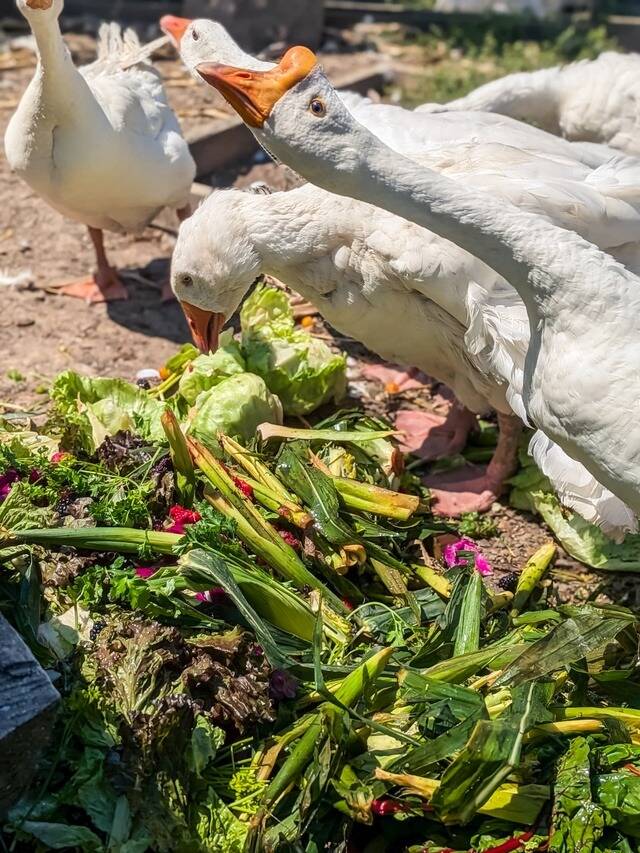
(Photo provided by Ballydídean Farm Sanctuary) Geese enjoy a salad.
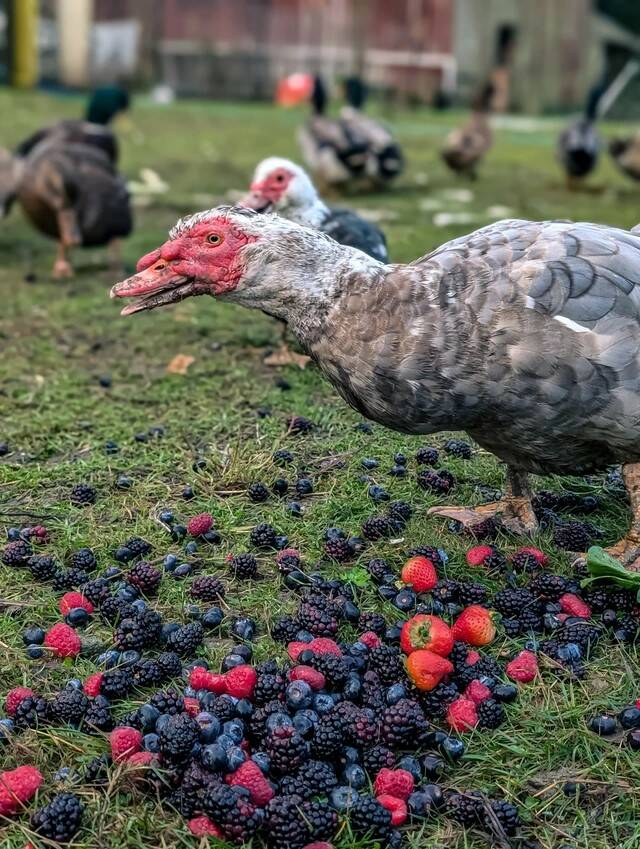
(Photos provided by Ballydídean Farm Sanctuary) Muscovy ducks get their pick of berries.
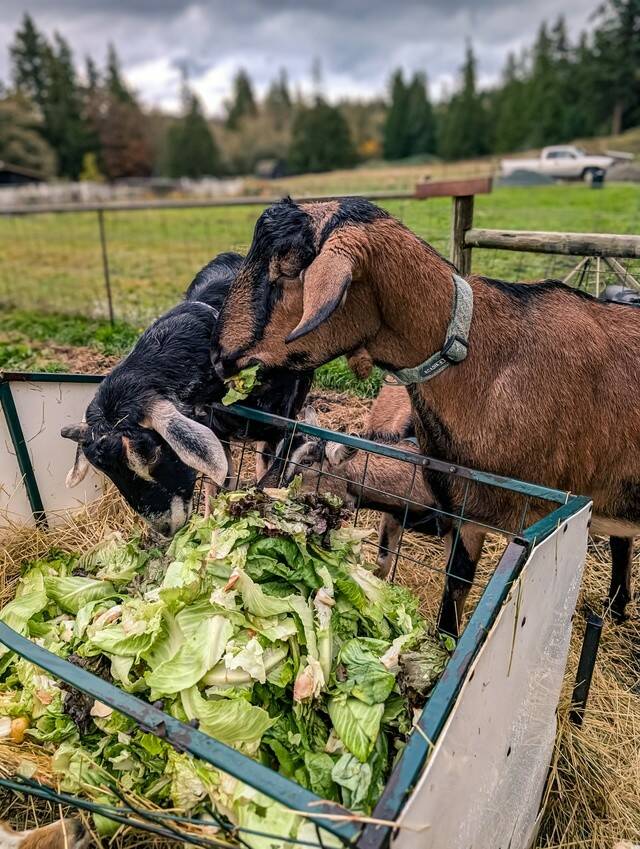
Goats feast on lettuce that would otherwise be bound for the landfill.

