State Rep. Dave Paul, a Democrat from Oak Harbor, isn’t happy that grants for two Whidbey Island projects he championed were stripped from the state capital budget in what he believes were examples of political grandstanding.
On the other hand, state Sen. Ron Muzzall, a Republican from Oak Harbor, said he had concerns about the two grant proposals and isn’t upset that they were pulled from the budget.
A $600,000 grant for the Whidbey Camano Land Trust to purchase and protect 257 acres of shoreline, a lake and upland forest along Useless Bay in Freeland was removed from the budget during negotiations, even though it was ranked No. 2 in a competitive statewide Estuary and Salmon Restoration Project.
Likewise, a $600,000 grant earmarked for the city of Oak Harbor was supposed to fund repairs at the Oak Harbor marina and revitalize the adjacent Catalina Park. The grant was removed from the capital budget during negotiations after the 2025 Legislative Session.
Paul said he was deeply disappointed and blames the Senate Republicans for the change.
“These are not partisan projects,” he said. “They are investments in the health of our environment, the strength of our local economy and the quality of life for families across Whidbey Island. It’s frustrating to see projects like these caught in the crossfire of political gamesmanship, especially during a difficult budget reality.”
Muzzall said he was contacted by Republican leadership on the Ways and Means Committee about the two grants, and he admits he wasn’t exactly supportive.
Muzzall pointed out that the earmark for Oak Harbor was originally in the 2023 budget for a completely different purpose, which was to purchase the large empty property downtown on Bayshore Drive. He said that the city didn’t have a purchase agreement with the property owner before asking for state money, which he wasn’t happy about. The city tried to lowball the property owner, he said, and the purchase predictably fell through.
After that, the city asked to switch the money to proposed feasibility study, which isn’t an allowed use of the funds, before finally settling on the marina project.
“They can’t seem to decide what they want to do with the money,” Muzzall said of city officials.
When a Republican colleague asked him about the grant, Muzzall said he also pointed out that the city just passed a Business and Occupation tax to fund marina repairs. He said the colleague also had strong feelings against funding a project that completely changed.
Paul, nevertheless, maintains that the project is worthwhile. In a press release, he states that the marina “plays a pivotal role in the region’s economy, generating an estimated $50 million annually, supporting more the 55 jobs.” He wrote that more than 700 boats visit the marina each year.
In an interview, Paul explained that he worked with former Mayor Bob Severns on the original request for funding to help purchase the property. After that fell through, the city came up with the idea of transferring the funds to a study, but the idea didn’t fit into the guidelines of the state funding source. He worked with city officials to craft the newest proposal, but it was removed from the capital funding list without explanation.
“Upgrading the Oak Harbor Marina is not just about infrastructure,” Paul said in a press release. “It’s about jobs, tourism and positioning Oak Harbor for long-term economic success. This is exactly the type of investment that strengthens our community and builds opportunity.”
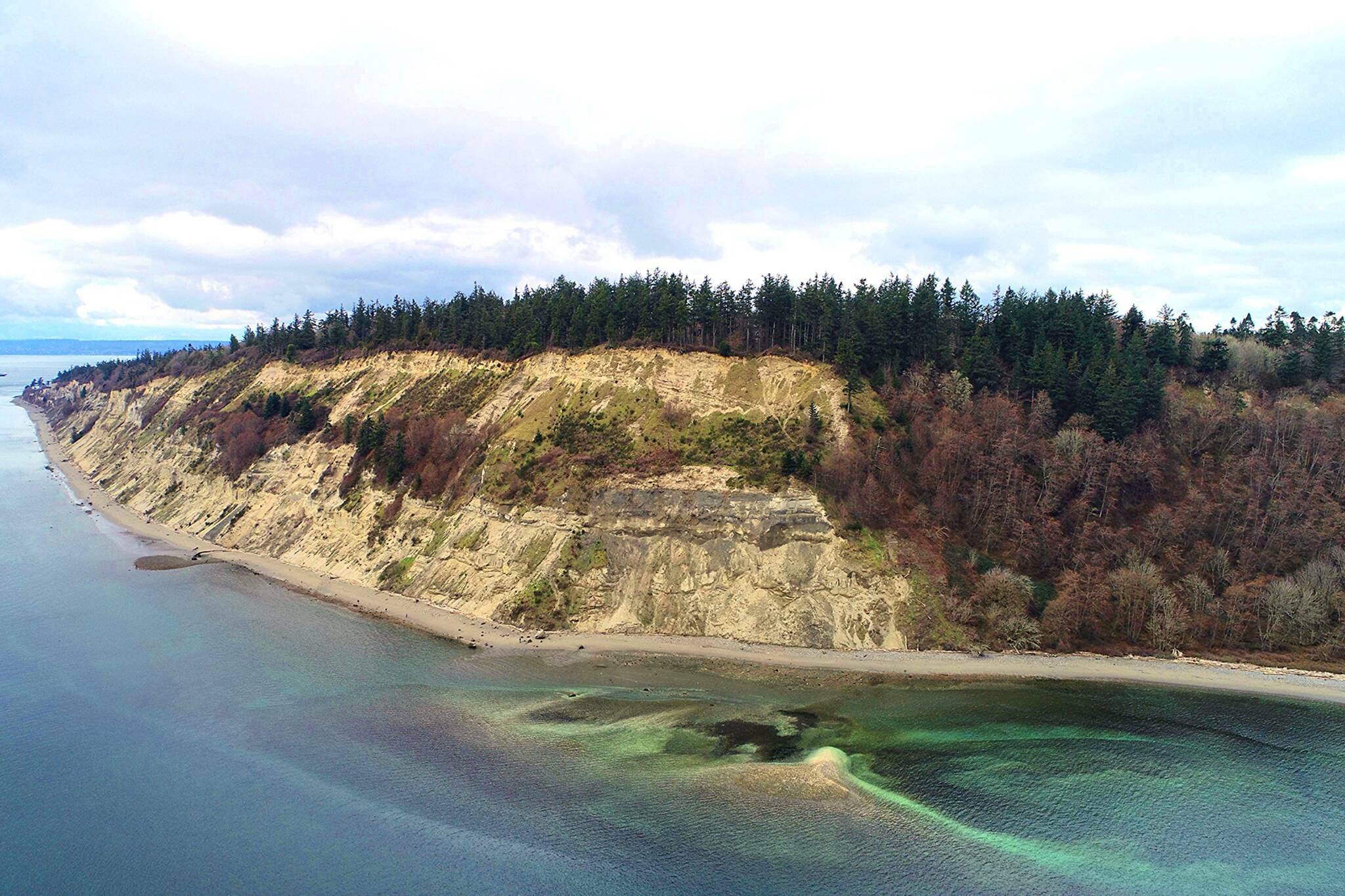
The other funding proposal was a $600,000 grant to help the Whidbey Camano Land Trust acquire the Double Bluff Community Forest. The Double Bluff project’s total cost is an estimated $7.5 million, according to an application with the Island County Conservation Futures program.
“In addition to preserving critical ecosystems, the project would provide community hiking trails and outdoor educational opportunities, while generating intermittent timber revenue and supporting eco-tourism,” Paul’s press release states. “Without protection, the land faces the threat of being subdivided into 51 residential home sites.”
Paul said the removal of the project from funding was virtually unheard of. The Department of Commerce creates the ranking in order to avoid it becoming political. He said it was very unusual for lawmakers to “cherry pick” a project to be removed during final budget negotiations.
Ryan Elting, the executive director of the Land Trust, was disappointed by the news.
“We are incredibly frustrated that our project was pulled, because Double Bluff Forest is arguably the highest conservation priority in Island County, and we don’t understand why it would be targeted for removal,” he said. “But Double Bluff is also important to this community, and we know from the past that if we don’t get the grant funding that this project merits, the community will pull together and ensure it is successful.”
Again, Muzzall concedes that he didn’t have a problem with the funding being pulled. He said a Republican on the Senate Ways and Means Committee has been concerned about the amount of state money being used to buy and protect forest land in Western Washington. When the fellow senator asked Muzzall about funding for the Double Bluff Forest, he simply told his colleagues that the funding was not his request.
Muzzall said he used to be a big supporter of the Whidbey Camano Land Trust, but he’s been distressed by the “direction” of the organization, which he feels has delved into politics under new leadership in recent years. Specifically, he wasn’t pleased that Elting spoke against the initiative to repeal the state Climate Commitment Act.
Yet while Muzzall is open with his opinions, he emphasized that he’s not on the committee that made the decisions and that he tries not to express “undue influence on the decision making process.” Also, the decisions couldn’t be made without agreement from the Democratic leadership on the committees.
Muzzall emphasized that the grants can be reconsidered in the supplemental budget process next year. Indeed, Paul said he will continue pushing for both projects to be funded.