
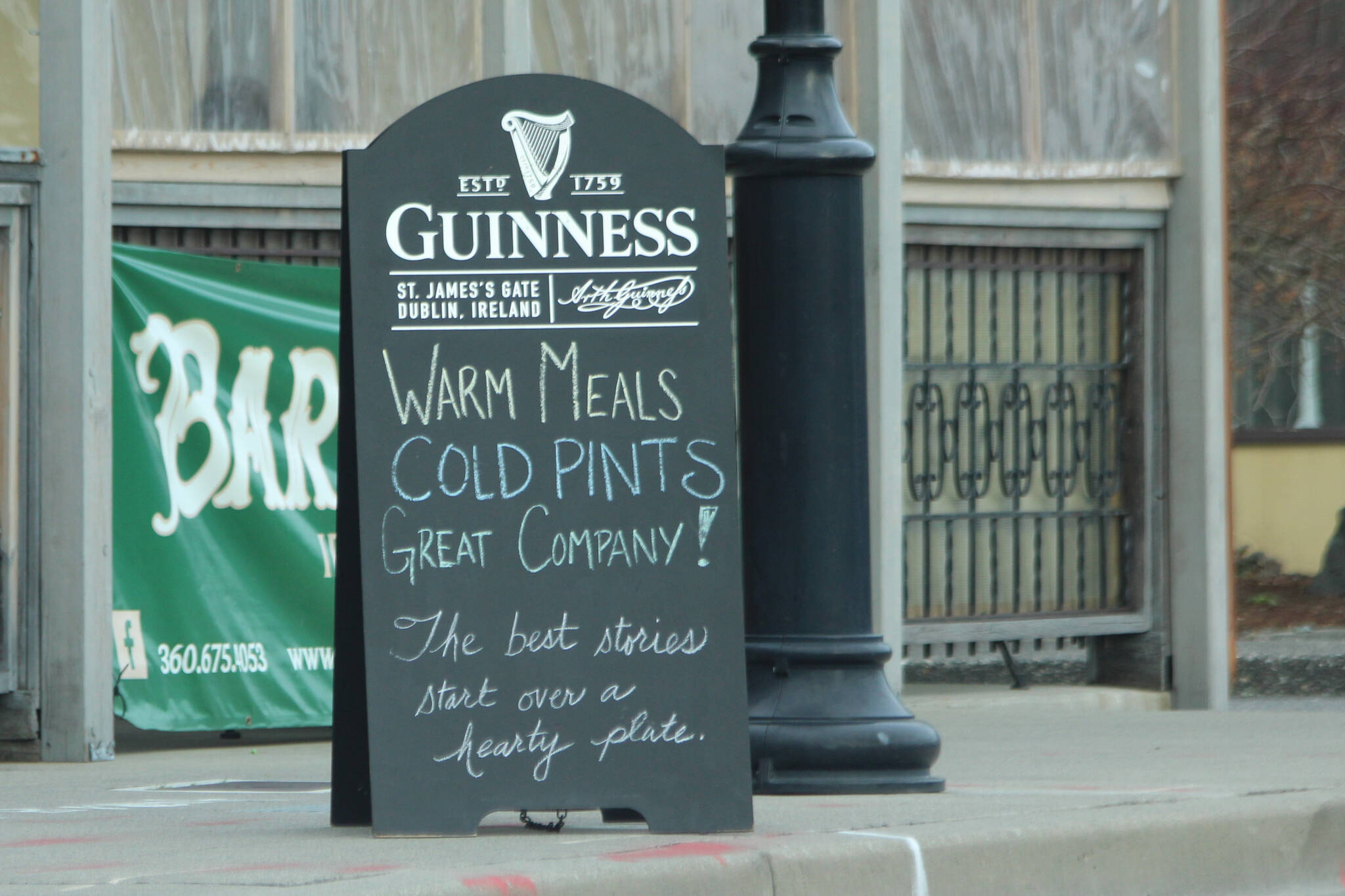
Reconciling Coupeville’s commercial and aesthetic priorities when it comes to signage spurred lengthy discussion at town council this week but no decisions.
A proposed sign code amendment presented at Tuesday’s meeting newly classifies A-frame signs, also known as sandwich boards, as portable signs, and allows business owners to display them with a permit.
Under the proposed amendment, licensed businesses would be able to display one 24-by-36-inch portable sign during daylight hours. Signs would have to be located within 12 feet of the business they are advertising, and in the interest of safety, could not obstruct the flow of pedestrian or vehicle traffic.
“The sidewalks are barely ADA-compliant as they are,” Mayor Molly Hughes said.
Additionally, the proposed amendment states that portable signs would have to be “professionally lettered, neatly painted or assembled” and would need to “remain in good repair.” By “professionally lettered,” Community Planning Director Josh Pitts clarified, he meant polished or streamlined, not necessarily designed by a professional.
Whether the amendment’s language is strict enough to keep portable signs cohesive with the town’s aesthetics — what Councilmember Jenny Bright called the “spirit” of the matter — was up for debate.
Signs are a protected means of free speech under the First Amendment, so municipalities are limited to regulating them in a content-neutral way. But some council members expressed concern about the possibility of portable signs being used to display commercially irrelevant or political messages, beyond being just dilapidated or visually unappealing.
Once it became clear how particular any amendment to the sign code may need to be to accomplish the council’s goals, the question of whether to continue pursuing an amendment at all was raised. Hughes opposed any amendment to the town’s sign code, calling it a “huge mistake” because people may try to take advantage of it.
But not everyone agreed the potential cons of a sign code amendment outweighed the potential pros. Evan Henrich and Kristo Allred, the council’s newest members, supported it.
Henrich reasoned that some commercially irrelevant sign messages — like the “cutesy quotes” Hughes brought up as an example — could be an expression of the personality that makes Coupeville unique. Marketing today is about the “economy of attention,” he explained.
“That’s how business works. … You gotta have marketing, you gotta get people in the door,” Henrich said.
Signage helped Allred figure out businesses’ hours when he first moved to Coupeville, where many open late or close early, he said.
Although she advocated for sandwich boards’ commercial benefit during July’s meeting, Bright made her concerns about the aesthetic component of the amendment clear on Tuesday. She suggested staff explore whether the code could regulate “noncommercial language” on signs, phrasing she observed in other municipalities’ sign codes.
Noncommercial speech signs have their own chapter of Bremerton’s sign code, defined as advertising community events or expressing “religious, political, social or other philosophical messages,” as well as their own size requirements. Yakima’s code, in contrast, asserts commercial speech signs should not be favored over their noncommercial counterparts.
When business owners spoke to the council in July about the importance of sandwich boards, they pointed to the economic benefit of bringing more foot traffic to businesses deprived of Front Street visibility. Councilmember Rick Walti’s opinion of the amendment’s commercial benefit remained unchanged since July; signage may attract more people that want to spend money in Coupeville, he said.
Pitts praised the council for its thorough discussion, which also included recommendations for clarifying language in the proposed amendment. The topic may return to the council’s agenda for another discussion before a hearing.

