Lawsuit claims Navy aircraft harm endangered birds
Published 1:30 am Tuesday, January 20, 2026
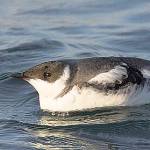
A Central Whidbey group that advocates against military jet noise recently filed a new lawsuit against the U.S. Navy and the U.S. Fish and Wildlife Service on behalf of birds.
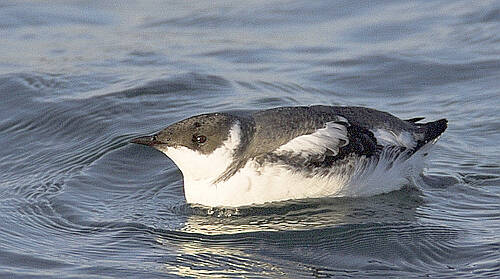
On Jan. 16, Citizens of Ebey’s Reserve filed a complaint in federal court that argues the “extremely loud” Navy’s EA-18G Growlers, based at Naval Air Station Whidbey Island, are jeopardizing the existence of a small seabird, the marbled murrelet, in Washington state. The bird is designated as threatened by the federal government and as endangered in Washington, Oregon and California.
The complaint argues that the Navy’s biological opinion, created in consultation with Fish and Wildlife Services, on the impact of Growler operations was flawed and failed to take into account new information related to the marbled murrelet, in violation of the Endangered Species Act. COER asks the judge to issue an order enjoining the Navy from “taking” marbled murrelets — which means to harass, capture or kill — until the the Navy has a lawful incidental “take statement” and also order Fish and Wildlife to prepare a biological opinion that takes new information into account.
COER notified the Navy and the Fish and Wildlife Service of the intent to sue in 2024, as reported in the News-Times.
COER claims that the noisy aircraft may jeopardize the existence of marbled murrelets in the state, where populations are declining.
“Marbled murrelets in the Pacific Northwest are already on the brink of survival and have no margin to absorb further harm,” the lawsuit states. “Growler overflights will cause harm to marbled murrelets, pushing them closer to extinction.”
In a statement, the Oak Harbor Navy League criticized COER’s action, calling the lawsuit “the latest in 13 years of never-ending legal challenges regarding Growlers and Whidbey Island.” COER’s new federal lawsuit is separate from the previous federal lawsuit COER and the state Attorney General’s Office filed against the Navy over the increase in Growler training at Outlying Field Coupeville and elsewhere. The judge in that case found that the Navy “turned a blind eye” to some evidence; as required, the Navy completed an amended Environmental Impact Statement last month. The litigation may be over in that case, depending on the judge’s decision and what steps COER or the AG may take.
In the statement, the Navy League claimed that “there is zero correlation between the ebb and flow of Whidbey-based flight operations and marbled murrelet populations.” The decline in numbers in the state, the statement concludes, “is due to exclusive reliance upon mature forests, reduction and fragmentation of habitat occurring since the 1800s, low reproduction rates, acute lack of adaptation, deterioration of marine conditions (water purity, fishing gear entanglement, sewage spills, depletion of forage fish), and El Niño events, none of which relate to jet operations near Whidbey.”
COER states in the lawsuit that the Navy and Fish and Wildlife Service admitted Growlers will cause “incidental taking” of marbled murrelets but that the Navy’s record of decision authorizes the action; COER is questioning this decision.
COER member Maryon Atwood pointed out that the decline in murrelet populations is worse in Washington than in neighboring regions.
“Washington — where Growlers routinely train — has more prime nesting habitat, but a much smaller marbled murrelet population than Oregon and California combined, where Growlers do not train,” she said. “Why hasn’t the service looked into that?”
Marbled murrelets are small, solitary seabirds that venture far from shore in search of small forage fish and also travel up to 50 miles inland to nest in old-growth forests, preferring craggy-topped conifers on which to lay their eggs, according to Conservation Northwest.
The lawsuit states that the estimates for the population of murrelets, which have a naturally low reproduction rate, declined from 7,500 in 2015 to 4,850 in 2022 in the state.
The lawsuit states that Growler overflights impact murrelets by causing a startle response that interferes with their normal behavior; by causing them to drop or swallow fish instead of delivering the food to nestlings; by causing them to abandon a nest; by causing distress in babies; and by causing nestlings to move and attract predators.
COER states that, according to Fish and Wildlife Service estimates, marbled murrelets will experience 3.8 million exposures to Growler overflights a year, with about 1.4 million occurring during breeding season.
COER argues that Fish and Wildlife failed to take into account a memorandum from within the agency that describes a “new threshold” for harm to murrelets; specifically that big jumps in noise relative to background noise can have adverse effects, in addition to noise that is just really loud.
In the meantime, a 2019 lawsuit related to Growler noise in the U.S. Court of Federal Claims may be nearing a resolution. A report on the status of settlement negotiations for Kandi Arnhold et al v. The United States is due by Jan. 30.
Attorneys representing the owners of more than 30 properties in Central Whidbey filed a lawsuit in U.S. Court of Federal Claims, claiming the increase in Growler noise represents a “physical taking without compensation” because of the decreased value of the residents’ homes. The attorneys unsuccessfully sought class action status, but the judge also denied the government’s motion to dismiss the case.
Last month, the judge filed a report that noted the parties made significant progress in settlement talks.