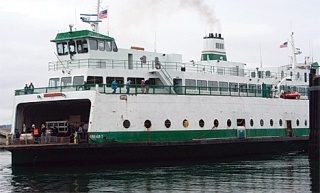
After years of serving motorists heading to and from the Olympic Peninsula, the four antiquated ferries that sailed the route will meet an unceremonious end.
The Steel Electric ferries beloved by many, the Klickitat, Quinault, Nisqually and Illahee, will be heading to the scrapyard.
Washington State Ferries agreed to sell the four vessels to Environmental Recycling Systems for $500,000 plus 10 percent of the recycling revenue, which could be as much as $200,000, said Marta Coursey, spokesperson for the ferry system.
She said the Seattle company will tow the four vessels from Eagle Harbor sometime in the next 45 days down to Mexico where they will be dismantled.
The Steel Electrics have not been used since November 2007 when officials removed them from service because of safety concerns surrounding the vessels’ hulls. Secretary of Transportation Paula Hammond made the decision.
The ferry system tried to sell the Steel Electrics on eBay, but didn’t receive any offers. Officials then approached companies to find a potential buyer.
There were three offers for the Steel Electrics, but the one
submitted by Environmental Recycling Systems was the only one considered viable.
“We need to sell them and this is the best offer so far,” Coursey said.
In meetings in the months after the Steel Electrics were pulled from service, some residents with a fondness for the ferries expressed the desire of having two of the vessels brought to Port Townsend, where one could become a community center while the other would be sunk to form a reef. However, Coursey said nothing ever came of that.
Plans to find a permanent replacement for the Steel Electrics are continuing. Officials will open bids for the contract to build new ferries for the Port Townsend/Keystone run on Nov. 6.
In the meantime, the route continues to be served by the Steilacoom II, which is owned by Pierce County. There were plans to replace the Steilacoom II with its sister ship, the Christine Anderson, but it doesn’t have a controllable pitch propeller needed to navigate the difficult entrance to Keystone Harbor. The Steilacoom II, with its more advanced propulsion system, will continue to work the route until the new ferries are built.