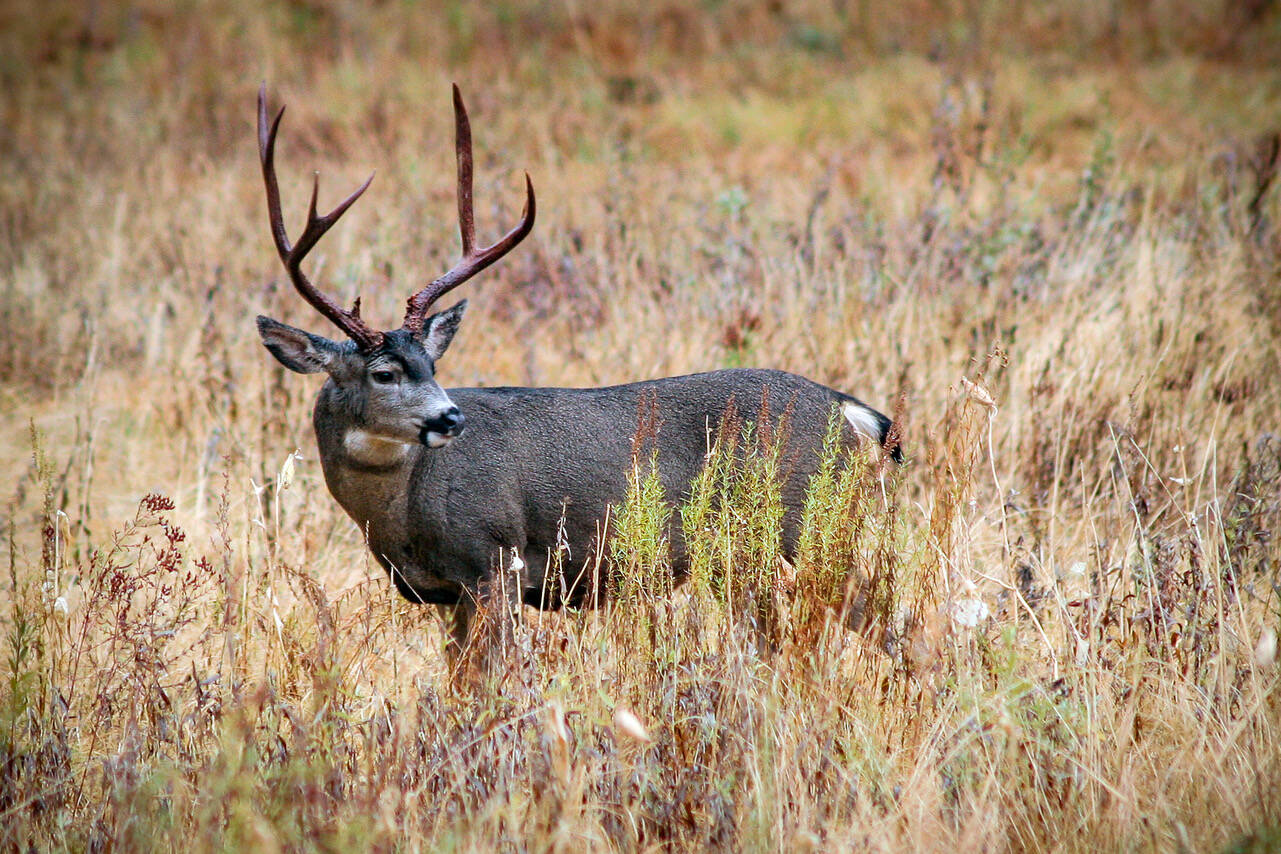
Though it’s still too early to tell, mysterious deer deaths on Whidbey have people wondering if a deadly disease may be sweeping through the population.
According to the state Department of Fish and Wildlife, there has been a small handful of suspicious deer mortalities on Whidbey over the past couple of weeks, concentrated in the Holmes Harbor area in Freeland. This includes four unexplained deaths and one sick deer, three of which had symptoms of disease. Kurt Licence, a biologist with Fish and Wildlife, said they haven’t been able to get to a fresh carcass in time to sample and test for disease.
“So the causes of deaths are still unconfirmed but I am keeping a close eye on opportunities to investigate future mortality reports,” he said.
Ralph Downes, an enforcement officer for Fish and Wildlife, speculated that it is likely a flare up of adenovirus hemorrhagic disease, or AHD for short. The infectious and usually fatal disease affects only deer and does not spread to livestock, pets or humans. Symptoms include rapid or open-mouth breathing, foaming or drooling at the mouth, diarrhea that is sometimes bloody, weakness and emaciation, according to the Fish and Wildlife website.
Whidbey residents are encouraged to report sightings of sick, injured or dead deer with Fish and Wildlife’s online reporting tool, wdfw.wa.gov/get-involved/report-observations. Licence said this helps him identify opportunities for sampling the bodies.
As of Monday, there have been zero confirmed cases of AHD in Island, San Juan or Snohomish counties, which is the area Licence manages. He said there have been a number of fawns in other parts of the state over the past year that have died or were humanely euthanized because they were suspected to have AHD, including in Bremerton, Shelton, Sequim, Olympia, Port Angeles, Port Orchard and Port Townsend.
In 2021, Whidbey Island saw one case of AHD, near Dugualla State Park. That year, multiple other deer were sampled but none aside from the North Whidbey case tested positive for the disease, Licence said.
“Once we confirm AHD in a specific area/island, sampling that area becomes a lower priority compared to sampling suspicious mortalities in new areas where the disease hasn’t been identified,” he said. “So it is not uncommon to only have a single confirmed detection per island. This makes it difficult to give a reliable estimate of total cases of AHD in an area.”
To further complicate matters, symptoms of AHD can resemble other illnesses like septicemia or a severe bacterial infection resulting from rumen acidosis, a digestive disorder.
Downes said the potential presence of the disease is yet another reason people should adhere to the new law prohibiting the feeding of deer, which went into effect earlier this year to protect against chronic wasting disease, another ailment impacting cervids. It’s also a good idea to pick up fallen fruit, which not only can contain toxins but can facilitate the spread of disease when deer congregate.