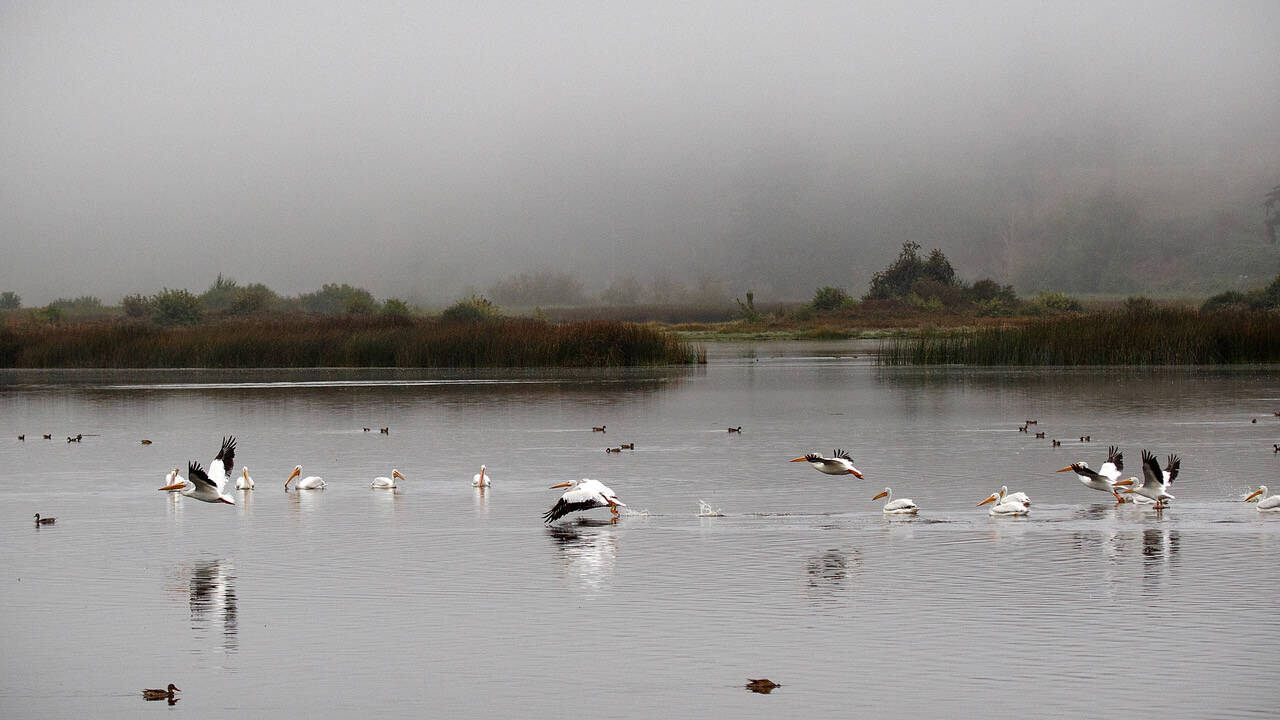
The recent discussion of a management plan for a wildlife sanctuary on South Whidbey has spurred conversations about developing similar plans for other nature preserves within Island County.
During a meeting last week, Island County commissioners reviewed the draft of a management plan for Deer Lagoon Preserve. Written by Carlson Andersen of the Whidbey Audubon Society with assistance from the Whidbey Camano Land Trust, the plan delves into recommendations to protect the 379-acre wetland, which provides habitat for 218 species of birds.
In 2004, the county used $1.4 million in funding from the U.S. Fish and Wildlife Service and National Oceanic and Atmospheric Administration to purchase Deer Lagoon Preserve. A management plan is required under federal assistance rules and stated in the deed.
The county commissioners spoke about the draft of the management plan in the context of the county comprehensive plan. Commissioner Melanie Bacon said it’s not an expectation that the board of commissioners adopt the plan written by Andersen, but rather to use it as a template.
Assistant Public Works Director James Sylvester acknowledged the amount of work Andersen put into the draft, which he worked on with a previous director of the department. Sylvester suggested finishing up the draft and getting public input before bringing it back to the county commissioners in its final form.
Bacon said she wanted something in the comprehensive plan to say that the county recognizes the value of Deer Lagoon Preserve and is in the process of developing a management plan for it.
According to Andersen’s draft plan, the only “public” entry to the Deer Lagoon Preserve trail is located at the south end of Deer Lagoon Road off Millman Road. Other access points can be reached by people with permission from private landowners at the end of Shore Avenue. Off-trail use by visitors is discouraged, because of ecologically sensitive areas for wildlife that include mudflats and tidelands.
“The preferred option is to purchase an appropriate property to relocate the Deer Lagoon Preserve parking lot and trailhead,” the plan stated. “If a new site is found, care should be taken to only build a parking lot to accommodate the number of visitors desired on the site at one time.”
Historically, dikes that were installed to create more farmland in the area have significantly impacted the estuary, and tide gates block access to salmon.
“According to Wild Fish Conservancy, the dikes truncated tidal influence in the western lobe of Deer Lagoon, limiting its value as habitat for juvenile salmon,” the plan stated. “More than 450 acres of potential salt marsh and mudflat habitat have been lost here. The dikes have also degraded about 100 acres of existing salt marsh on the seaward side.”
To keep wildlife from being disturbed, some of the plan’s recommendations include prohibiting watercraft (motorized and non-motorized), dogs and other domestic animals from the preserve. Even joggers and bikers were noted as negatively impacting wildlife with their activities.
Capital improvement projects designated as high priority include the installation of trailhead and informational signs, temporary restrooms and new property where the trailhead and parking can be relocated.
Not wanting to have a “favorite child,” Commissioner Janet St. Clair was cautious about supporting efforts for just one preserve of many. She pointed to a number of preserves within the county, including Strawberry Point, Camano Ridge and Four Springs, as well as parks like Dan Porter and Rhododendron.
“Rather than specifying a single preserve that should get that attention, I think we need to know which ones are truly preserves and which ones are just passive parks,” she said, “and what is our obligation based on how those were acquired, in terms of how we manage those.”
Additionally, she wondered how enforcement of some of the recommendations, like prohibiting dog-walking, would be handled. If volunteers want to have a more detailed management plan and recommendations, she said, that can come before the board later, but the comprehensive plan should identify all preserves and their allowable activities versus a natural park or open space.
Bacon agreed that this made sense, but Sylvester said he worried about a blanket approach because every park is different. Most have a recreational component involved, and the county generally works with the Whidbey Camano Land Trust for preserves.
Members of the public who spoke during an earlier meeting were supportive of the draft management plan written by Andersen. Marnie Jackson, executive director of Whidbey Environmental Action Network, said she admired the depth with which he interviewed agencies, departments, entities and nonprofits around the region and on the island to develop a plan that is compliant with the 22-year-old grant agreement.
“So I’m very grateful, and I think that it’s a big move towards our climate resilience to care for that really precious place,” Jackson said.
Langley resident Govinda Holtby talked about the South Whidbey Christmas bird count she has been doing for the past 15 years, pointing to large numbers of shore birds and wintering birds in Deer Lagoon.
Linda Griesbach, a board member for the Whidbey Audubon Society, said she has enjoyed visiting this wetland for years and for the past few has been involved in native plant restoration and noxious weed removal at the preserve.
Jackie Lasater, another board member for the Whidbey Audubon Society, said a site specific management plan will both restore and protect the future of this critical Whidbey Island ecosystem. She noted that it’s important to delete language in the parks element of the comprehensive plan that states there is public beach and water access at Deer Lagoon, since visitors tromp through sensitive nesting areas in search of it.