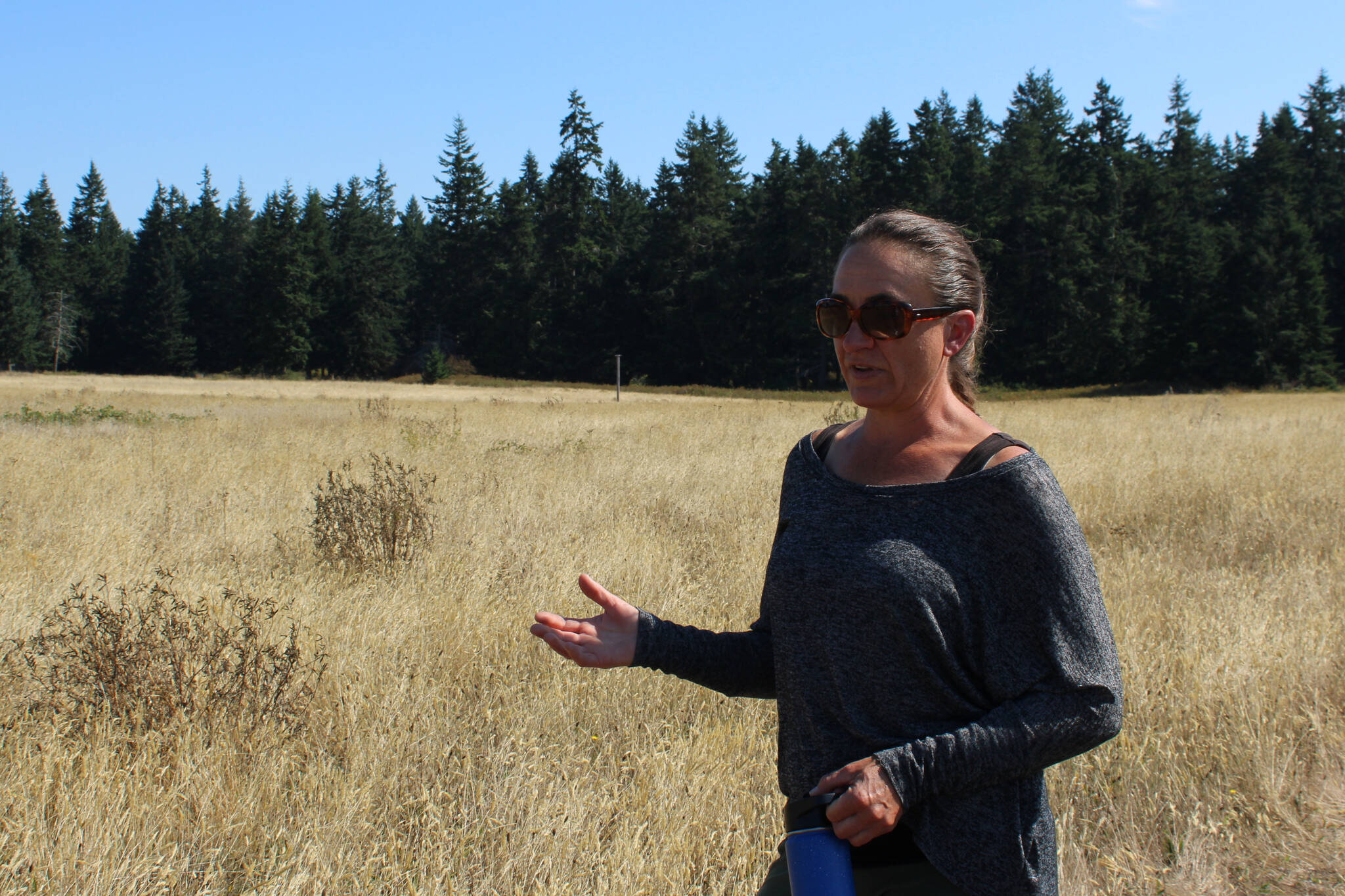
Just 3% of the prairies which originally spanned Western Washington — including Whidbey Island — remain today. With the help of new leadership, a Central Whidbey nonprofit is trying to change that.
Founded in 2009, the Pacific Rim Institute for Environmental Stewardship is steadily rehabilitating 140 acres of prairie and savanna located just east of Coupeville through the reintroduction of many of the region’s native species.
Now, bringing on Murietta Mitschak as executive director and electing Jim Peskuric as board chair earlier this month, the institute is trying to obtain a conservation easement which would permanently protect the land from development.
“As we bring (the native plants) back, we’re bringing back the native pollinators, we’re bringing back the whole food chain,” Peskuric explained.
The land upon which the institute is located — 175 acres altogether — “has survived development, farming and grazing since the arrival of European immigrants in the 1850s,” according to Pacific Rim. Currently, the institute grows upwards of 50 species of rare and threatened native plants on its property.
Rehabilitating the prairie is a decades-long undertaking, a process the institute is still experimenting with.
Before native species can be reintroduced to the land, invasive plant species must be removed with herbicide or controlled burns, depending on what needs to be eradicated. Seeds must be harvested, cleaned and sprouted in small containers called plugs before they can be planted on the property.
Indefinite maintenance, or anthropogenic management, of the land is necessary to prevent the return of invasive species and ensure young plants grow successfully. A conservation easement, then, is precisely what Pacific Rim needs to protect the progress it has already made.
“(The prairie is) not something you restore and you walk away,” Mosa Neis, a land steward at the institute, emphasized. “It will always have to be managed.”’
Rehabilitating an acre of prairie costs the institute roughly $35,000. Completing all 140 acres is what Mitschak calls “the big dream,” but one that is not unrealistic. The fruits of Pacific Rim’s labor are already paying off.
Golden paintbrush, a flowering yellow plant native to Washington prairies, was “federally listed” as a threatened species in 1997, according to the U.S. Fish and Wildlife Service. Neis said Pacific Rim has the “capacity” to produce five pounds of golden paintbrush seed a year, which is “more than anybody’s producing right now.” The institute contributed to the effort to revive the plant, amounting to its de-listing in 2023.
An uptick of voles and deer on the prairie, which eat the roots and seeds of plants, however, means the institute may not produce as many seeds this year. Neis said such a loss may have a “rolling” impact year-to-year, the severity of which remains to be seen.
If the phenology of the plants at the institute align with the phenology of the Taylor’s checkerspot butterfly, then Pacific Rim could also participate in the recovery effort for the species. The checkerspot is considered endangered federally and at the state level, according to the Washington Department of Fish and Wildlife. Luckily for the institute, the checkerspot thrives in open prairies.
Adequate funding must also be secured to make this possible, as well as the institute’s other operations. Pacific Rim is always accepting donations at pacificriminstitute.org, but there are a number of other ways to get involved — conservation is a community-driven effort, as Mitschak explained.
There are three miles of trails on the property which are open to the public and their leashed furry friends waiting to be taken advantage of, as well as a large building available to rent for events or stays. Visitors can tour the prairie and forest and, for those seeking a more hands-on contribution, can volunteer to work on the property.
Native plants can be purchased to grow at home, too, as part of the Homegrown National Park movement. Dedicating even a small patch of greenery to growing native species can ease fragmentation affecting populations of pollinators.
Pacific Rim also holds Cider Fest, its major fundraising event since it began in 2017. Cider Fest will return from 12-6 p.m. on Sept. 20 at the institute.
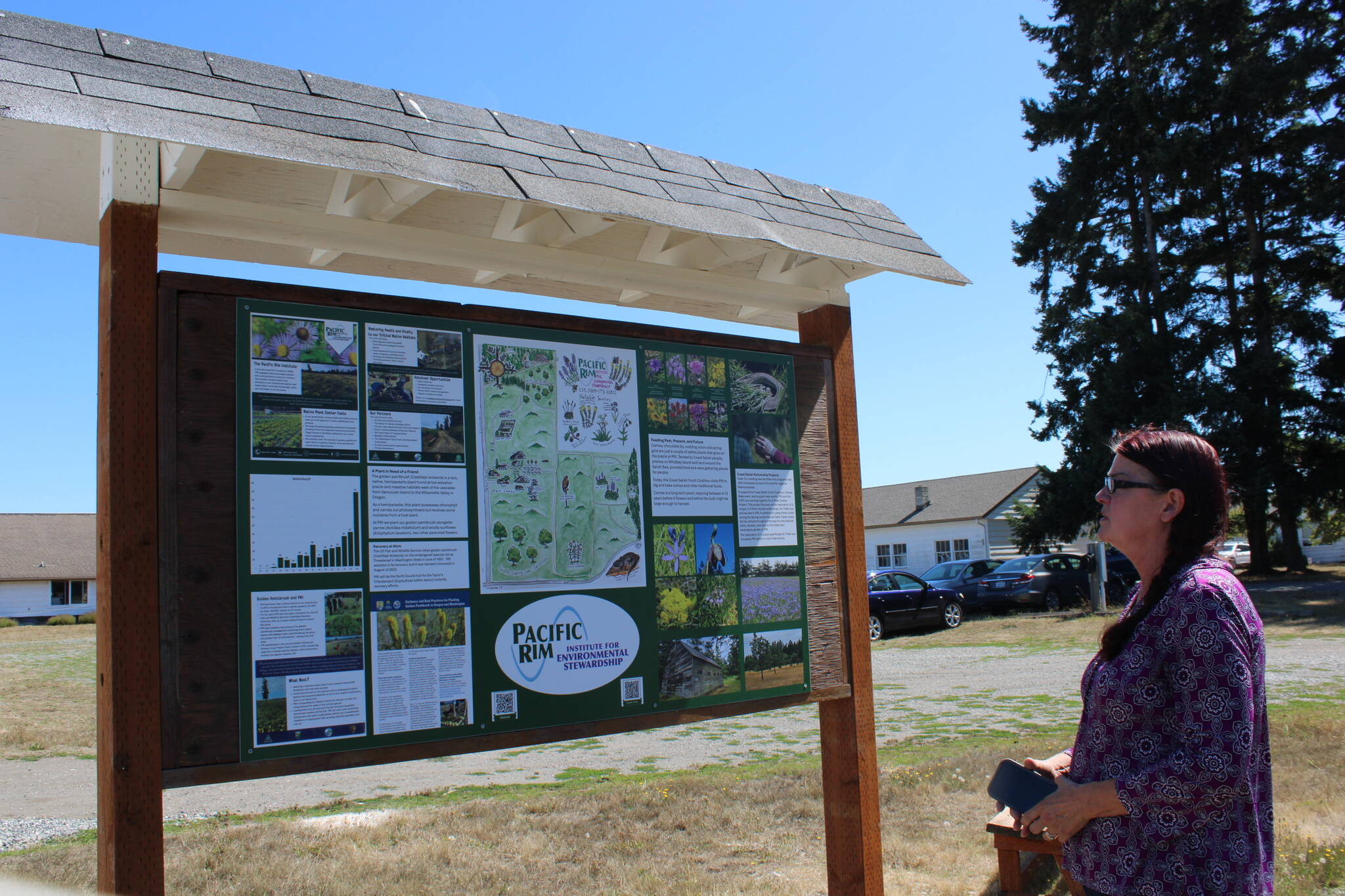
(Photo by Allyson Ballard) Murietta Mitschak said she has been “inspired” to get more involved with “environmental actions” since she joined the Pacific Rim Institute.
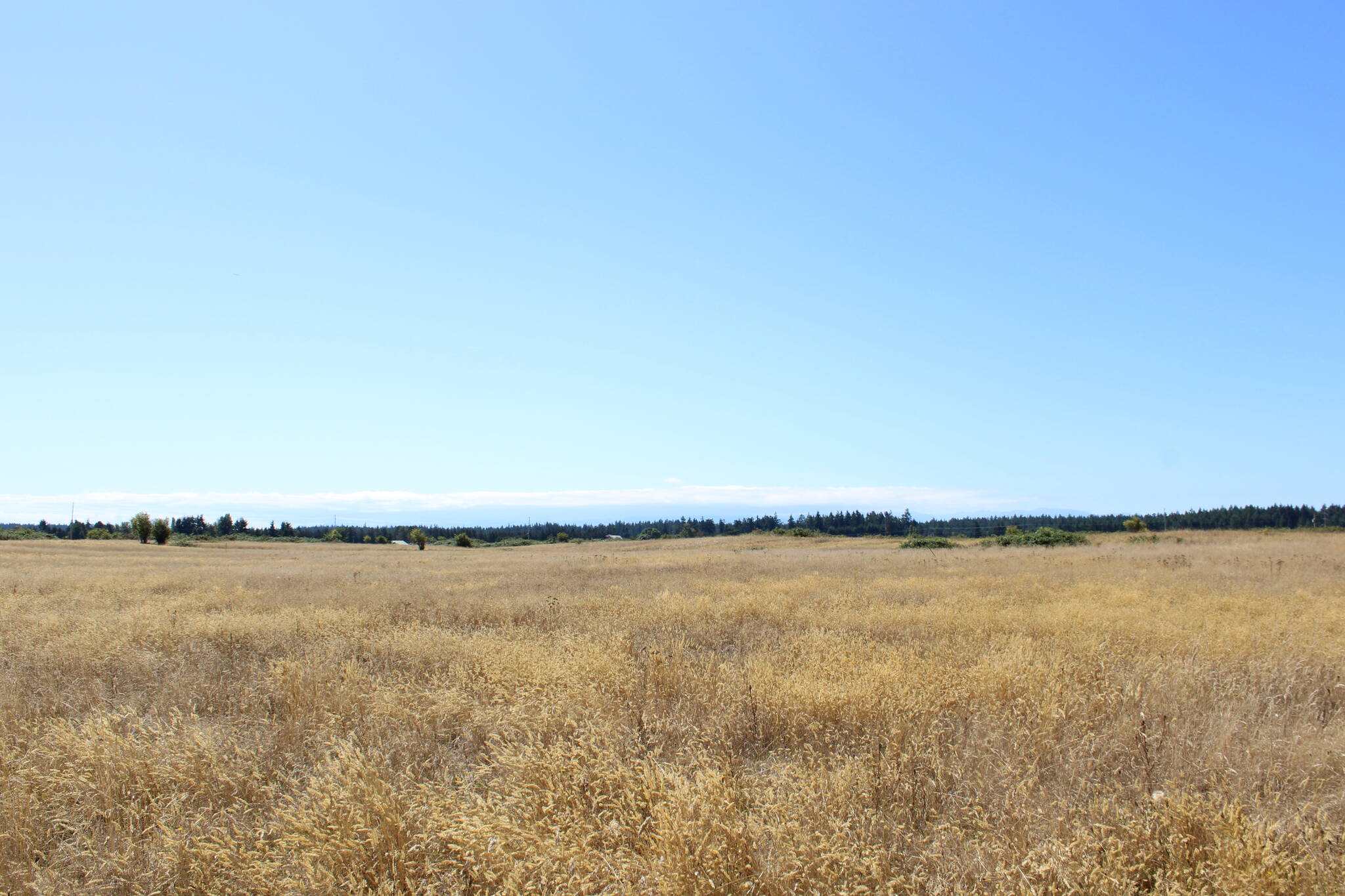
(Photo by Allyson Ballard) The institute is working to rehabilitate 140 acres of prairie in Central Whidbey.
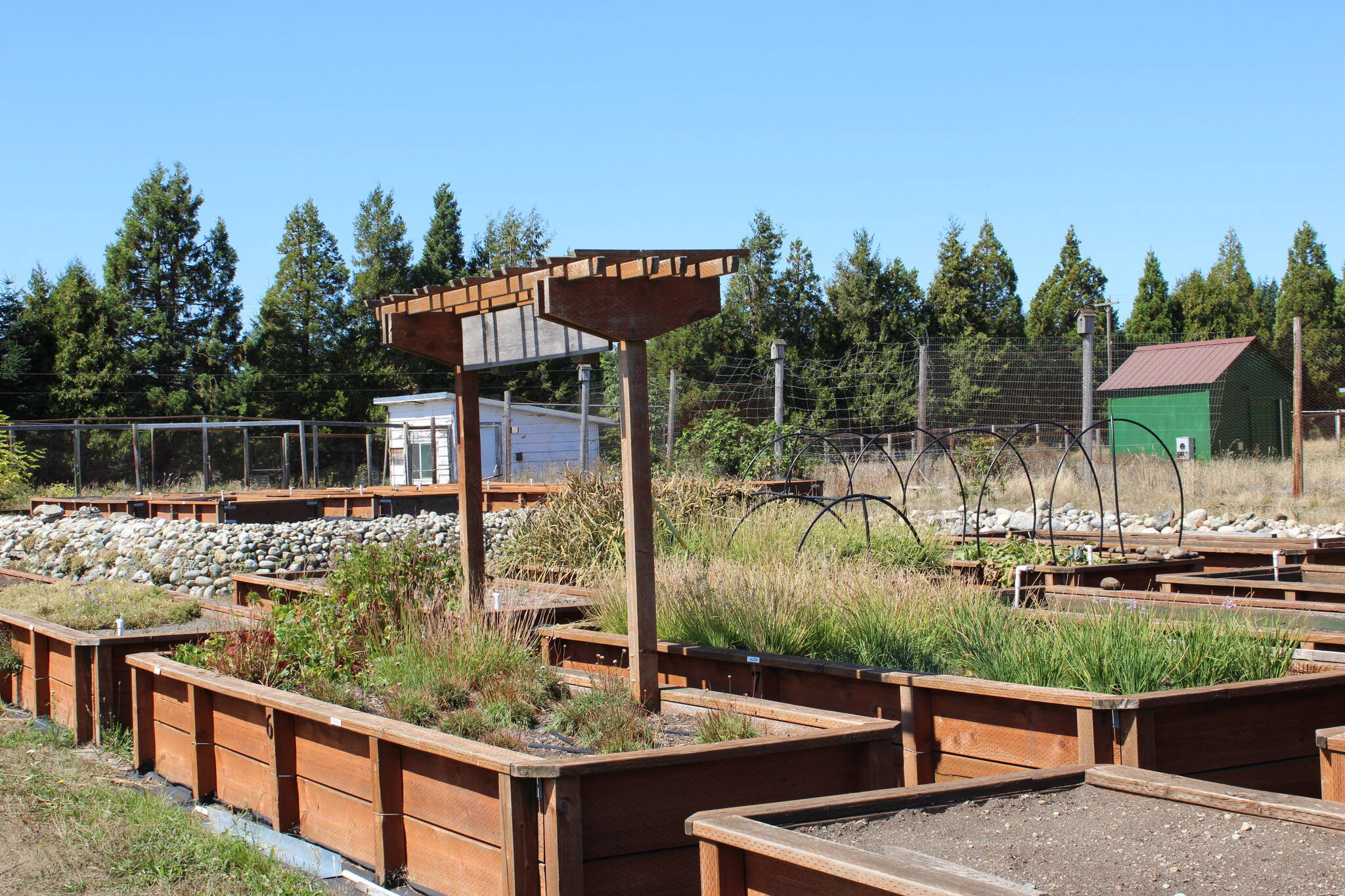
(Photo by Allyson Ballard) The institute’s native plant center includes a greenhouse, shade area and nursery beds, all used to grow more than 50 species of rare and threatened native plants.
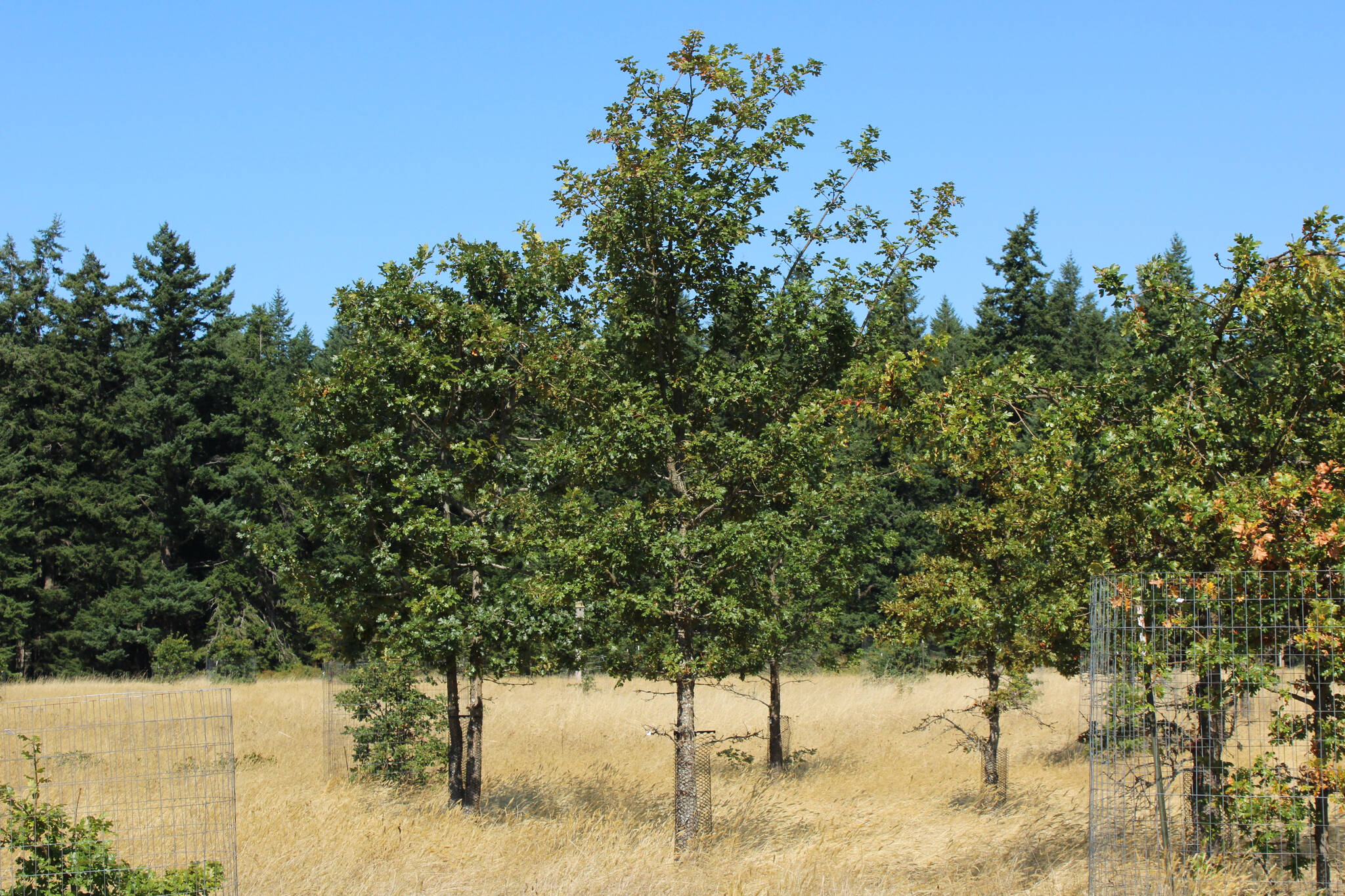
(Photo by Allyson Ballard) Neis and Peskuric explained that one Garry oak can support up to 300 species, making its re-population a top priority.
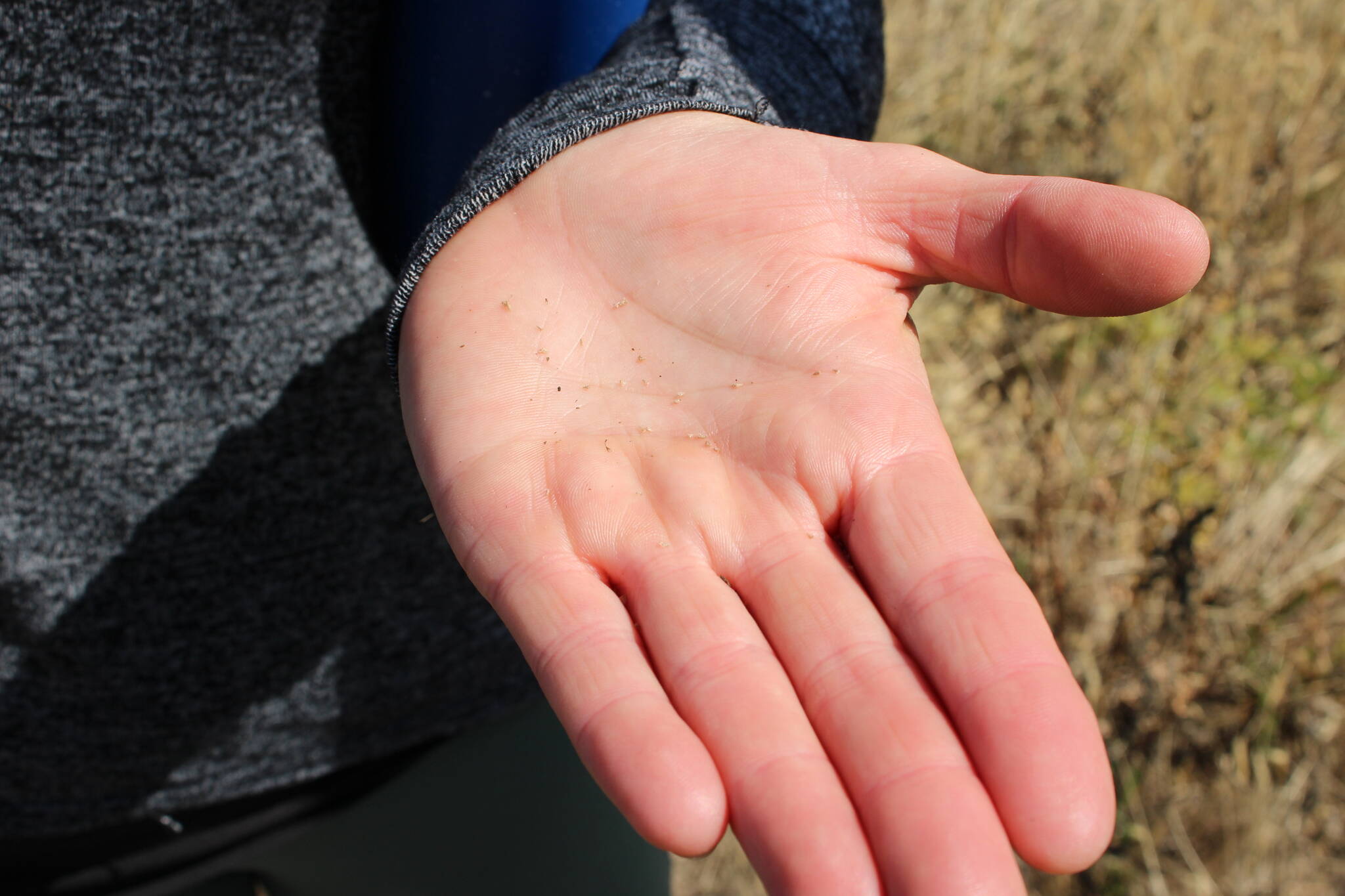
(Photo by Allyson Ballard) Golden paintbrush seeds dazzle ever so slightly in the unrelenting prairie sun.
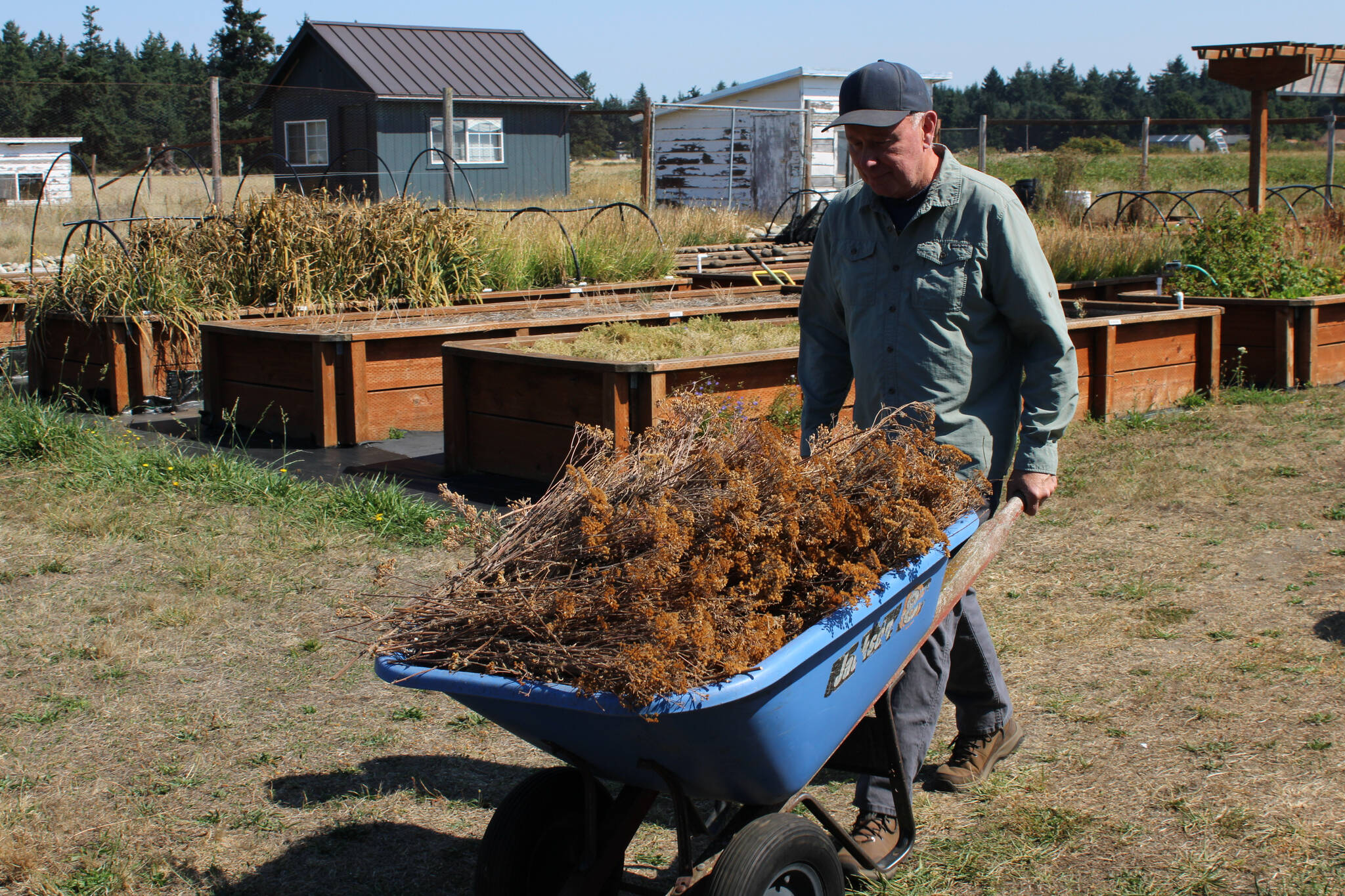
(Photo by Allyson Ballard) Yarrow, the freshly “whacked” seeds of which Jim Peskuric transports here, is one of two host plants the golden paintbrush must grow with.
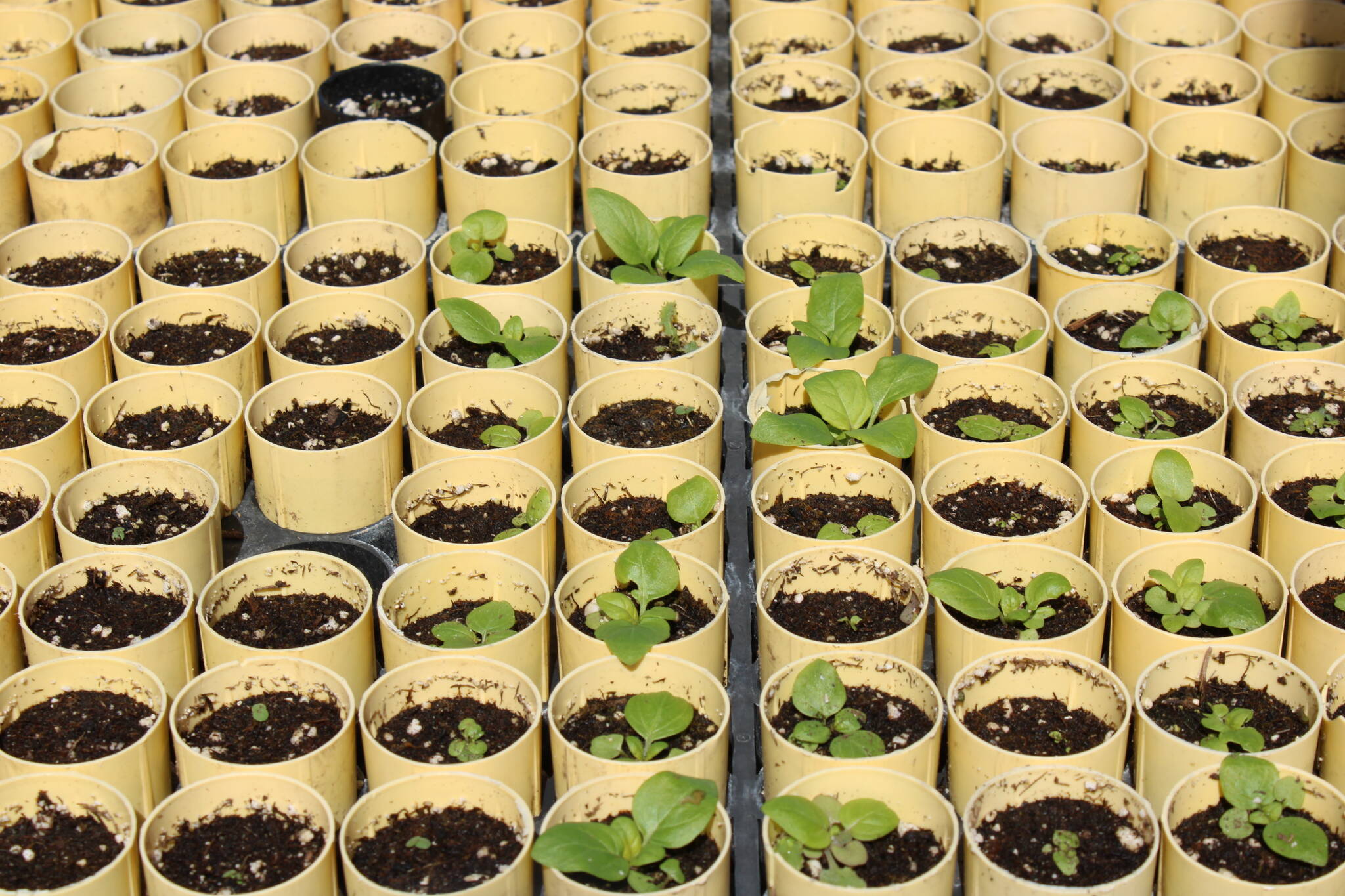
(Photo by Allyson Ballard) Seed sprouts are grown before being reintroduced to the prairie lands.
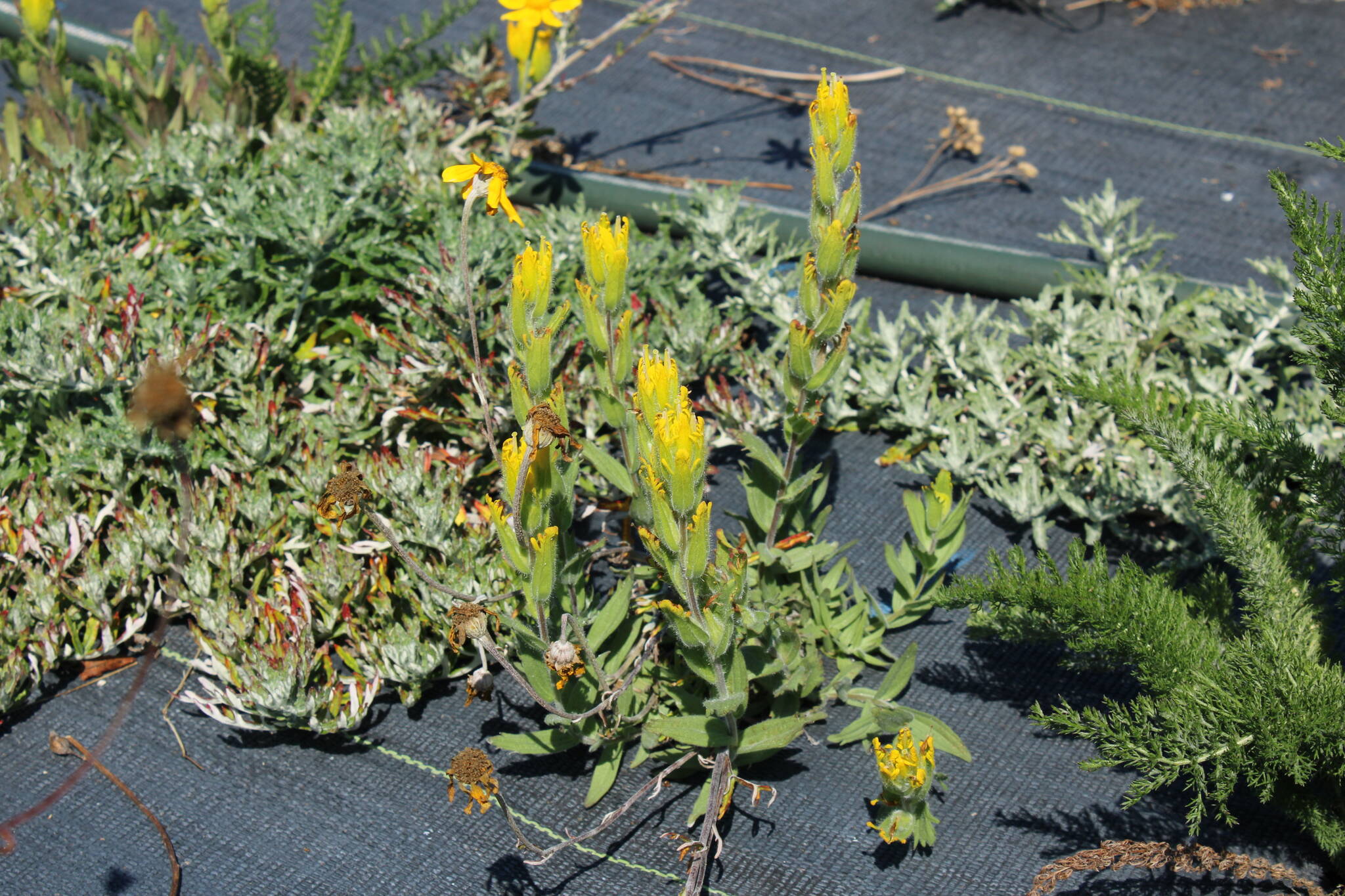
(Photo by Allyson Ballard) Re-population of the golden paintbrush, or Castilleja levisecta, is the focus of much of the institute’s effort.
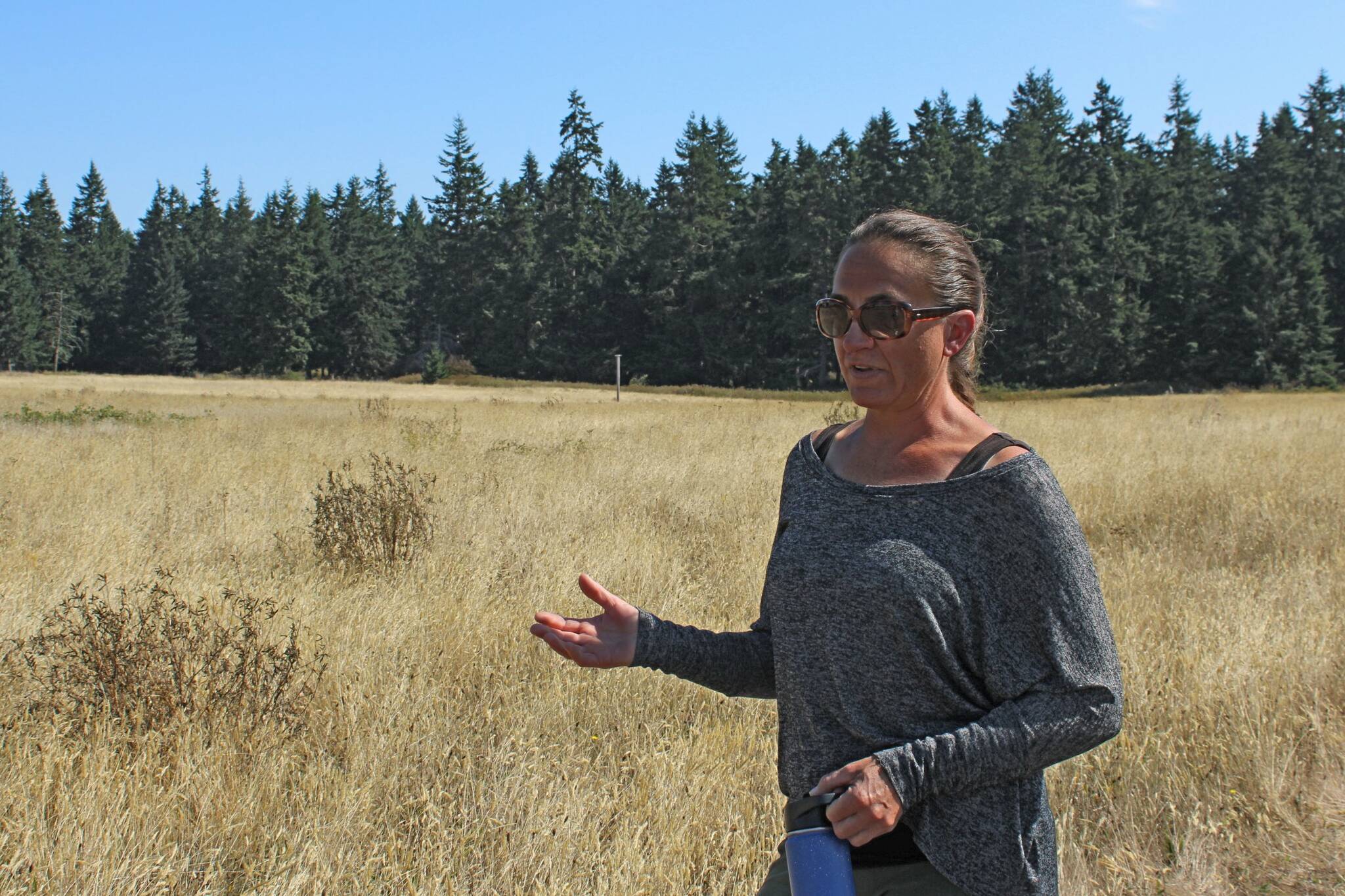
(Photo by Allyson Ballard) Re-population of the golden paintbrush, or Castilleja levisecta, is the focus of much of the institute’s effort.