HOA policy hinders removal of unsafe trees
Published 1:30 am Friday, February 20, 2026
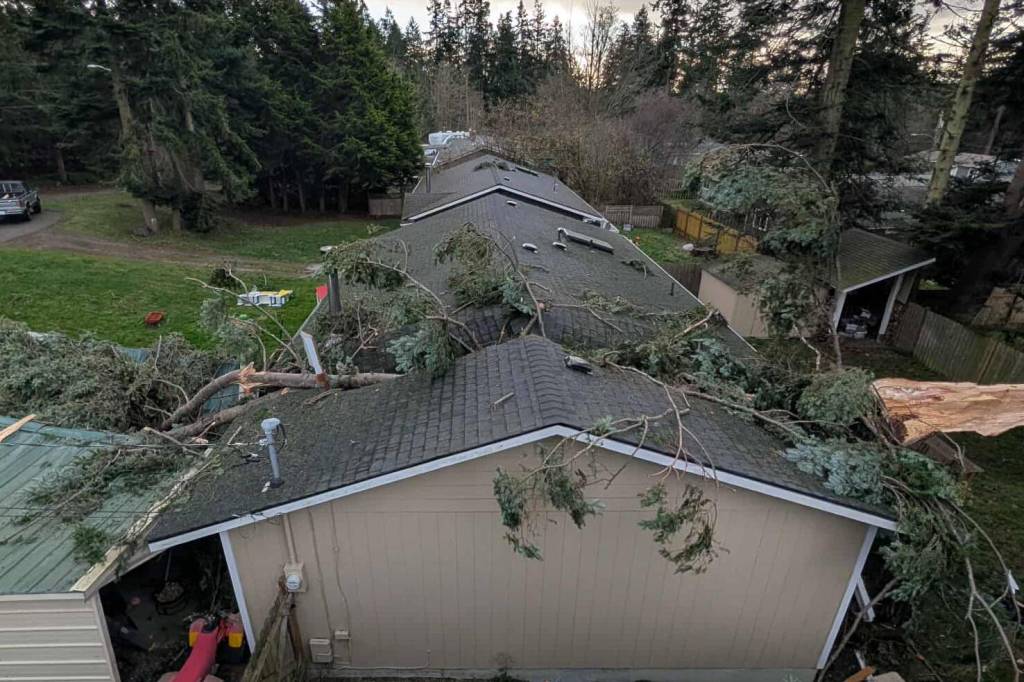


A homeowners association and changes to its tree policy made removing dangerous trees difficult for a North Whidbey resident.
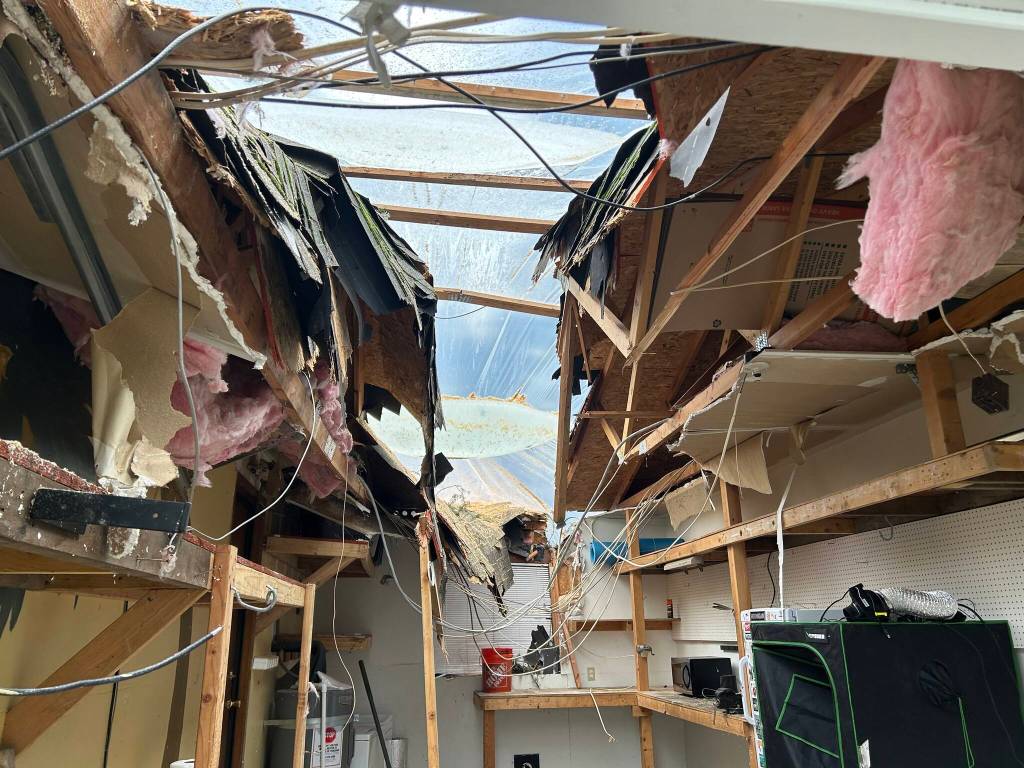
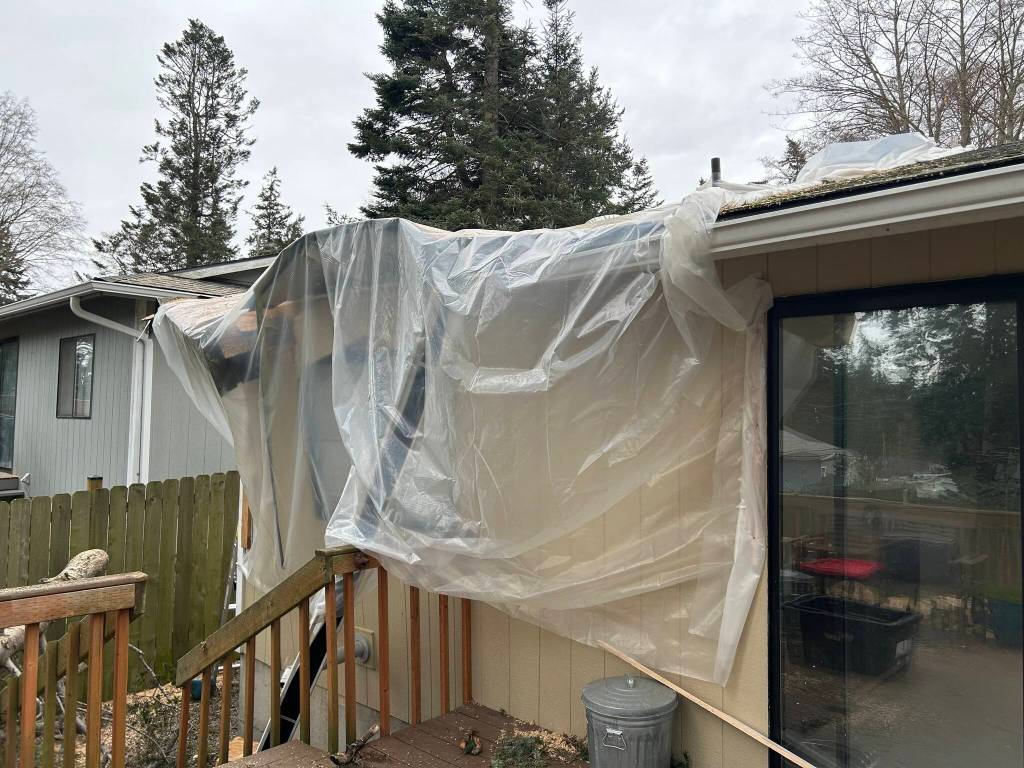
Alyssa Moncada and her family were asleep when windstorms on Whidbey the night of Dec. 17 caused a portion of the upper half of a large evergreen tree in their backyard to fall, which destroyed the garage of their Northgate Terrace home. Moncada estimated it originally stood 40-50 feet tall and 3-4 feet in diameter.
Besides extensive structural damage, the tree “knocked out” the electricity and hot water, Moncada said, displacing the family likely until June. Despite the damage, it took Moncada two months to obtain the neighborhood homeowners association’s approval to remove the remainder of the tree.
“It’s one thing if (the tree) hits our already broken house,” Moncada said, “but I don’t want it to hurt somebody.”
Moncada believes “tree drama” spurred the homeowners association’s board of directors to reevaluate their tree policy. Board President Rachel Oswalt declined to be interviewed for this story.
Potential changes to the homeowners association’s tree policy were first discussed during November’s board of directors meeting, according to the minutes; the board discussed whether the policy should include a fine for unauthorized tree removal. In December, the board considered the “potential liability and insurance implications of denying tree removal requests” and the “role of arborist evaluations in supporting consistent decision-making,” the meeting’s minutes detail.
The board did not adopt a new policy until Jan. 8. Under the new tree policy, homeowners are fined $2,500 the first time they remove a tree without authorization and $3,000 for each tree after the fact.
The policy specifies that removal requests are handled by the Architectural Control Committee and the board of directors and only approved if a tree is dead, diseased, structurally compromised or an “imminent safety hazard to persons or property,” it reads. Generally, the policy makes an effort to protect healthy trees of a certain age, size, species and importance in preventing land erosion.
Moncada originally sought approval to remove two trees: what remained of the first, which already damaged the garage, and a second leaning at a dangerous angle. She received approval for the second tree on Jan. 13 and it was cut down on Jan. 22.
Moncada said she felt like the board dragged its feet to approve the removal of the first tree, however, despite the fact that she provided them letters from a certified arborist describing the removal of both “extremely hazardous” trees as “imperative.” More of the first tree fell on Jan. 30, crushing a fence between two different neighboring properties and destroying a shed.
The majority of the board finally approved the first tree’s removal at a meeting on Feb. 12. Moncada thinks more of it falling, as well as her constant emails to the board warning them of the dangers the first tree presented, contributed to their decision.
The first tree was removed on Feb. 18. Removing both cost over $40,000.
“Luckily our insurance is covering it, but just for these two, it’s so incredibly expensive,” she said. “I don’t think anybody in the neighborhood has the money to start cutting down a bunch of trees.”
Given the age of the neighborhood — and, by extension, many of the trees within it — as well as the damage her home sustained, Moncada felt surprised it took the board as long as it did to approve her removal request.
“I feel like this is just an easy stamp of approval,” Moncada said.