Oak Harbor maps out ‘stay out of designated area’
Published 1:30 am Friday, December 5, 2025

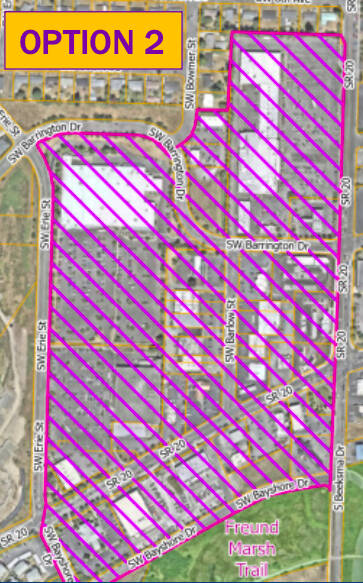


A new “stay out of designated area” ordinance will allow judges to ban some people convicted of drug crimes from entering certain zones in Oak Harbor. Those who violate the prohibition can be arrested by police.
In a city council meeting Tuesday, council members approved the stay-out-of-designated-area order that will extend in an area bordered to the north by Southwest Eighth Avenue, to the south by Southwest Bayshore Drive, to the west by Southwest Erie Street and to the east by Highway 20. The area encompasses SPiN Cafe, Walmart, Safeway and many businesses large and small.
The decision was unanimous, with Councilmember Christopher Wiegenstein excused from the meeting.
With this new ordinance, the city prosecutor can request that a judge impose a stay-out-of-designated-area order against a person charged or convicted of a drug-related criminal charge. Those who defy the condition can be arrested, face an additional criminal charge and receive potential jail time.
The idea of creating the designated area was in response to community and business owners’ concerns after police documented an increase in illegal drug activity in the business district on the south side of the city, said Chief of Police Tony Slowik. The police documented 151 incidents associated with drug activity within a quarter-mile radius of Southwest Barlow Street.
Slowik said the stay-out-of-designated-area ordinance is intended to reduce drug-related activity in a problematic section of the city through a court-driven process. It provides judges with an additional tool to address drug use and sales by allowing them to bar individuals convicted of drug-related offenses from entering a defined zone, he added. Along with meeting with the courts, the police department has held several community engagement opportunities to get the public’s insight leading up to this order.
City staff presented the council with two options for the boundaries of the designated area. The second option, which the council chose, set the southern boundary end at Southwest Bayshore Drive. Property owners of Grocery Outlet, MOD Pizza, Starbucks and 7-Eleven expressed enthusiasm to be inside of the exclusionary zone, Slowik noted.
Even with the zone in place, he added, the court retains the ability to modify the area to ensure access to specific locations based on individual’s needs. Council members were generally optimistic about the change.
Councilmember James Marrow opined that both options seem mild, however, he noted that he prefers the option with the boundary that includes the businesses on the Bayshore Drive strip.
“I’m just delighted with this,” Marrow said.
However, some council members retained some skepticism before showing their approval.
Councilmember Eric Marshall expressed concern that the boundary will bar access to SPiN Cafe, a day center for homeless and low-income residents. Slowik noted that other day centers, including the Oak Harbor Library and The Center, will remain available outside the zone. Additionally, Slowik said the boundary is expected to curb drug use and distribution by offenders in Oak Harbor, rather than shifting activity to other parts of the city, in response to concerns raised by Councilmember Bryan Stucky.
The council opted to choose the boundary that ends at Southwest Bayshore Drive.
Ultimately, all council members were optimistic about the ordinance and how it could help squash drug-related crimes in Oak Harbor.
“There isn’t anything that will solve this problem,” Mayor Ronnie Wright said. But, instead of being reactive, “we are trying to take a more proactive approach in bringing these things forward,” he said.
City law enforcement will have access to all people who have a stay-out-of-designated-area court order, Slowik said.
Learn more about the new ordinance on the City of Oak Harbor website.