Invasive European green crab found near North Whidbey
Published 1:30 am Tuesday, December 2, 2025
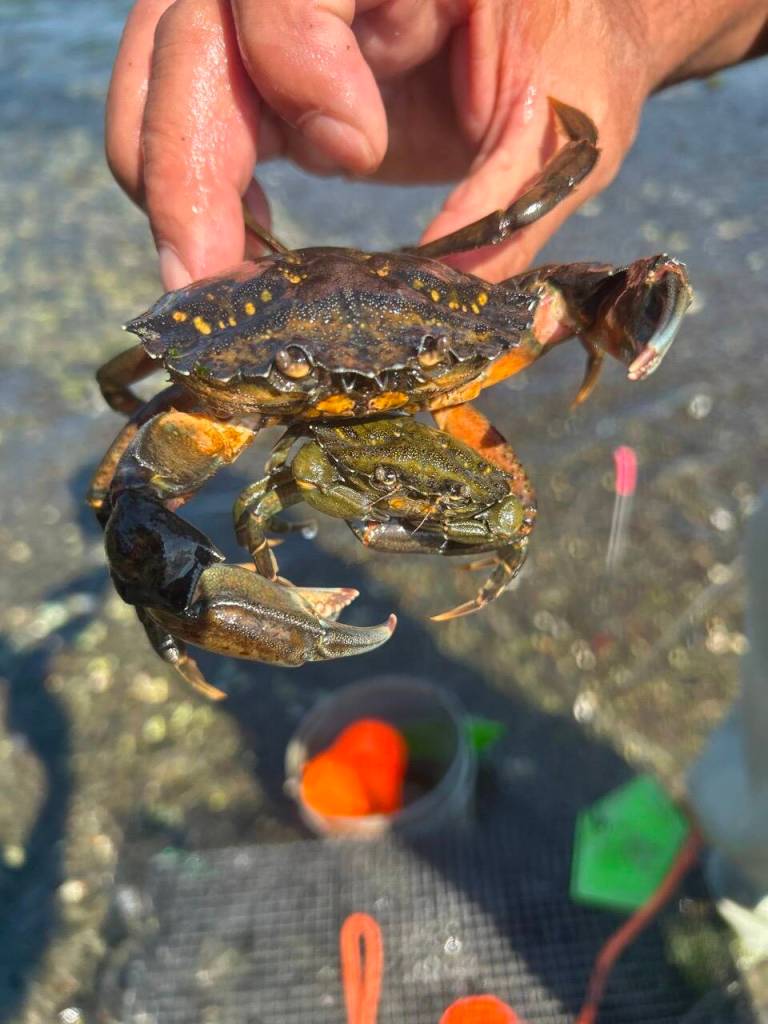
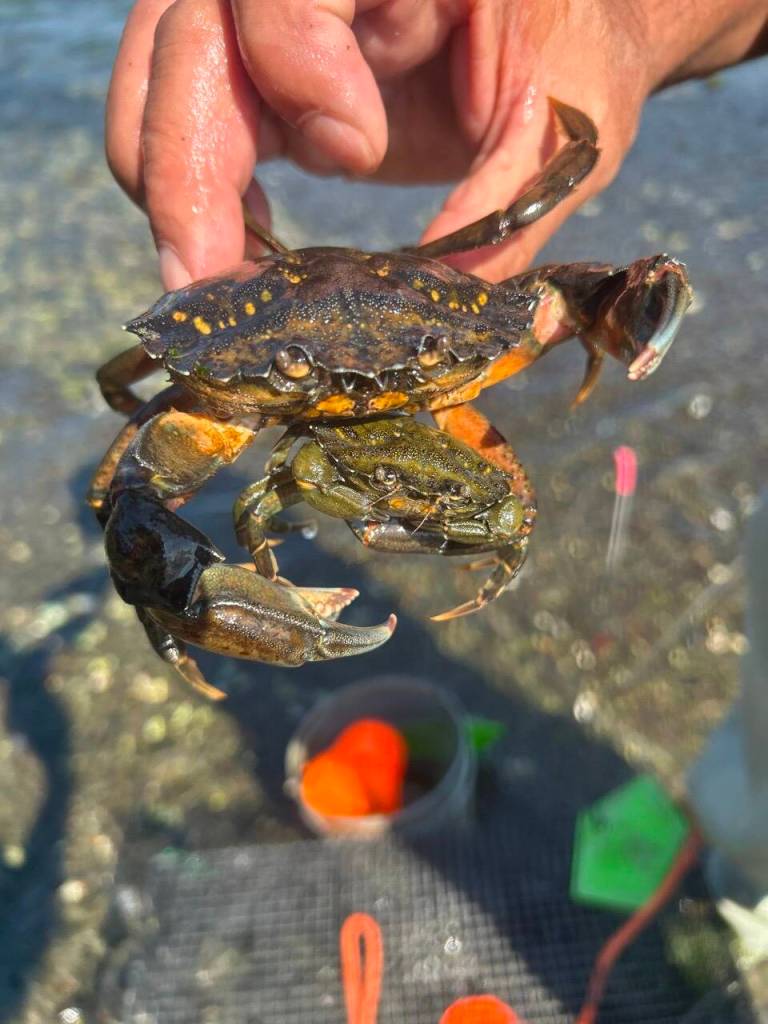
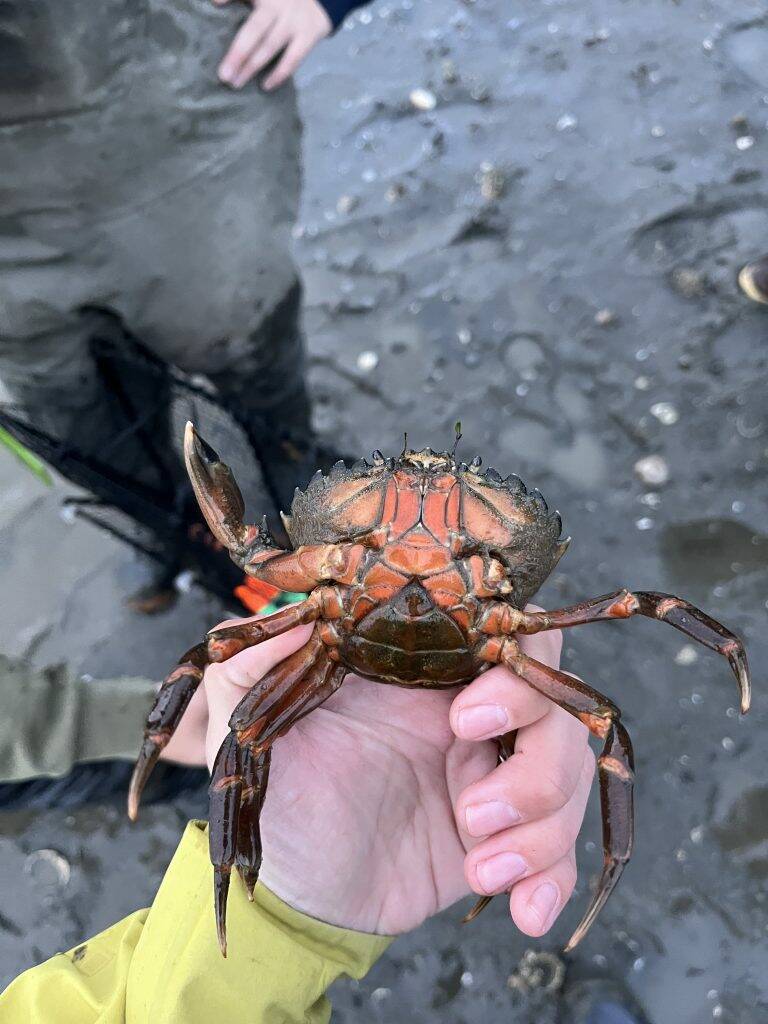


An invasive species of crab is clawing its way across Whidbey.
The European green crab, which poses a threat to native shellfish, eelgrass and estuary habitat critical for salmon and many other species, has been an issue in the state for several years now, according to the Washington Department of Fish and Wildlife.
On Whidbey, Communications Manager Chase Gunnell reported Lagoon Point has had low numbers of the crabs captured intermittently since 2018, and Cultus Bay had its first detection in 2024. But now, the invasive species has made its way to the northern Whidbey Basin.
Last week, a press release from Washington Sea Grant, a program based at the University of Washington supported by NOAA, revealed that a community member found a molt from one of the crabs at Similk Beach, located on the northern end of the Swinomish Tribal Reservation. This September discovery is the first detection of the highly invasive species in the northern Whidbey Basin.
According to Mikaela Legarsky, a communications specialist for the Department of Fish and Wildlife, in October, the Swinomish Tribe caught 12 European green crabs in Similk Bay during joint trapping efforts with Fish and Wildlife and Washington Sea Grant.
Emily Grason, the Crab Team program lead for Washington Sea Grant, stated in the press release that she had originally expected the northern part of the basin to be more protected from a green crab invasion because of the narrow inlet to Deception Pass.
“It turns out that crab larvae coming into the Strait of Juan de Fuca can get shot right through Deception Pass,” Grason said in the press release.
Less than two months prior to the discovery, the Tulalip Tribes found a green crab on Mission Beach in Possession Sound, the first detection of a green crab in the southern end of Whidbey Basin. Though the tribes set up 110 crab traps, no more were caught in that region of the Whidbey Basin.
The Department of Fish and Wildlife has committed to a long-term management plan for the invasive species, running from 2025 to 2031. Gunnell said in a previous South Whidbey Record story that there is almost no hope of completely eradicating green crabs from the state, as Oregon and California’s numbers are too high. Instead, the goal is to limit further expansion.
The plan includes detailed guidance for early-detection monitoring, rapid response and ongoing control trapping, according to a news release from the department, and other efforts across defined management areas and coordination zones for Washington’s Outer Coast and Salish Sea. The state legislature appropriated $12 million in funding for management efforts during the 2025-2027 biennium. As part of the plan, Fish and Wildlife is partnering with tribal governments, U.S. federal agencies, Washington state agencies, shellfish growers and public universities.
Since the former governor’s emergency order in January 2022, over 1 million green crabs have been caught and removed. Gunnell explained that the crabs are frozen to humanely kill them, and where possible, they are often then composted by state, tribal or permitted partner organization staff. However, the green crabs captured most recently in the Whidbey Basin were sent to Washington Sea Grant and University of Washington researchers for genetic testing.
“This testing may allow us to determine where these invasive crabs came from, such as from Padilla Bay or Bellingham Bay to the north, or crab larvae drifting in from larger established populations on the Washington Coast or on Vancouver Island, British Columbia,” Gunnell said.
The Washington Sea Grant press release noted that an increase in the number of green crabs found in the state’s inland waters is due in part to the 2024 El Nino climate pattern.
That’s not to say you should kill a green crab if spotted in the wild, since a case of mistaken identity means unnecessarily taking out a native crab. To avoid confusing them with other species, Fish and Wildlife recommends reporting the suspected green crab by taking photos of it or its shell. Use the reporting tool on the website, wdfw.wa.gov/species-habitats/invasive/greatest-concern/egc.
Green crabs have five points on their shells, but they are not always green in color. They may also be yellow or orange, especially on their underside, legs and claws.
Sound Water Stewards, a Freeland-based nonprofit, in collaboration with the Washington Sea Grant and Washington State University, has been training citizen scientists on how to conduct molt surveys and join the fight against the invaders.
“So far this year, just over 17,882 European green crabs have been caught from across Washington’s Salish Sea,” Legarsky said. “Research and monitoring are ongoing to understand potential impacts from these invasive crabs on native shellfish.”