Sound Off: Shotgun wads are top contaminant on Whidbey beaches
Published 1:30 am Wednesday, March 25, 2026
By DAR CHRISTOPHERSON
Volunteers gather weekly for two hours at Whidbey Island’s public beaches. They pick up the “dandruff of our society” including hygiene products, toxic chemical bottles, hypodermic needles, tires, food containers, cigar tips, clothing, rope etc. Their pay is camaraderie and soothed consciences for their contribution.
The program is sponsored by the Department of Ecology, Island County and managed by the Washington State University Extension office in Coupeville. There are about 150 volunteers on the weekly email list.
No roll call, come when you can. The events center around an old blue WSU truck driven by volunteers. “Blue” features peeling paint and 115,000 miles on the odometer. The engine light never goes off, and you need to be of a certain stature to see over the steering wheel as the drivers seat is “well settled”.
Volunteers joke that Blue fits right in with a demographic of older citizens sporting hearing aids, thick glasses and hobbled knees awaiting replacement. Some conversations indicate “engine lights” flickering between perspectives of brilliance fueled by rich experience and long careers. Blue got new tires, brakes and a battery a few years ago. In the spirit of being “Waste Wise,” “Blue” and the volunteers are cherished.
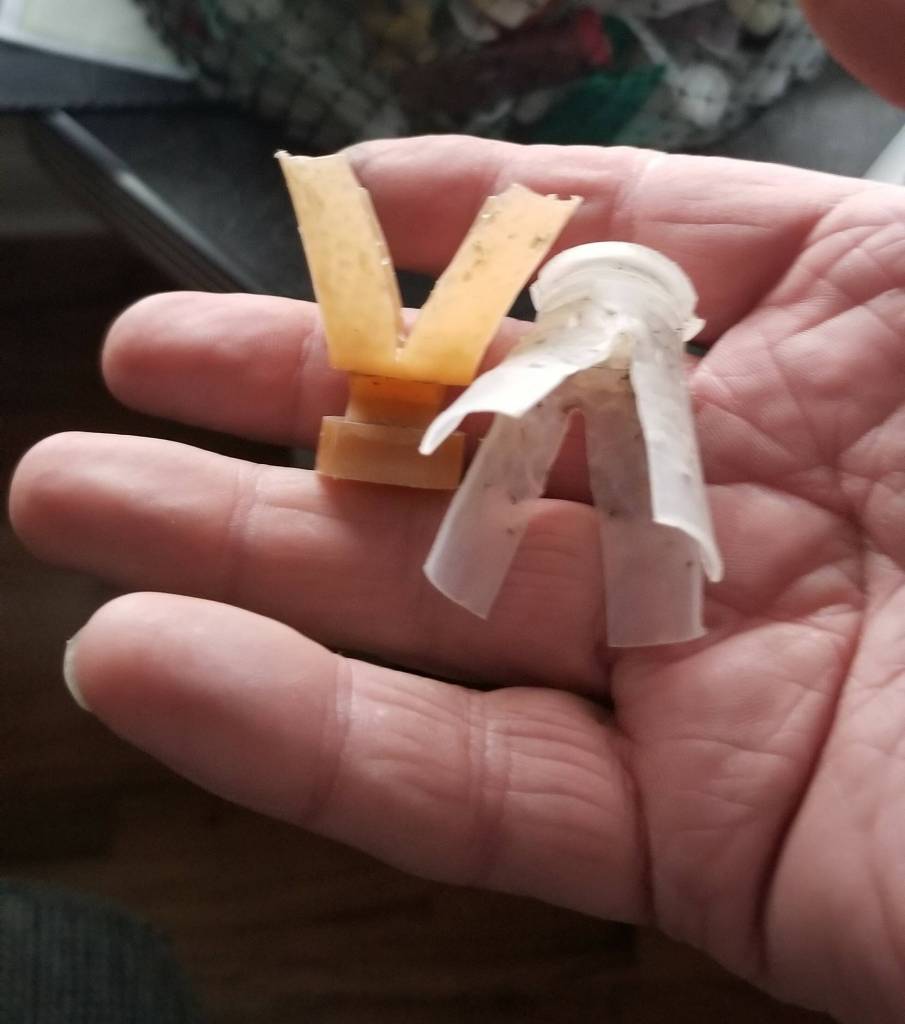
Don’t cut these characters short. They get angry. Very angry when discovering trash knowingly deposited. They started noticing “flower like” blooms of plastic on every beach. This prolific flotsam is the shotgun “wad.” Wads accompany the shot out of the barrel every time a hunter pulls the trigger over water. They travel beyond retrievability on a watery journey to their destination on our beaches.
Community Litter Cleanup Programs focus on one public beach each week. The total length of all beaches cleaned is approximately 5 miles. The CLCP program picked up more than 7,000 wads in 2025. A wad for every 3.77 feet or 145 wads average per 2-hour event. A wad is equivalent to the plastic in a shopping bag. Should our lawmakers do something if 48 times a year someone spreads 145 shopping bags on one of our beaches?
Extrapolating the numbers to the remaining 755,040 feet (143 miles) of beach indicates a potential 200,275 pickable wads on Whidbey at any time. Most become microplastic as many more are deposited each hunting season. Industry insiders familiar with hunters habits suggest the estimate is understated.
Effects of the Puget Sound converging currents on Whidbey Island compound the assault on our community. We find identifiable items from as far south as Olympia. Plastic wads are the number one piece of identifiable trash we collect.
In much of Europe biodegradable ammo is required. Most biodegradable hunting ammo is manufactured in Europe because it is frequently required there. In America, it is not required and, therefore, manufacturers don’t need to provide bio product to hunters. They profit from hunters while everyone else bears the environmental expense.
Meetings of volunteer cleaners get heated. Suggestions of senior civil disobedience to garner attention dominate the conversation. Block Deception Pass bridge until police come? Picket retailers and hunting venues? However, discussions lead to reason. We are all contributors. When we lazily drive for a sub sandwich on game day, we leave a trail of tire dust and carbon that disseminates into our ground water and air. The angry volunteers decide to try to help hunters rather than attack the sanctity of their sport.
They began reaching out to officials and influencers for guidance. Not everyone was happy to hear from us. Many would not respond. Some were disparaging. We are all beholding to sponsors and constituents. We found one truth. Every hunter talked to wanted a solution. None of them want to continue blasting plastic onto beaches. We can only conclude that it is the industry and their sponsored representatives that are captive to profit from a convenient status quo. They refuse to seriously address the problem.
Others recognized the severity of the problem and responded. Island County Commissioner Melanie Bacon, Commissioner Janet St. Clair and Rep. Clyde Shavers took time to meet with the group and offer perspective and support. State Wildlife Biologist Kurt Licence and the State Flyway Manager Kyle Spragens provided heartfelt support for the volunteer efforts to interface and help hunters. Wildlife biologists from around the state visited Oak Harbor bearing witness to the massive wad accumulations. From these collaborations a rebate plan was formalized to encourage local hunters to try new bio ammos.
Retailers like Ace Hardware and Skagit Arms stepped forward to stock bio ammo in anticipation of rebates offered. WSU extension organized the grant application and committed to managing grant money from the state Aquatic Lands Enhancement Account. CLCP volunteers committed to provide 400-500 hours to manage rebates and track the associated hunter surveys for the Washington State Department of Fish and Wildlife database. Biodegradable manufacturers like Rio Ammo, Gamebore, Bio Ammo and Apex Ammo were anxious to participate and agreed to help advertise the story nationally of a small community warding off pollution and helping hunters. The plan was to be educational and collaborative with the hunters. The grant of $45,000 was queued up as an impactful pilot program.
A week prior to awarding the grant, the Aquatic Lands Enhancement Account was defunded. State lawmakers were forced to balance the budget. The current federal administrations de-emphasizing of environmental or “woke” spending added to the pressure.
Here is why this is important:
In 2025 the CLCP cleaned one half mile long Windjammer Park beach five times, picking between 300 and 600 wads each event. On Jan. 20 of 2026, 15 volunteers picked up another 870 wads on the same beach in just two hours. Would lawmakers look away if there were 870 shopping bags scattered on Windjammer Park beach? Where do you think the microplastic goes?
If you happen upon a Blue truck at a beach cleanup, stop by. Talk to the volunteers. Witness the mess for yourself.
For beach cleanup information visit CLCP Beach Litter Volunteer Opportunities on the Island County website.
Dar Christopherson is an Oak Harbor resident.