Public hears from South Whidbey principal candidates
Published 1:30 am Tuesday, March 10, 2026
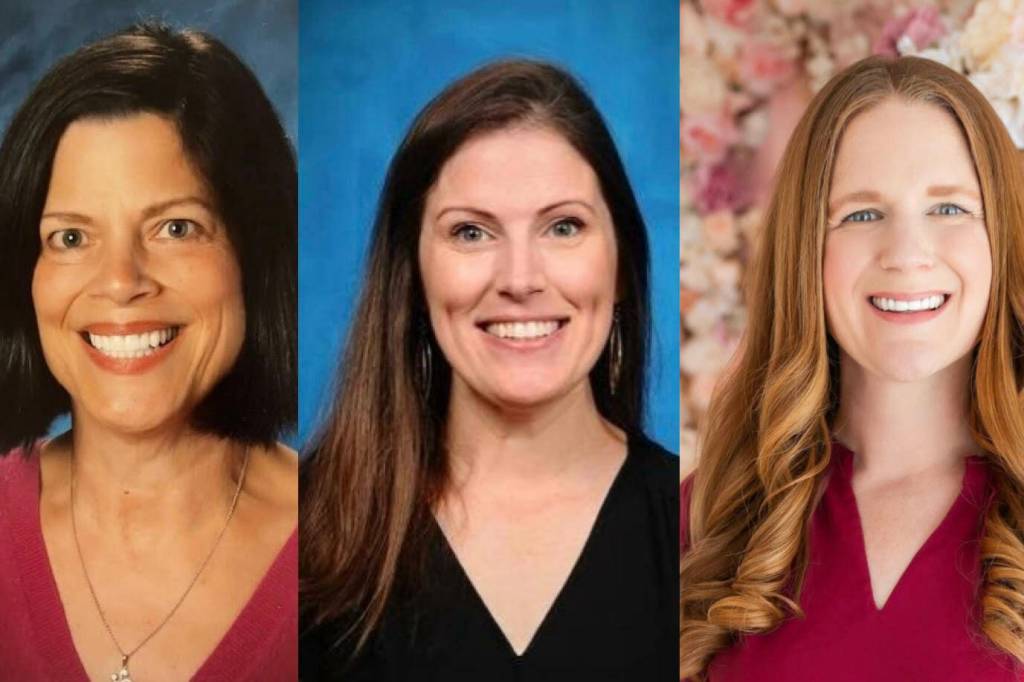
Three finalists made their cases to become the principal at South Whidbey Elementary School during a public forum on March 5.
Mary Helen Bever, Kristin Codda and Jordan Young emerged as the frontrunners for the position from a “large number of candidates” who originally applied, according to South Whidbey School District Superintendent Becky Clifford. Public feedback solicited through a survey at the forum will be reviewed before a decision is made.
Clifford said the district plans to announce its selection Friday, March 13.
Each candidate took 30 minutes to introduce themselves, then answer four prepared questions about fostering trust within the community, creating a safe learning environment, leading through transition and their vision for the future. Candidates answered audience questions with any leftover time.
Bever, currently an assistant principal at Discovery Elementary in Everett, said she “learned early on that education opens doors,” a lesson she strives to instill within students. Born and raised in Seattle, Bever’s family has visited Whidbey since her mom’s childhood.
Practicing law kept Bever busy before having three kids, all 18 months apart. Taking a few years off work led to her involvement in education, which she said brought her “joy.” Bever fell in love with teaching math, however, when she taught at the middle school level for two weeks at the principal’s request. Since then, Bever has taught kindergarten, second, fifth, seventh and eighth grade math.
Eventually, Bever realized she wanted to help schools in a bigger way, so she obtained her leadership credentials and became a principal. Bever explained she is drawn to South Whidbey Elementary because of its ALE, or alternative learning experience, program, allowing instruction to be delivered outside a regular classroom schedule according to the Office of Superintendent of Public Instruction. She brought a similar program to one of her schools.
“What I learned from that, and what excited the teachers and the parents: kids realized what they’re learning in school is helpful when they go into the real world,” she said.
Codda, an assistant principal at South Whidbey Elementary, is the only internal finalist for the position. She said she has been a part of the South End community since 2012.
Codda’s experience in education began shortly after high school. She realized she had a “real connection to students that had some learning differences” while working in childhood education in a private setting, motivating her to acquire a degree in special education. Eleven of Codda’s 26 years in education have been spent at the elementary level.
Working at a “small, independent school” taught Codda the importance of educational leadership, that it is the “lifeblood” of day-to-day operations, she said. That lesson proved useful when she transitioned to public education.
Throughout her career, colleagues suggested to Codda she might be suited for administration; eventually, she realized she wanted to support schools and their communities in a bigger way. Codda believes her experience adopting four curricula and earning a masters in curriculum and instruction empowered her to embrace educational leadership.
Young grew up in the Lake Stevens area and serves as an assistant principal at Meadowdale High School in Lynwood. Teachers became a “big source of support” for her when, as a 12-year-old, she lost her father.
Her career in education began in California, where she taught fifth grade students for three years. Being accepted as a Teach for America corps member brought her to Arizona, and she taught science for fifth, sixth, seventh and eighth grades. Young obtained her master’s degree in secondary science education during that time.
Young switched to teaching high school biology and environmental science for eight years before participating in an intensive, 15-month program for her master’s in educational leadership. She then served as an assistant principal for four years.
Having her daughter in 2023 motivated Young to move back to Washington, and she accepted her current position at Meadowdale High School about a year ago. She did not anticipate applying for a new job so soon, but she could not pass up the opportunity to work at South Whidbey Elementary.
All three candidates emphasized the importance of availability in earning trust and building authentic relationships within a new role and, for some, a new community.
Bever reiterated her love for socialization; teachers share what is happening in classrooms, she added, but principals are a good resource to answer bigger picture questions about schools. Conflict resolution can be a powerful way to build trust from Codda’s perspective, and she said being trustworthy and reliable is important, too. Checking in with students and staff on personal and professional levels is important to Young, who added that classroom walk-throughs and pick-ups and drop-offs are a couple ways she likes to make herself available.
Bever said she led the safety committee at each of her schools, and added that “students feel safe when they know what’s going to happen in a classroom.” Ensuring poor behavior is met with consequences is one way to create that predictability, she added. Respect and understanding are crucial to creating a safe environment, Codda said, which means encouraging student-centered learning and ensuring teachers are connecting with one another. Young implemented restorative practices at her school, and over a three-year period, referrals declined by about 45%.
Young added that inclusivity is important in creating safe learning environments as well. At one of her schools, she adopted three versions of U.S. history courses — from Chicano, Native American and African-American perspectives — to prepare students for a global society.
Having candidates explain how they would handle change is relevant given construction at South Whidbey Elementary is set to begin this summer. Part of an $80 million bond passed in 2023 is funding a new playground at the school, per a previous News-Times story.
All four of Bever’s schools underwent construction during her tenures, so she learned that getting students excited about it can be a good way to limit negative impacts. She added that communication is huge, and played a particularly important role in how she handled bringing students back into the classroom during the COVID-19 pandemic.
A school community of Young’s lost a teacher and two students, a tragedy which required transparency, consistent communication and connection with those affected and the community at large.
Planning ahead, leaning into staff expertise and keeping families updated are how Codda mitigates change. Student stability, she said, is a top priority, and a sense of predictability must be maintained.
All three candidates received an audience question about what high quality math instruction means to them. Bever believes a strong foundation of math understanding is established in elementary school, and that mastery takes practice. Codda understands procedural fluency in math to be built through hands-on learning, like with games and manipulatives. Young prioritizes math discourse in the classroom, in which students are leading each other and engaging in relevant conversation.
In response to a question about her thoughts on restorative discipline, Bevers explained that mistakes are human and can be teachable moments. When mistakes are made, she wants students to own them and fix them.
Codda said figuring out the root of behavior is her favorite part of the job when asked how she would support teachers in handling students’ behavioral issues. She encourages teachers to de-escalate situations and to “tap out” if necessary, as long as they circle back to try and understand the cause of the behavior.
If Young could change one thing about the district, she answered an audience member, she would encourage more people to take the public education route for their children rather than homeschool them, knowing all the district has to offer.