South Whidbey salmon recovery project receives grant
Published 1:30 am Tuesday, October 7, 2025

Projects around the state aimed at restoring salmon, which have been experiencing population decline, recently received a sizable chunk of funding.
Last week, the Washington State Salmon Recovery Funding Board and Puget Sound Partnership announced the award of more than $61 million in grants to 155 projects. This includes three projects on Whidbey.
“These grants fund important work,” Jeff Breckel, chair of the Salmon Recovery Funding Board, said in a press release. “They are funding organizations to undo the damage we have done to our rivers, bays and shorelines in the past and helping us make our waterways more hospitable to salmon.”
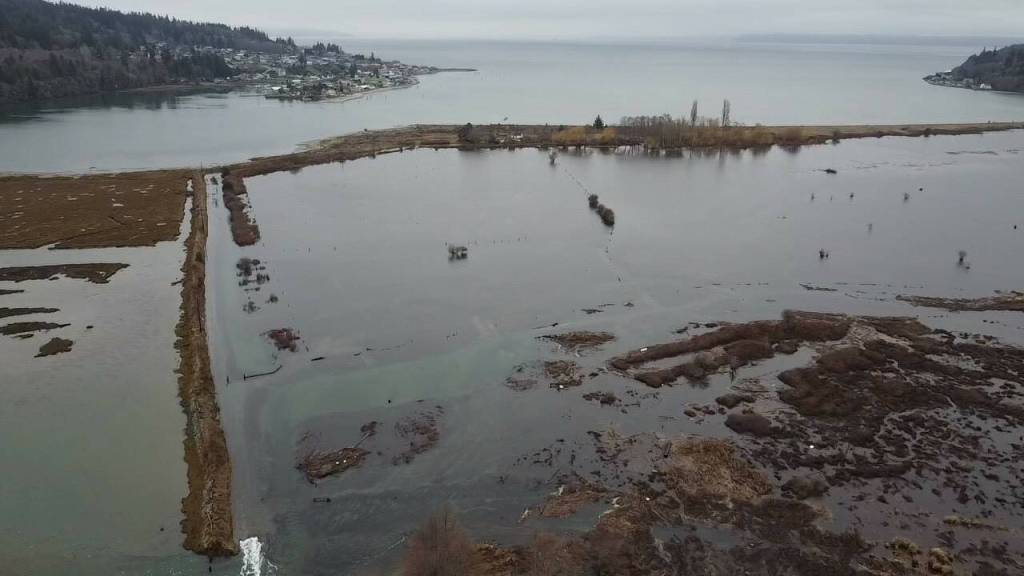
On South Whidbey, a project sponsored by the Tulalip Tribes focusing on Cultus Bay won a $314,395 grant. According to the project description, 100 feet of the dike and road where a tide gate was located “blew out” from flooding.
“The dike/road provides access to a private house and other structures, and the landowners are motivated in working with Tulalip to come up with a solution to restore landowner access, enhance fish passage and return natural processes for the inner estuary of Cultus Bay,” the description stated.
The project is currently in its design phase. Completion is planned for September 2026, according to project details.
Chinook, coho, chum and pink salmon, as well as steelhead trout, can all be found in Cultus Bay. Some of these are listed as threatened with extinction under the federal Endangered Species Act, while others are designated as a federal species of concern.
Other project awards on Whidbey include $897,954 for removing a barrier to fish passage in Race Lagoon near Coupeville and $253,489 for assessing the feasibility of lowering Maylor Marsh, part of Naval Air Station Whidbey Island, for young salmon.
The grants are administered by the state Recreation and Conservation Office. Megan Duffy, director of the office, said there are many benefits to investing in salmon recovery.
“When we restore our rivers for salmon, we also are reducing flood risk, restoring habitat impacted by wildfire, adding carbon-storing trees to help build climate resilience and helping local businesses that rely on fishing for tourism and jobs,” she said in a press release.
The Climate Commitment Act, the Puget Sound Acquisition and Restoration grant program, the Riparian Grant Program and the Salmon Recovery Program all provided funding for the grants.