The rope dug into our palms and we braced our knees, playing tug of war with the ocean as we pulled the crab pots up from the Salish Sea’s depths. Saltwater splashed off the rope, soaking our sleeves and splattering across our pants. With a final pull, the metal cage finally broke the surface, alive with orangish-brown crabs clicking and scrambling over one another.
It was late Monday morning and I was out with Bill Smith and his girlfriend, Carla Holderman, two Coupeville residents who spend their weekends chasing Dungeness crab across the Saratoga Passage.
Smith’s sailboat, the Culmination, was built in 1983 in Taiwan; he bought it at a Seattle boat show in 1986. At 85 and 77, respectively, Smith and Holderman haven’t slowed down. They still set sail for two- to seven-week crabbing and fishing trips, often joined by friends or family.
We launched from a dinghy on Good Beach, a private beach in Coupeville. Smith rowed us across the short stretch to where the Culmination was anchored. It was a beautiful day on the cusp of autumn. The Penn Cove waves shimmered under a soft morning breeze. The scoter ducks tap danced on the waves and jellyfish speckled the water, pulsing beneath our boat.
Recreational crabbing in Puget Sound revolves around two seasons. Summer runs from July and August, and winter falls generally October to December, according to the Washington Department of Fish and Wildlife.
Crabbing is one of Puget Sound’s most popular recreational fisheries. Each year, sport fishers catch more than 1.5 million pounds of Dungeness crab using pots, ring nets — and in the case of wade and dive fishers — their hands, according to Fish and Wildlife.
We sailed for two hours across the Saratoga Passage before we got to our first crab pot that the couple had dropped the day before, just off of Polnell Point. Once the pot was within view, Smith issued one last pull on the rope it was tethered to, and up came the little cage designed to trap crustaceans. It was filled with noisy crabs. Some were laying still, others wrestled and others munched on the crab bait, a turkey leg from Prairie Center Market.
We pulled up two more pots, each just a few minutes apart. The haul was plentiful, totally 36 crabs.
“We’ve been blessed,” Holderman said in awe.
However, in Washington, only five crabs a day are permitted per license, and since only Smith and Holderman held Washington fishing licenses, we had to narrow the crabs down to 10. Under Washington’s regulations, only male Dungeness crabs can be kept, and each must measure at least six and a quarter inches across with a hard shell.
Smith began measuring the crabs. He held up a dollar bill to a crab’s back to show me it was within the regulated size to keep. Then one by one, he flipped them over and checked if they had a narrow design on their abdomen, indicating they are a male, or a wide design, indicating they are a female. He also felt for their shell’s softness, pinching them to test for a bend where it should be hard.
The shells soften when the crabs are molting, according to Fish and Wildlife. A soft-shelled crab will yield less meat and will be of much poorer quality than a hard-shelled crab. Its off-putting taste usually causes it to be thrown out, so releasing the soft-shelled crab eliminates wastage and allows the crab to be harvested later, the department notes.
The crabs that did not pass the criteria were tossed overboard like a discarded child’s play toy. With a light splash, the free crabs sank to the ocean floor. They were silent beneath the water, but in my head I imagined the crabs cheering in high pitched voices as they embraced their freedom.
After selecting the biggest ten crabs from what was left, Smith loaded seawater into a pot and brought it to a boil. He then lifted the crabs, grasping their legs on either side of the crab like two kids about to pull on a wishbone, and, without a moment to waste, he bashed their back on a pole and let the shell and unwanted bits fall into the sea. Within an instant, the crab was dead and only the legs and meaty knuckles remained.
He dropped them one by one into two buckets, legs still moving, their muscles spasming from residual nerve signals.
When the crabs were done, we brought our feast out to the deck, the sun warming our backs as we cracked shells and dipped sweet crab meat into melted butter. Holderman’s homemade potato salad and bread from the Little Red Hen rounded out the meal.
The crab meat was tender, practically falling out of its shell. Together with the taste of the salty seawater on the crab and the smooth butter, I was in crab-heaven.
In his element, Smith ate his crab in peaceful silence, enjoying being on the boat, where Holderman said he would live full-time if he could.
“I don’t have much in the looks department, and I don’t have the best personality,” Smith joked, “But I have crabs.”
Holderman said for her, these trips aren’t about eating crab, but sharing the excitement with her friends and family who come along with her. She loves to take the sailboat to different islands, go hiking and come back to the boat and make dinner, she explained. Along the way, they usually meet fellow boaters who will often offer to tie up together and share food and stories.
Our stomachs full, we sailed back to Coupeville, just as the golden hour fell on the water and trees. Just as we were about to park, I spotted a Pacific harbor seal next to the boat. The water puppy dove playfully under the waves.
All recreational crabbers 16 years or older must carry a current Washington fishing license. Liscences can be puchased at https://fishhunt.dfw.wa.gov/login.
Crabbers in Puget Sound waters are required to carry a Dunguness crab Catch Record Card. Learn more at https://wdfw.wa.gov/licenses/fishing/catch-record-card/dungeness.
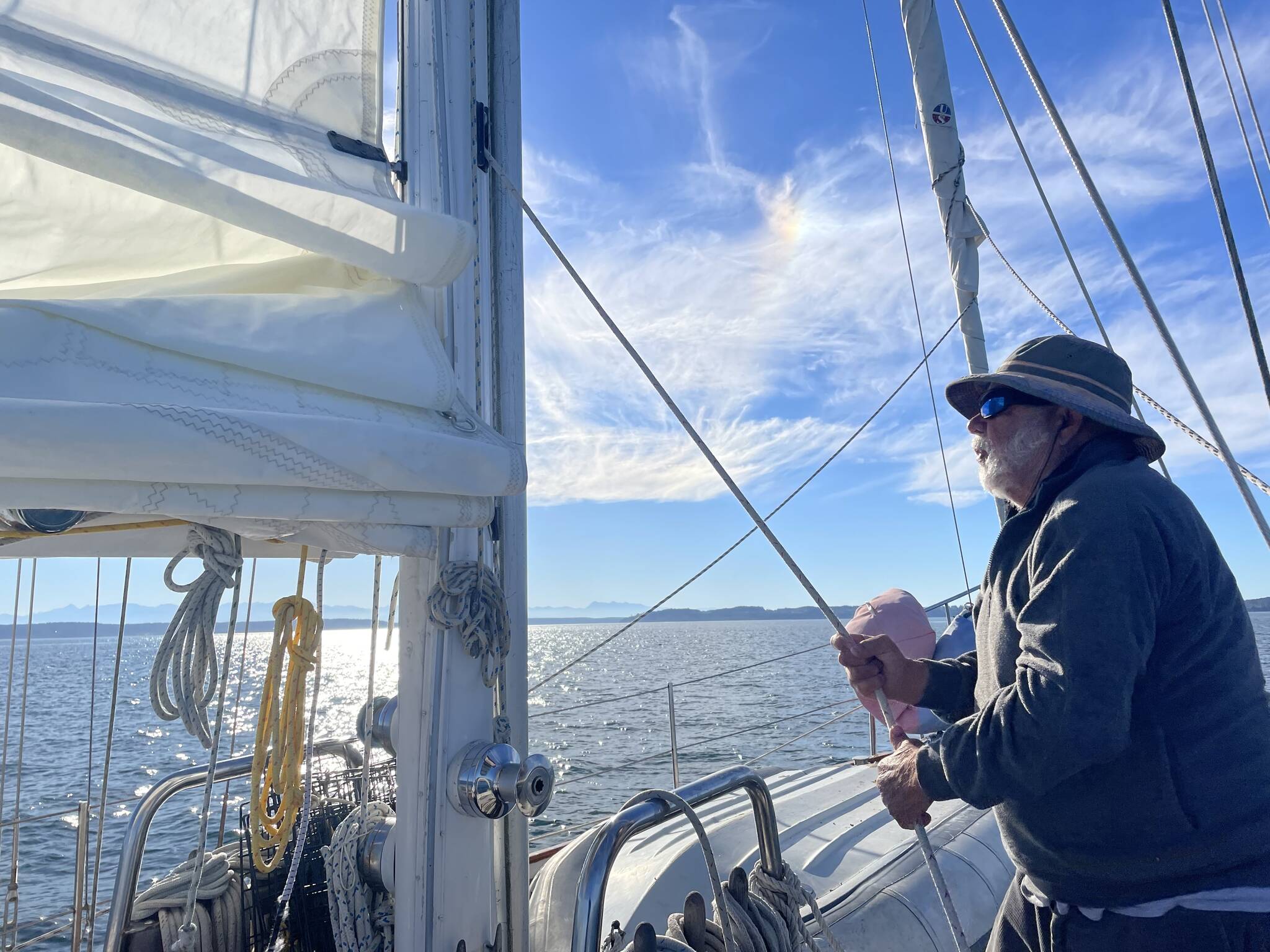
(Photo by Marina Blatt) Bill Smith pulled up the sail as a rainbow peaked through the clouds behind him.
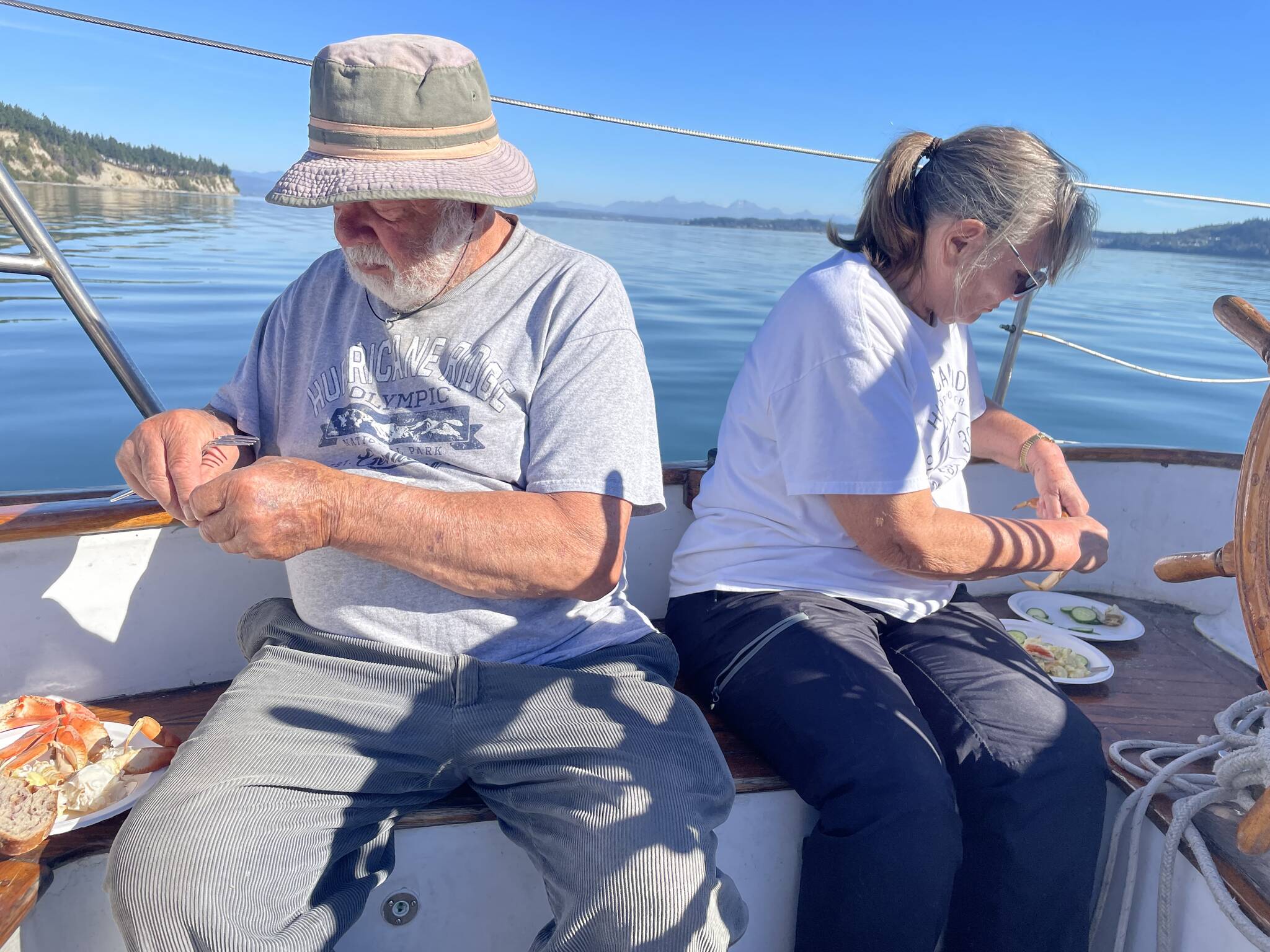
(Photo by Marina Blatt) Bill Smith and Carla Holderman feast on crab legs and soak in the sun aboard Bill’s boat, the Culmination.

(Photo by Marina Blatt) We feasted on fresh crab meat and butter with a side of potato salad.
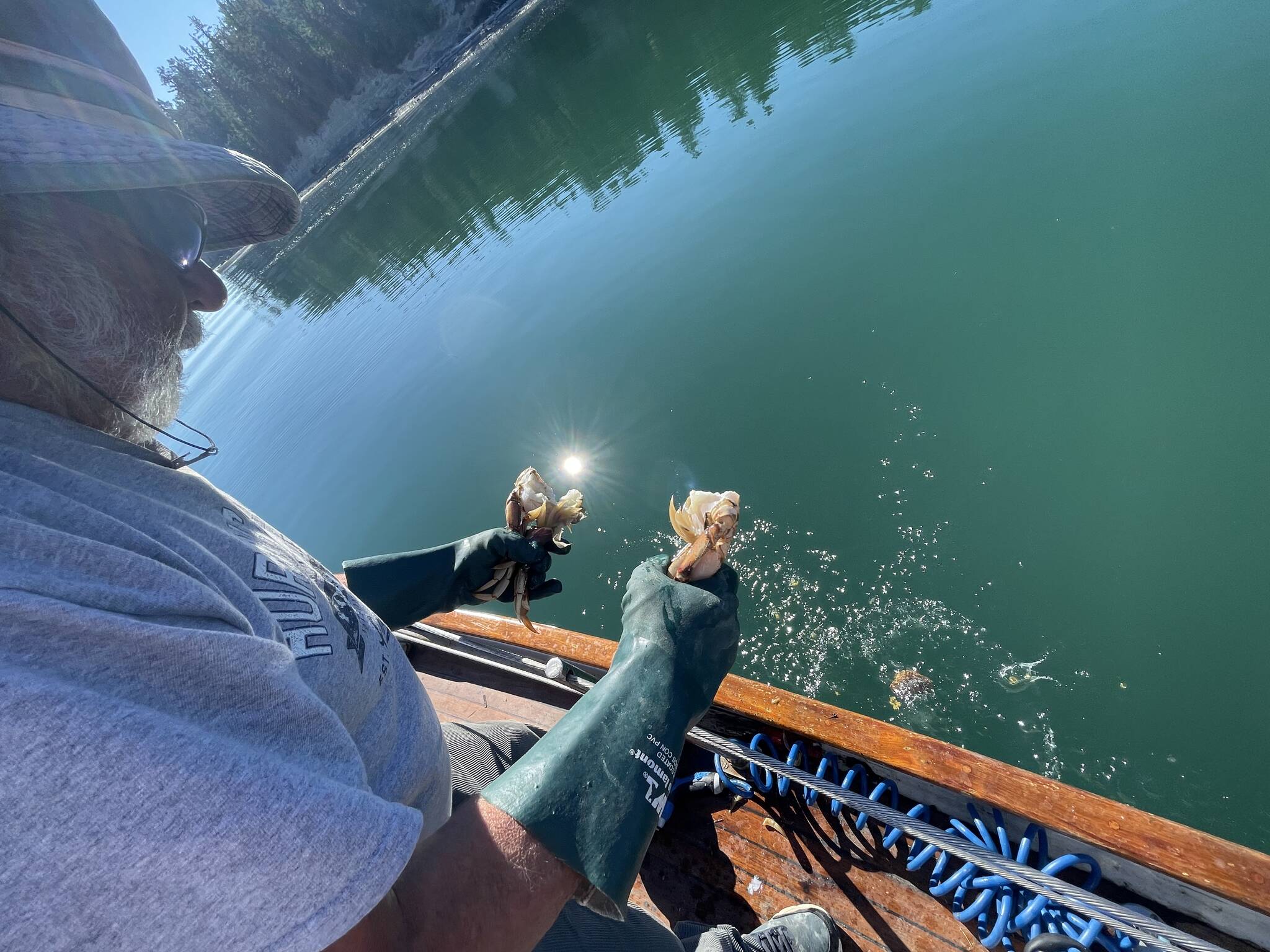
(Photo by Marina Blatt) Smith simultaneously bashed the crabs’ back on a pole and pulled its legs apart, letting the shells and unwanted bits fall into the sea.
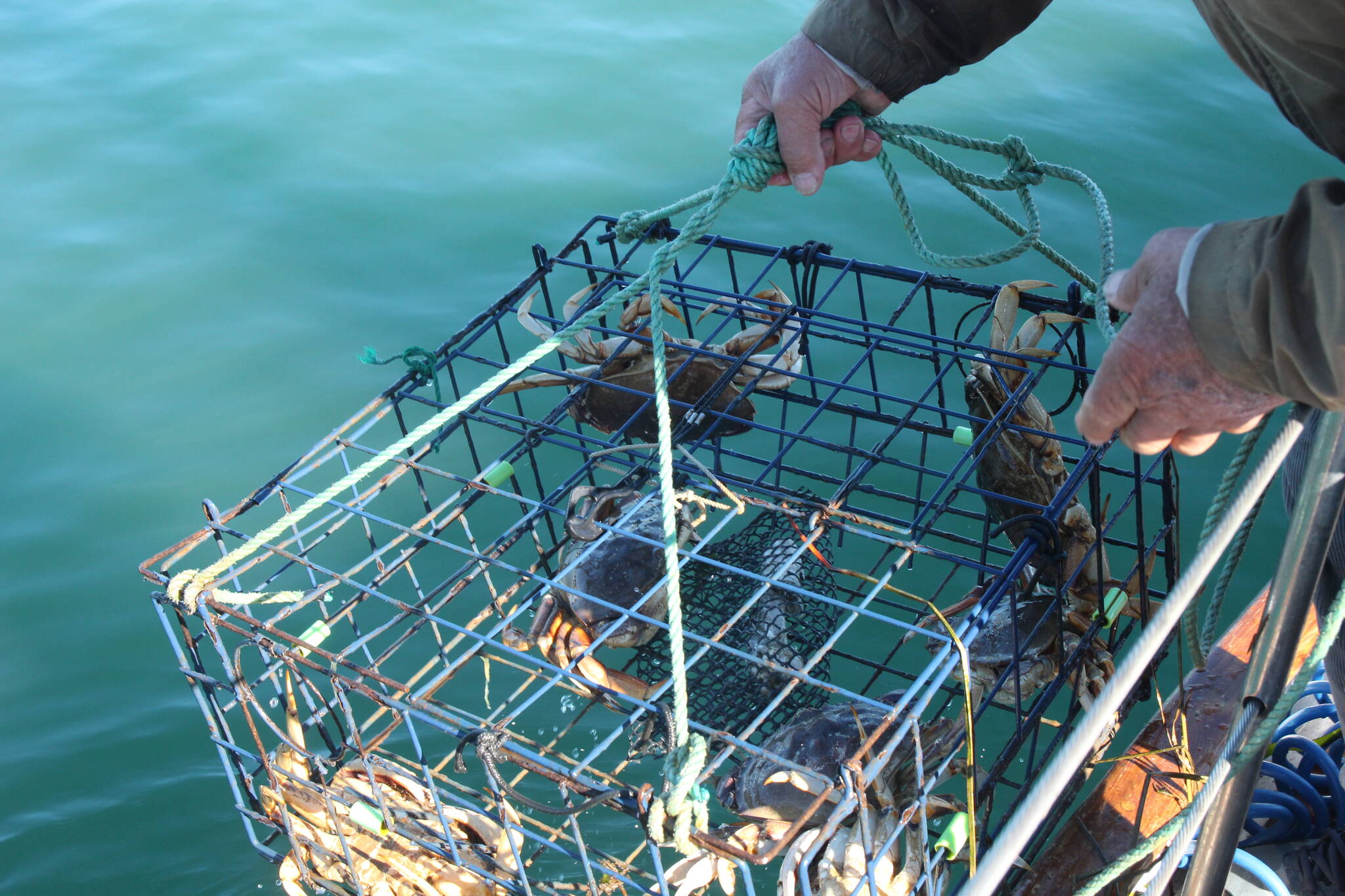
(Photo by Marina Blatt) Smith lifted the crabs from the teal ocean water.
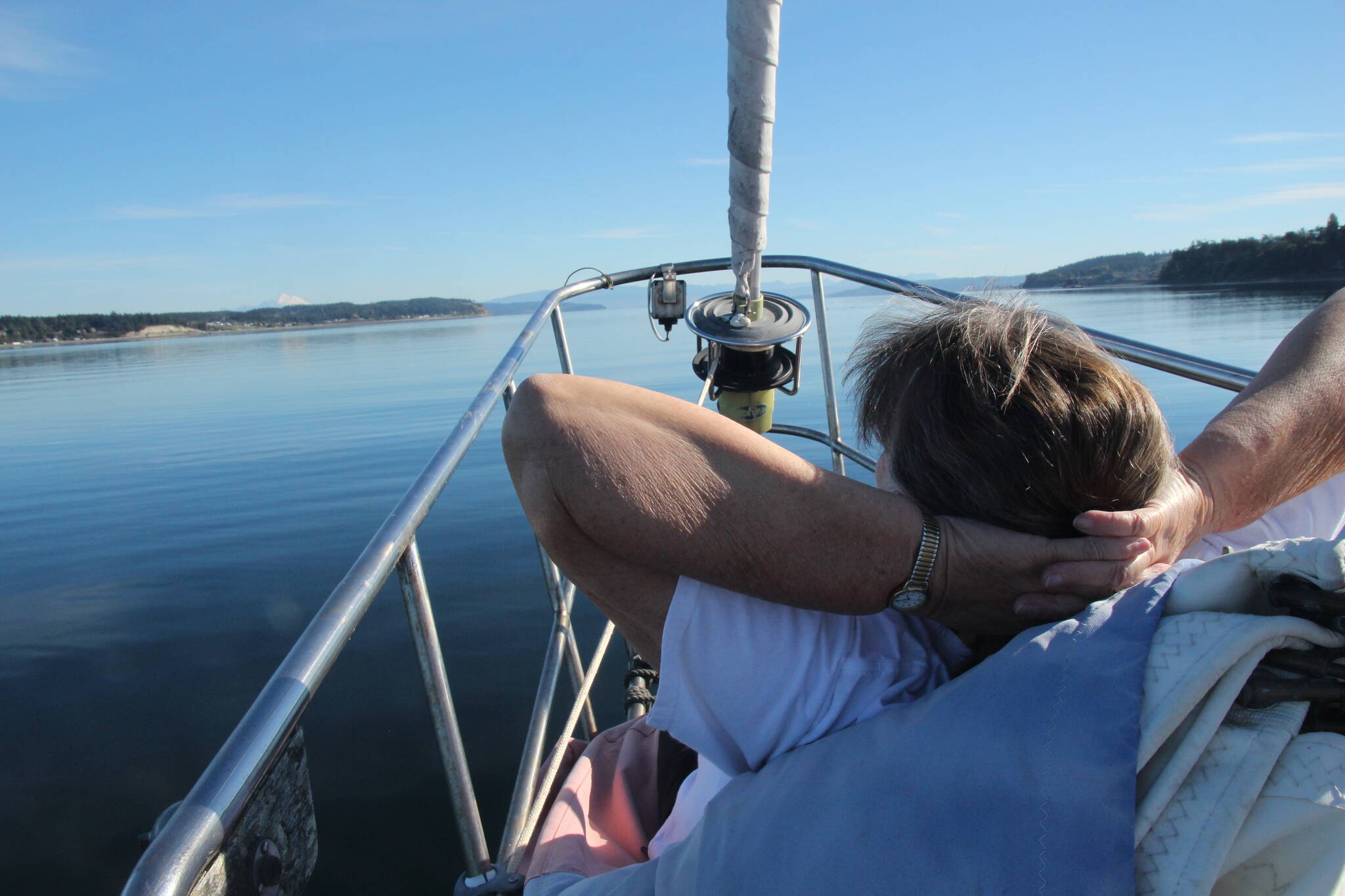
(Photo by Marina Blatt) Holderman relaxes at the bow of the boat on a makeshift chair made out of a rolled-up sail
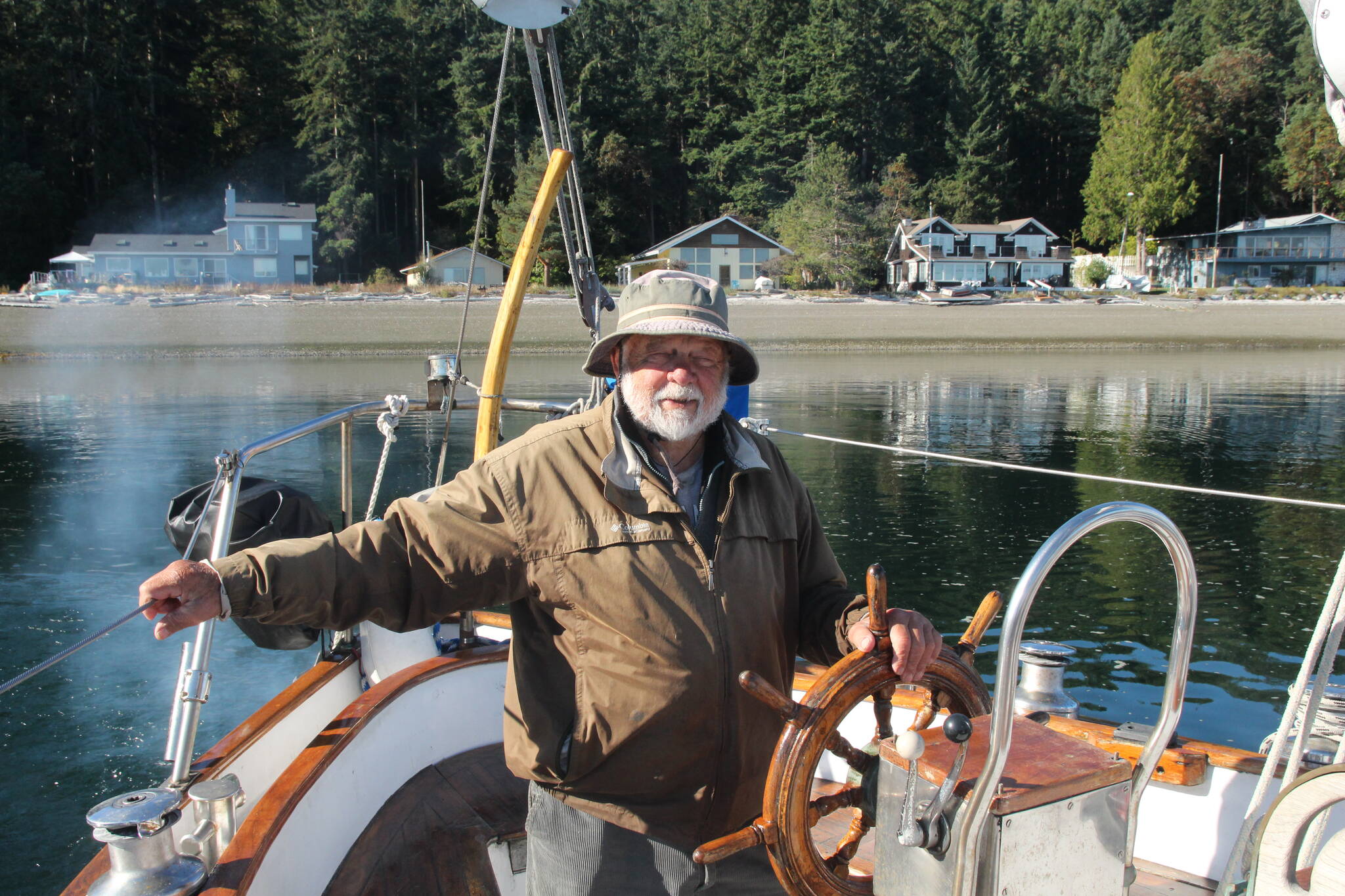
(Photo by Marina Blatt) Smith’s favorite pastime is steering his boat, the Culmination.
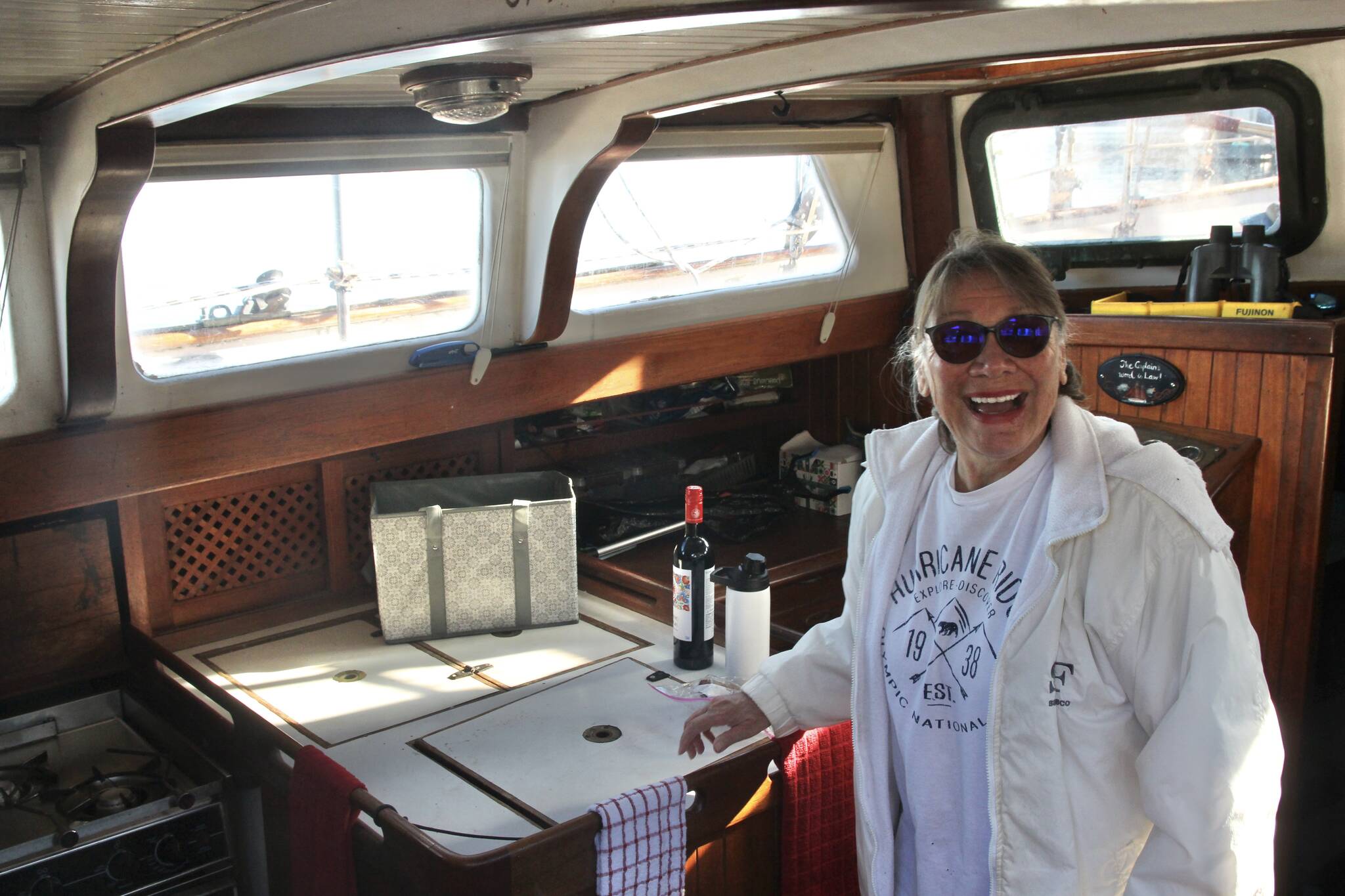
(Photo by Marina Blatt) Carla Holderman smiles inside the Culmination’s kitchen.