Cannibalistic deep-sea fish found on Whidbey
Published 1:30 am Tuesday, June 30, 2026
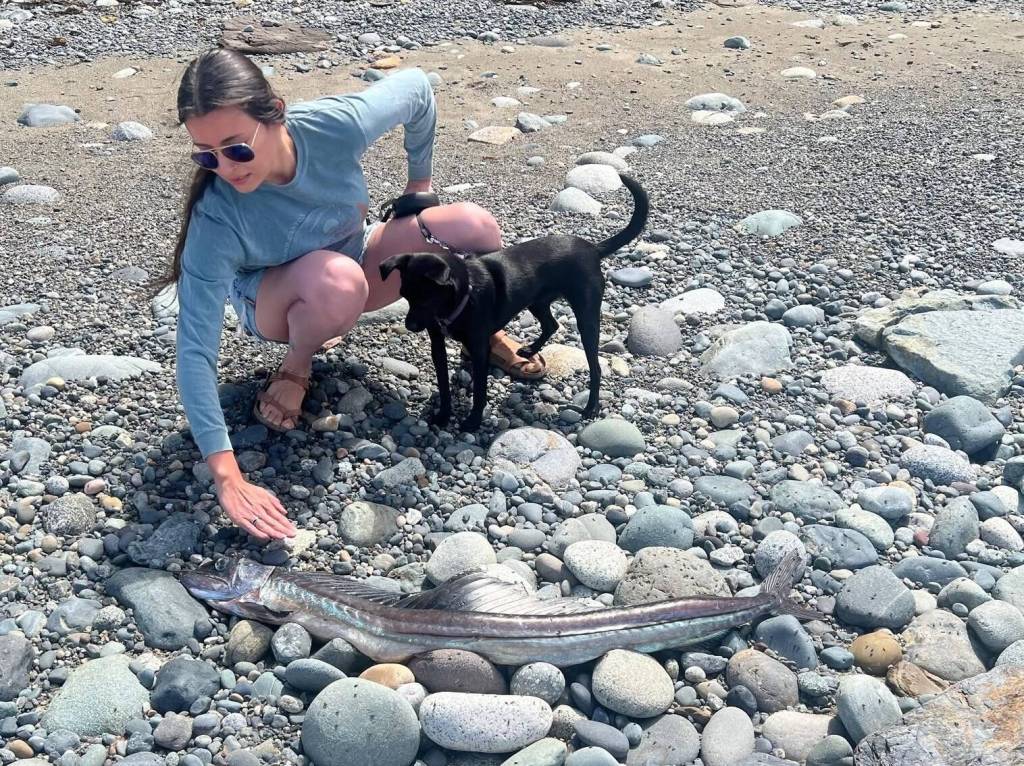
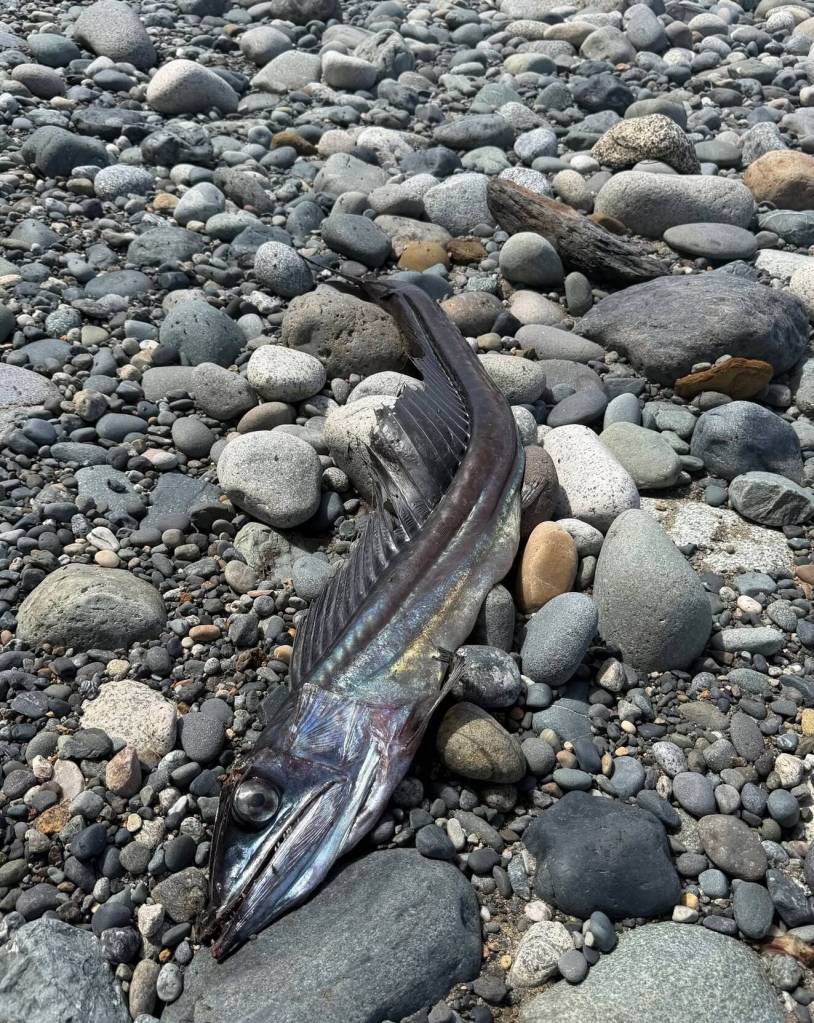

A cannibalistic deep-sea fish rarely seen in local waters washed ashore on North Whidbey last week.
Mia Gehrmann came across the deceased fish on June 24 at West Beach. She snapped a photo of the creature — capturing its almost iridescent sheen, pointy head and sharp teeth — and posted the image on Facebook asking for help identifying it.
A few commenters got it right.
Adam Summers, a professor in the University of Washington’s biology department, confirmed for the News-Times that the subject of Gehrmann’s photo is a “pretty fresh” lancetfish.
“Great looking fish and a wonderful skull full of pointy teeth,” he remarked.
NOAA Fisheries is a federal agency responsible for the stewardship of ocean resources. An article it published in 2022 described lancetfish as “notorious cannibals” which also tend to feed on other fish and invertebrates, hence their sharp teeth. Members of the species are scaleless and hermaphrodites, meaning they possess both male and female sex organs.
Lancetfish can grow upwards of 7 feet long. Another photo posted by Gehrmann suggests the fish was close to that length.
NOAA Fisheries noted that lancetfish swim about a mile below the sea surface and mainly reside in tropical and subtropical waters. But they have been known to migrate far north. Several have been found in the Gulf of Alaska, near the Aleutian Islands and in the Eastern Bering Sea.
Summers is unconcerned about lancetfish washing ashore on Whidbey Island.
“They have been washing up with about the same, very rare, regularity as long as I can remember,” he said.
Although lancetfish normally inhabit deep water, they occasionally enter straits. Summers said those that wash ashore likely become disoriented after swimming into shallow water.
“Once confronted by a sloping bottom, high currents and tidally varying depths, the fish is in deep trouble,” Summers added.