Rockin’ a Hard Place: An untypical woman of her time is celebrated in new novel
Published 1:30 am Tuesday, May 26, 2026
Teresa Di Biase is a novelist with a passion for history. She also has a passion for her religion, the Episcopal Church. And, from her home on South Whidbey, she has recently completed a well-researched historical novel about a remarkable woman involved in the church who turned personal tragedy into a life dedicated to people pushed to the margins.
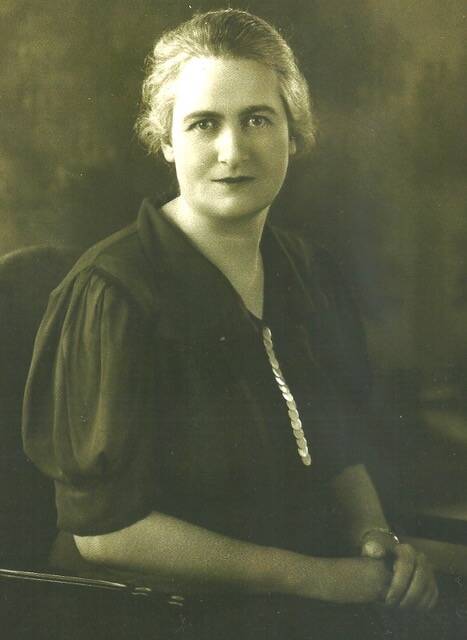
The novel is entitled “The Second Mother,” and its subject is Margaret Guthrie Peppers, who was born in Iowa in 1894 and died in Los Angeles in 1952. She was an untypical women of her time and her life took various directions.
Teresa first learned about Margaret Peppers in the mid-1990s, when she was commissioned to write a chapter for the centennial history of the Episcopal Diocese of Western Washington.
“In the archives of the diocese, I found an article from the Seattle Times in the mid-1940s about Margaret as she was preparing to help local Japanese American farmers when the federal government was relocating them to a camp in Idaho during World War II,” Teresa said. “That tweaked my interest in wanting to know more about her.”
Margaret Guthrie married Hal Peppers in 1910, when she was just 16. Her daughter Ruth Peppers was born a year later. The family moved to California, where Hal was raised. He died of tuberculosis in 1914, leaving Margaret with no place to live and no income to support herself and her daughter.
This is where the Episcopal Church enters the picture. Margaret was accepted into the church’s school in Berkeley where women were trained to be deaconesses and serve as missionaries to underserved populations. After completing the training in 1918, she went to the Philippines, where she worked and was paid by the church at several sites, including a rural mountain area and an orphanage in Manila that served mixed-race children, often the result of liaisons of American sailors with local women.
That started her on the path to what might be called Second Motherhood. She cared deeply for the orphans. Her own daughter was not with her; she lived with her father’s sister in California and felt somewhat abandoned by her mother. They did eventually reconcile years later.
Margaret was in the Philippines for ten years, through 1928. When she returned, she went to work for the diocese in Seattle serving in the church’s new rural ministries program, targeting people who lived in areas where there was no church presence. She went to mining camps and small villages, and worked frequently with Japanese American farmers.
During the depression, funding for the rural ministries program was eliminated. Margaret was then assigned to two parishes with large Japanese American congregations. And, as the war began, she spent months helping these people pack up and get on buses headed for the Minidoka incarceration camp in Idaho.
“No white ministers were allowed to be in the camp but Margaret petitioned the authorities to go there,” Teresa said. “She found a place to live outside the camp so she could visit the farmers inside and pray with them.”
After the war, many of the Japanese Americans she knew moved to the Midwest. Margaret went to her bishop and asked for a new assignment.
In the late 1940s, she spent a year working as a missionary to Navajo people in Arizona. She was forced to retire when her health failed. She lived with her daughter until she died.
“I novelized Margaret’s incredible journey and created dialogue to flesh out this remarkable story,” Teresa said. “I see her going from being a more enlightened person taking the gospel to others to a place where she identified with the people she served, like the Japanese Americans.”
Margaret Peppers certainly was an untypical woman of her time.
“Second Motherhood” is available for purchase at local bookstores or on Amazon. Teresa will speak at a book launch party on Saturday, May 30 at 2 p.m in the fellowship hall at St. Augustine’s-in-the-Woods Episcopal Church at 5217 S. Honeymoon Bay Road in Freeland.
Harry Anderson is a retired journalist who worked for the Los Angeles Times and now lives on Central Whidbey.