New book feathers Whidbey’s iconic red-footed bird with fame
Published 1:30 am Tuesday, May 12, 2026
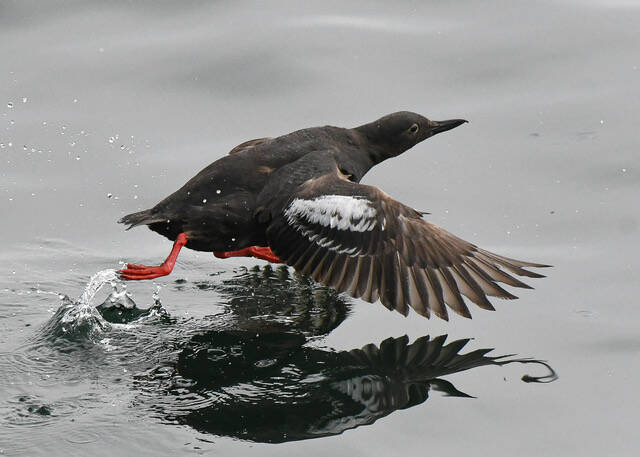
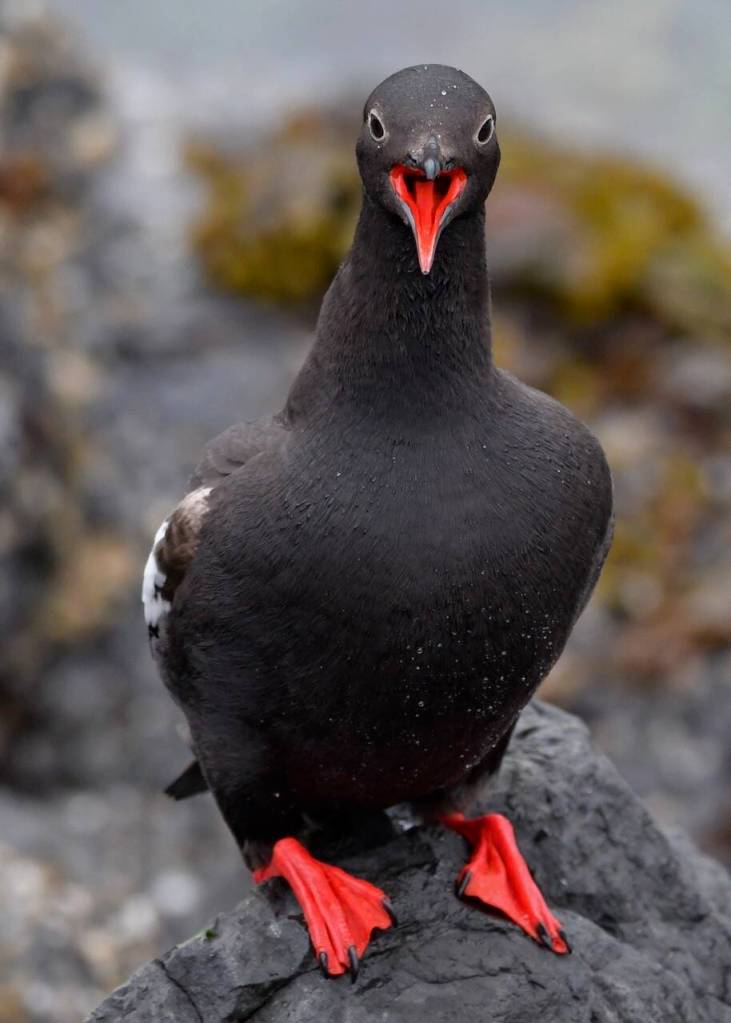

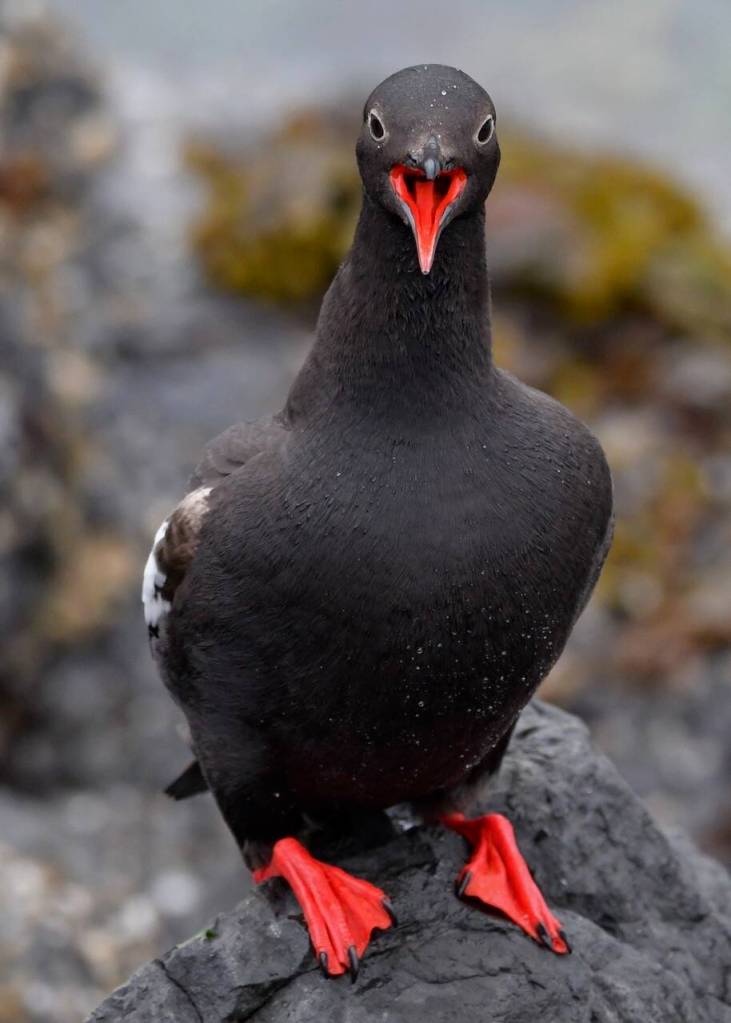


Whidbey Island’s beloved bright-footed seabird, pigeon guillemot, is flying high.
At numerous events round the Pacific Northwest — libraries, book stores, birding groups, even a literary salon — the clownish-looking, charismatic, chatty seabird with the strange French name is the species du jour. It even appeared in the recent Procession of the Species annual parade in Olympia.
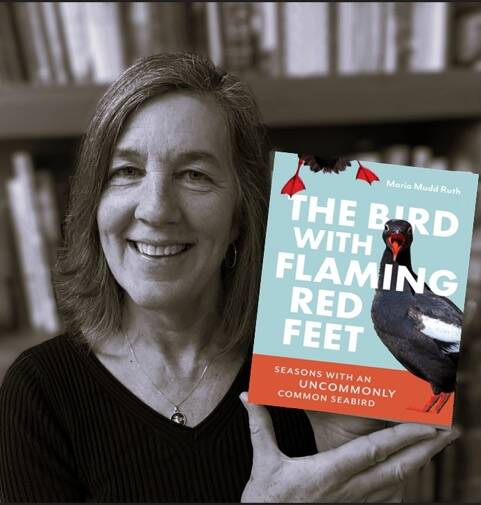
A new book, “The Bird with Flaming Red Feet: Seasons with an Uncommonly Common Seabird,” delves into the habits, habitat, behaviors and breeding of the stout black, white-winged and red-accented birds frequently seen on Whidbey beaches, bluffs and bopping around its ferries.
Written by Olympia author Maria Mudd Ruth, the 200-page book is a mix of historical research, personal reflections and interviews and interaction with biologists, wildlife officials and individuals and groups devoted to learning about pigeon guillemots in their natural setting.
Thursday evening at Coupeville Recreation Hall, Ruth will speak on “The Joys of One-Bird Birding.” The free event is sponsored by the Whidbey Audubon Society, which has been integral in raising awareness and gathering data about pigeon guillemots, alternately known as pidgemots, guillies, PIGU, PGs or simply, the ‘black and white bird with red feet.’
“I think the idea of “one-bird birding” really appeals to people,” Ruth wrote in an email. “By paying close attention to just one bird, its behavior, its environment, and how it responds to its environment over the days, weeks, and seasons can be a deeply satisfying way to bird and deepen your sense of place.”
The book is dedicated to Frances Wood and Phyllis Kind and other “Guillemoteers” of the Salish Sea Guillemot Network. More than 20 years ago, Wood and Kind, residents of Whidbey Island and avid birders, organized a data collection system to observe and learn about the seabirds that breed every summer along the island’s beach burrows and bluffs. (Their range is the North Pacific Ocean from the equator to the Arctic Circle.) Back then, Wood found little information about the Puget Sound population of the pigeon guillemot, which actually isn’t a pigeon and doesn’t speak French. The name, pronounced GILL-uh-mott, is derived from the French word Guillaume, or William.
Ruth traces the vast amount of knowledge gained over the past two decades on the local guillemots back to a moment in Wood’s life.
In the summer of 1997, Wood was living in Seattle and visiting Whidbey regularly to conduct bird surveys in the woods. One day, she took a lunch break on the beach and noticed playful bright-footed birds frolicking in the water and flying into bluffs. Although she’d spent every summer of her life vacationing on Whidbey, she’d never spent time watching these birds.
“These avian clowns began to awaken a dormant playfulness deep inside me,” Wood wrote in her 2004 book, “Brushed by Feathers: A Year of Birdwatching in the West.” “First I mimicked the head bob, then got to my feet…shed my jacket and tried a little dance of my own. Then I listened for the guillemots’ trill, and my dance changed into a soft, flowing ballet.”
When Wood later moved to Whidbey, she started writing a birding column for the South Whidbey Record and Whidbey News Times. Wood met Kind, a retired PhD scientist in microbiology, immunology and genetics, when she sought volunteers to join her kayaking and search for guillemot breeding sites. Their partnership led to the first community science project of 28 volunteers called the Pigeon Guillemot Breeding Survey. The data is used by the University of Washington, Washington Department of Fish and Wildlife and Puget Sound Partnership.
“The survey has grown to seven regions in the Puget Sound area and we are starting three more regions in British Columbia this summer,” Wood said. Renamed the Salish Sea Guillemot Network, observers are assigned to sites around Puget Sound, spending one morning every week for about 12 weeks observing nesting activity.
The surveys help understand the guillemots’ population dynamics, what role they play in maintaining a healthy coastal ecosystem, and the importance of protecting the bluffs. There’s now about 250 volunteers regionally.
“This is 250 pairs of eyes and ears on the beach, the bluffs, and on thousands of guillemots every summer,” said Ruth, who joined the survey in 2013. “I think our contribution to the knowledge of PIGU in the Salish Sea is enormous and unique. And because we have long-term data sets going back to 2004—this makes the data even more valuable for scientific research.”
Ruth insists she’s not a birder, labeling herself an “accidental naturalist,” even though this is her second book devoted to one bird.
Her 2005 book called “Rare Bird: Pursuing the Mystery of the Marbled Murrelet” takes readers into the old growth forests of the Northwest in search of the seldom-seen nests of the marbled murrelet. The coastal bird, known for its elusiveness, is threatened by logging, urbanization and oil spills. Although both birds are members of the alcid family, they differ in many ways.
The marbled murrelet is an introvert, the guillemot the class clown. The murrelet is boring mottled brown, the guillemot a flashy fashionista prone to loud shoes and messed-up lipstick.
“They are at nearly opposite ends of the spectrum in their life histories and personalities during their breeding season,” Ruth said. “I really didn’t plan on writing another bird book, especially another alcid. I guess I assumed all alcids were more or less like the marbled murrelets—not that fun to watch on the water and barely watchable around their nesting sites.”
All that changed when she sat on a beach and watched a funny-looking bird not many people seemed to know about and fewer could pronounce. (Its cousin is the puffin, the most famous of the 24 members of the web-footed, diving seabirds known alcids or auks.)
“Here was a playful, social, entertaining seabird that gathered just offshore in groups of tens to a hundred or more birds in Puget Sound,” Ruth recalled. “They were vocal to the point of ‘chatty.’ They rested, courted, and mated on the beach in plain sight.” (For more on that topic, consult chapter 12, Sex on the Beach.)
She was smitten — again. And smiling.
“I didn’t know that laughing while birding was possible,” Ruth writes in the first chapter. “Their energy and glorious exuberance transform mere behavior into performance. It’s not Swan Lake, mind you, but closer to a wacky improv skit.”
Info box
Author Maria Ruth Mudd speaks 7 p.m. Thursday, May 14 at Coupeville Recreation Hall, 901 Alexander Street, Coupeville. Event is free, sponsored by Whidbey Audubon Society, www.whidbeyaudubonsociety.org.
Read more about the book and author at www.mariaruthbooks.net/guillemots. Salish Sea Guillemot Network is at www.pigeonguillemot.org.