Council weighs federal program meant to promote economic growth
Published 1:30 am Friday, May 1, 2026
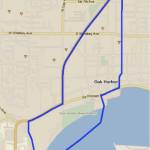
Oak Harbor city leaders weren’t completely sold on a proposed new version of federal Opportunity Zone designations.
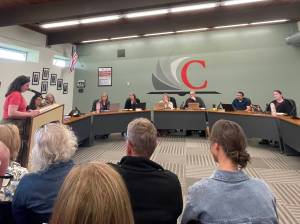
At an Oak Harbor City Council workshop Tuesday, Community Services Director Stacy Pratschner presented an overview of what she described as an updated economic tool for “under-invested rural communities.” Though Oak Harbor has already had an opportunity zone for nine years in the central business area, no one has yet taken advantage of it.
The Opportunity Zone program is meant to promote economic growth and job creation in low-income or select neighboring communities while creating tax benefits for investors, according to the IRS.
“Taxpayers who invest in Qualified Opportunity Zone property through a Qualified Opportunity Fund can temporarily defer tax on the amount of eligible gains they invest,” it states on the website. Additionally, properties held for more than 10 years can yield additional tax savings on appreciation, a feature intended to encourage long-term development.
Oak Harbor’s designated opportunity zone will be in place through 2028. Yet, staff’s proposed “Opportunity Zone 2.0” would extend designations through 2036, and Pratschner noted it is designed to attract more investment than the original version. The updated framework would include permanent designations, expanded eligibility for investment and additional tax deferrals to encourage participation.
Councilmember Bryan Stucky said even business people he spoke with couldn’t tell him what an opportunity zone is. Though he didn’t see a big problem with pursuing an opportunity zone 2.0, he worried it may necessitate too many demands from staff and might not accomplish what they are hoping for.
“I honestly just don’t see it being used more than once or twice by one savvy investor. And we can call that a win or not but, most people are not knowledgeable about it. It’s not well advertised. To me it’s just kind of a nothing to be honest,” he said.
Kristina Hines, the executive director of the Economic Development Council for Island County, acknowledged that lack of public awareness is a large barrier.
“It hasn’t been taken advantage of because people don’t understand what it is. It’s a tax process, right, so you need CPAs and attorneys who understand the processes, who understand how to open these qualified opportunity zone funds where capital gains money goes,” she said.
However, there is a hidden advantage of having an opportunity zone in Oak Harbor: those investments are not limited geographically, she noted.
“An investment in New Jersey that generates capital gains can go into a qualified investment fund here to invest in a project here,” she said. The potential could be significant, particularly as the city looks to revitalize its downtown core, Hines noted.
Even so, Mayor Ronnie Wright advised that broader tax policy changes could undermine the program’s relevance.
“It will be interesting to see how current tax legislation changes are going to impact this as well,” he said. “Because I think now that this is going to become a moot point. But that’s just me.”
Mayor Pro Tempore Tara Hizon was tentatively optimistic about implementing an opportunity zone 2.0.
“I think that you know that any incentive or opportunity we can provide is something that is worth looking into, so I would support moving forward just so we have another tool in our toolbox, provided that it’s not going to be too much of a strain on staff time and resources,” Hizon said.
Still, she said it might not be worth the labor strain on staff if it won’t be taken advantage of.
Pratschner reassured the council that staff capacity would not be a major obstacle.
“We got it,” she said.
Councilmembers Barbara Armes and James Marrow advocated to give the zoning a shot.
“Nothing ventured, nothing gained,” Armes said, suggesting the city could pursue designation and reevaluate if it fails to generate interest.
“We won’t know unless we try,” Marrow agreed, pointing to limited promotion and training as key obstacles.
Still, even with Pratschner’s assurance, some remained unconvinced.
Councilmember Sandi Peterson said she shares the mayor’s concerns about whether the program will attract investors. While acknowledging success in other communities, she questioned its track record locally and also asked whether staff time could be better spent elsewhere.
“But maybe that’s a Ms. Aguilar issue for getting the word out. I don’t know. It’s a big crapshoot to me. And I don’t know that I like our staff spending time on ‘maybes’.”
Councilmember Eric Marshall emphasized that lack of participation could reflect a lack of awareness rather than a flaw in the program itself. He noted that information about opportunity zones is largely confined to the economic development council’s website and suggested broader outreach.
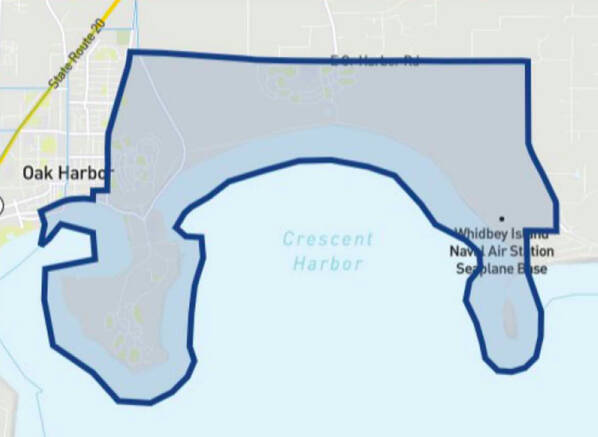
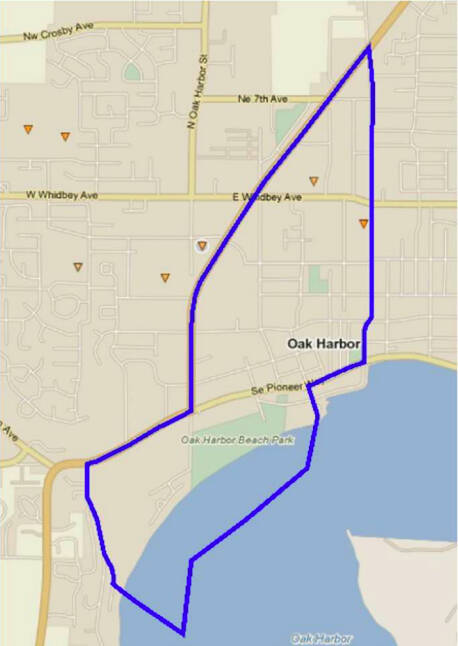
Two local “census tracts” in Oak Harbor would likely qualify for designation under the new program. One covers the downtown central business area and the other extends from Pioneer to Seaplane Base. The city can apply for one or both when the application window opens May 1 and closes May 28.