Coupeville School Board adopts $1.1 million in cuts
Published 1:30 am Friday, May 1, 2026
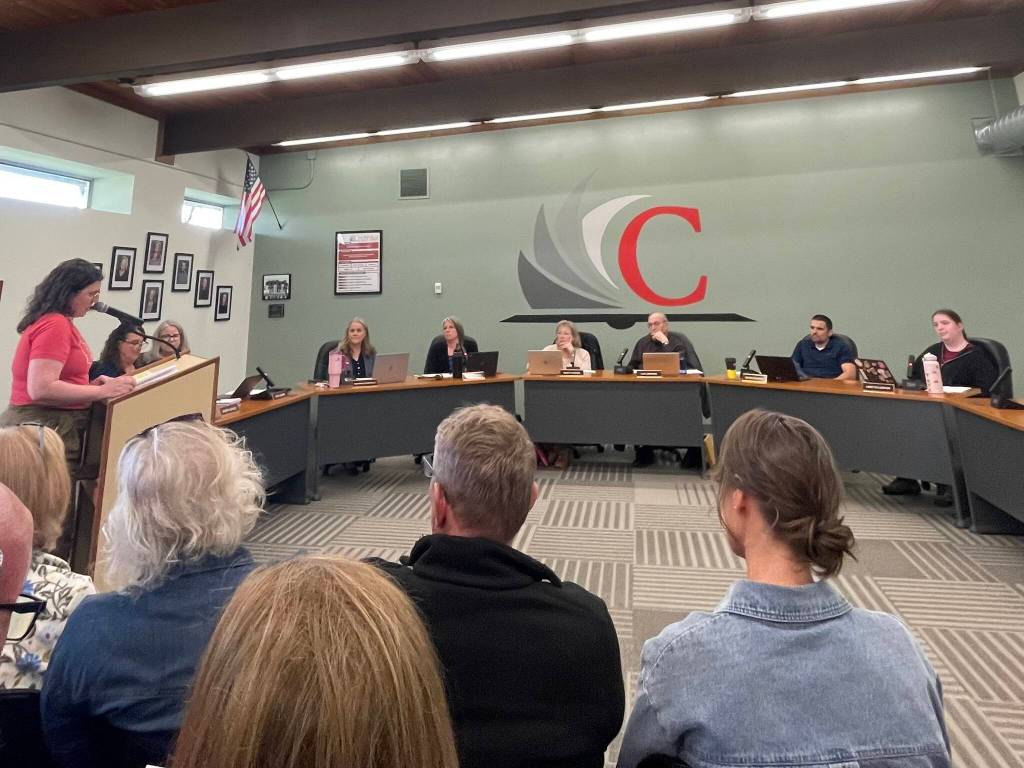
The Coupeville School Board voted unanimously on Thursday for a modified education plan that will cut $1.1 million across the school district budget, which may result in the loss of six employees.
The meeting was packed with teachers and other staff, as well as students and parents. Many expressed concern that the cuts will affect basic education in the classrooms. Others discussed the survey conducted by two school district unions, which found widespread staff concern with the superintendent and school board.
Coupeville Education Association Co-President Katja Willeford spoke to the room, warning that the cuts could fall disproportionately on employees working most closely with students.
“Tonight we have a very critical stance we have to take because the provisions of the modified education plan need to be addressed,” Willeford said.
The plan, first introduced earlier in the month, proposed reductions affecting teachers, para-educators, janitors, food service workers, secretaries and other school-based staff. She added that the proposal largely spares central administration while removing vital classroom staff members. That concern was echoed by Shelly LaRue, president of the Coupeville Educational Support Association, who argued during the public comment period that the plan targets employees with the most direct student contact and the lowest pay.
“That tells us that people supporting these decisions do not fully understand the work that we’re doing,” she said, highlighting the depth of experience among staff. Para-educators collectively represent more than 240 years in public education, while secretaries contribute nearly a century of experience.
Willeford emphasized that staffing reductions appear disconnected from enrollment trends. While student full-time equivalent numbers have remained relatively stable since 2019, fluctuating within about 100 students, certificated staff positions have dropped significantly, from 66 to 53. Now the district is considering cuts to its certificated FTE by more than 10%.
“And now you’re proposing cuts of up to six more FTE, leaving us a skeletal 47,” Willeford said before the vote, rounding up from 46.4.
Losing 21 certificated positions over time makes “little sense” given enrollment has stayed between roughly 900 and 1,000 students for years, she noted.
The scale of the proposed reductions drew strong reaction from union leadership.
“To say that it shocked the union to see the proposed cuts,” Willeford said, is an “understatement.”
“These are not interchangeable positions,” LaRue warned. Many staff members, she added, hold degrees, professional recognition and contribute beyond their job descriptions.
“All of them give their heart, their soul, their own time and money to this district,” she said.
As of March, Willeford said the ratio of FTE students to certificated staff sits at 17.4, aided slightly by recent partial hires. If the proposed cuts move forward, she warned the figure could approach 20. A larger ratio applies more pressure to certificated staff, Willeford said. She pointed to current class sizes, including more than 40 students in one middle school art class and over 50 students in a physical education class before a part-time hire provided relief. Next year isn’t any more promising, Willeford said, noting projections of more than 30 students per third-grade class and 28 in the second grade.
Willeford acknowledged broader financial pressures facing the district, including rising costs for supplies, insurance, maintenance and utilities, as well as insufficient state funding. Still, she argued that local funding decisions should reflect community priorities. District presentations, she noted, have referenced “additional staff” and highlighted that levy funds can support salaries.
“The community voted for these levies, and now you’re cutting programs and staff that best serve our communities’ children,” Willeford said.
Director At-Large Morgan White acknowledged the value of all staff, from teachers to central administrators, and asked what the union would propose instead. Willeford declined to offer specific cuts, emphasizing looking away from the classroom. Staff, she said, are already stretched thin.
Noting it isn’t an easy decision, White welcomed greater collaboration moving forward.
“We represent the community and we want to get that community voice. And you represent your union and I hope that you’re getting your union voice and that we’re all working together to do what’s best for our kids. That’s why we’re all here,” White said.
Outside of Coupeville School District, inadequate state funding, rising operational costs and declining student enrollment are challenges faced by the Oak Harbor School District, amounting to early projections for a budget reduction as large as $5 million or the 2026-27 school year, according to its website. The district is aiming for a reduction of $3 million.
During a meeting in July 2025, the school board of the South Whidbey School District cited enrollment declines and a “detrimental” state funding model as obstacles it faces in the budgeting process as well.