State Ferries eyes parking lot for electrical equipment
Published 1:30 pm Friday, August 15, 2025

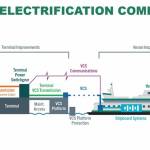
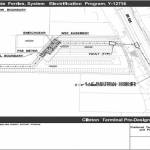
Washington State Ferries is seeking access to a parking lot owned by the Port of South Whidbey for ferry terminal electrification efforts, which could mean the loss of some long-term parking someday.
During a port meeting this week, Tammy Binschus, a project manager for State Ferries, gave a presentation about the agency’s electrification program. The Mukilteo-Clinton route is slated to receive two hybrid-electric boats constructed by Florida-based company Eastern Shipbuilding Group. The Clinton terminal will be electrified and ready to charge vessels starting around 2030, the second in the system after Seattle’s terminal.
Binschus explained that the pre-design study has been completed and the agency is moving into environmental permitting, which is expected to last a year and a half, possibly longer. Construction on the Clinton terminal will begin in 2027.
Separate from electrification efforts, adding overhead loading for walk-on passengers at the terminal will be happening on a similar timeline. When complete, foot traffic will no longer have to cross the car deck to disembark.
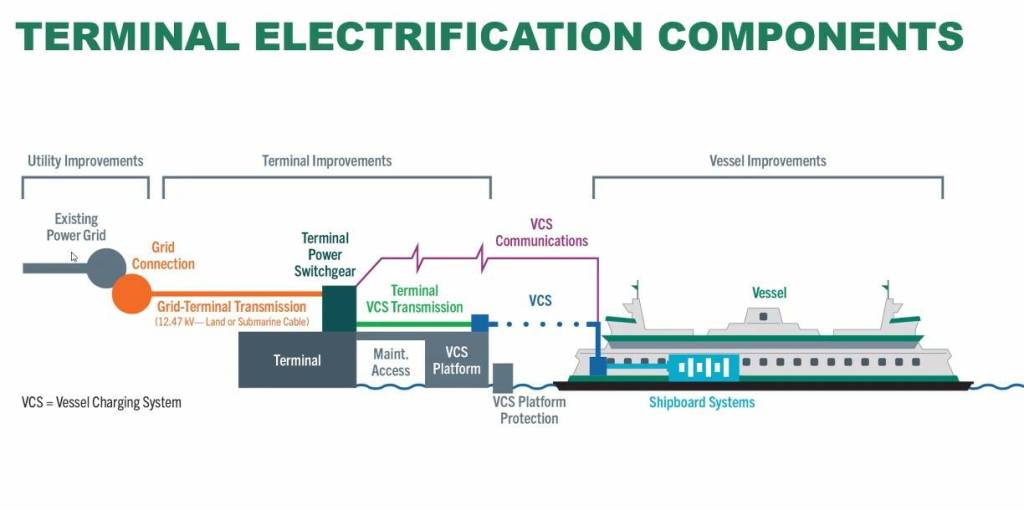
The goal of the electrification project is to deliver 500 amps of power at 12.7 kilovolts to the terminal. Binschus said Puget Sound Energy will bring power from the Langley substation down Highway 525 to the Port of South Whidbey’s property edge at the Humphrey Road parking lot, where the meter will be located. From there, the power will be transmitted to the terminal out to a platform in the water, where a charging arm will plug into the vessel when it’s at the slip unloading and loading passengers.
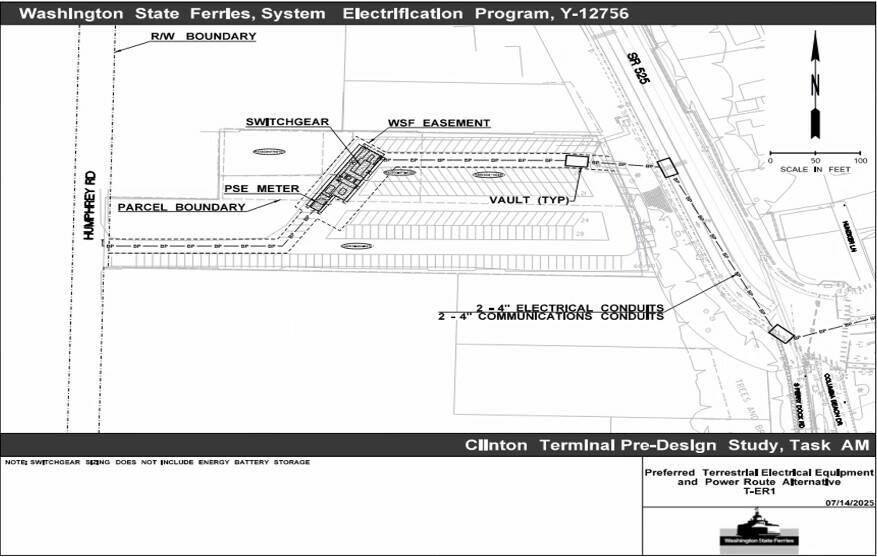
Binschus said PSE will put power underground into a joint utility trench along the highway, roughly 2.8 miles from the substation to the ferry parking lot. State Ferries is asking permission from the port commissioners to use parts of the parking lot for electrical equipment, known as the switchgear. The final design is not yet complete but Binschus estimated the footprint to be around 3,000 square feet or less.
State Ferries is seeking an easement for PSE to bring their power onto the property and for State Ferries to have its electrical equipment there.
Port Commissioner Curt Gordon asked if the northern part of the parking lot has less embankment than the southern part. Binschus responded that the conceptual drawings do not necessarily show the exact location of the switchgear.
“So as the team starts designing, they will be looking at much more information. We will be having geo-technical drilling testing, to test the soils,” she said. “And that information is going to tell us a lot of where the best place for us to come out of that parking lot and drop down the hill will be.”
She added that this will be at least a year away. Gordon said he brought up the northern part of the parking lot because it’s where stairs are located. Binschus said the only area where cars wouldn’t be able to park is the footprint where the electrical equipment is located.
Though the terminal has two slips, Binschus clarified that only the main one will be electrified. Gordon said he was going to keep asking about possibly getting power down to a passenger-only ferry dock that the port hopes to rebuild. Binschus said something like that could be in future negotiations, but power would have to come from PSE, not State Ferries.
“As this project progresses … as we’re dropping out of your parking lot and down the hill, we could potentially have spare conduits installed for you at that point,” she said, but added PSE will need to be consulted about what power is available for the passenger-only ferry dock.
Gordon asked what the next step is, and Binschus responded that the commissioners should make sure they’re open to letting State Ferries use the port’s property. She said a couple other locations were considered for the equipment, but there were no good options when factoring in high tides and private property.
The commissioners agreed they were supportive of the project. They will next consider approving a memorandum of understanding at a later meeting.
“It’s the future,” Gordon said of the project.
Andrew Padula, a PSE spokesperson, said Friday that the company conducts a feasibility and system impact study when customers, such as State Ferries, request new electric loads. As part of this, the impact on the grid is assessed. Design and engineering ensures the new load request does not negatively impact other customers.
“As we look to accommodate increasing electricity demand from all sectors — residential customers, commercial and industrial customers — we’re also looking at how we can partner to reduce demand at times of peak use, and for two-way uses of energy so that energy can be stored for use when demand is at its highest,” Padula said. “We’re currently piloting this functionality with school buses and have a program to learn more about and test future vehicle-to-grid projects.”