Jet noise study examines regional complaints
Published 1:30 am Tuesday, April 14, 2026
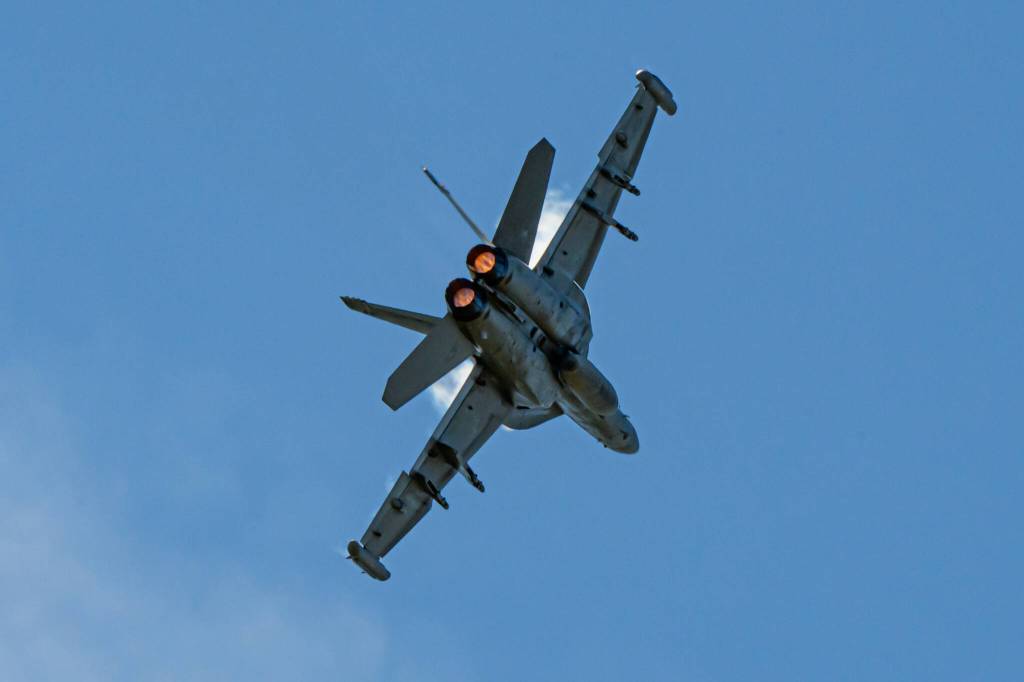
A recent study found that military service can affect people’s perceptions of EA-18G Growler jet noise, however, intense noise is impactful regardless of one’s background.
Sound Defense Alliance, which advocates against Growlers’ effects on the community, hosted a panel of researchers from the University of Washington and Omnifishient Consulting on March 26 to discuss the study’s findings. Ultimately, the study aimed to understand how exposure relates to community responses and how noise complaints characterize the lived experience of jet noise exposure.
The first part of the study involved a randomized survey conducted in 2024, and the second analyzed the verbiage of jet noise complaints.
Researchers mailed postcards to 10,000 households in nine counties, including households on Whidbey. Postcards linked to the survey and asked for people’s thoughts on their experiences with jet noise originating specifically from Naval Air Station Whidbey Island.
Comprised of required and optional sections, the survey inquired about people’s exposure to jet noise and its impacts on general health, stress, sleep, annoyance and more. It also inquired about respondents’ perceptions of the military and the base.
“It was actually a pretty lengthy survey because we asked so many questions about the noise experience,” Edmund Seto, with the UW School of Public Health, said, “but also a variety of different health impacts.”
Limited funding meant that the study could not redistribute postcards to recipients who initially did not respond, so the survey only received 663 responses. Those responses were distributed well across the area of predicted noise exposure. Notably, 31% of respondents currently or formerly served in the military.
Respondents rated jet noise as much louder than other common sources of noise, like roadway traffic and commercial aviation; the study also found that people’s perceptions of jet noise levels corresponded to the actual noise levels.
Those with a history of military service reported feeling similarly annoyed about high jet noise levels as those without a history of service, although they differed when it came to low jet noise levels.
“Noise exposure affects both people who have served in the military as well as folks who haven’t served in the military. It’s just that for lower noise levels, perhaps the history of armed service makes them less sensitive to noise,” Seto noted.
For the second part of the study, researchers collected jet noise complaints submitted to Quiet Skies Over San Juan from 2017 to 2020 and to the Navy’s jet noise complaint line from 2021 to 2023. Counties in the noise complaint dataset included Clallam, Island, Jefferson, San Juan and Skagit.
Using sentiment analysis, researchers were able to “convert the complaint into something that quantifies the intensity of emotion” conveyed, Lauren Kuehne of Omnifishient Consulting explained.
“We can also use the text in the complaints to classify complaints into categories, to try and demonstrate or document both the range of different categories of impact or different types of impact, and then also the prevalence,” she added.
The analysis found that negative sentiment towards jet noise could be found around airfields, but also outside the area of modeled noise exposure. Complaints frequently reported disruption to things like sleep and relaxation. Field carrier landing practice notices were found to be reliable predictors of jet noise complaints.
Community noise monitoring efforts are important, Kuehne explained, because noise regulation is weak.
“And that leads to very, very, very low information environments, and it also leads to limited levers, political levers, that you can pull, or legal levers, that you can pull in order to enact change,” she said.
The Oak Harbor Navy League did not respond to a request for comment. Mike Welding, the base’s public affairs officer, declined to comment.