PBY hitches helicopter ride to new home
Published 1:30 am Friday, January 23, 2026
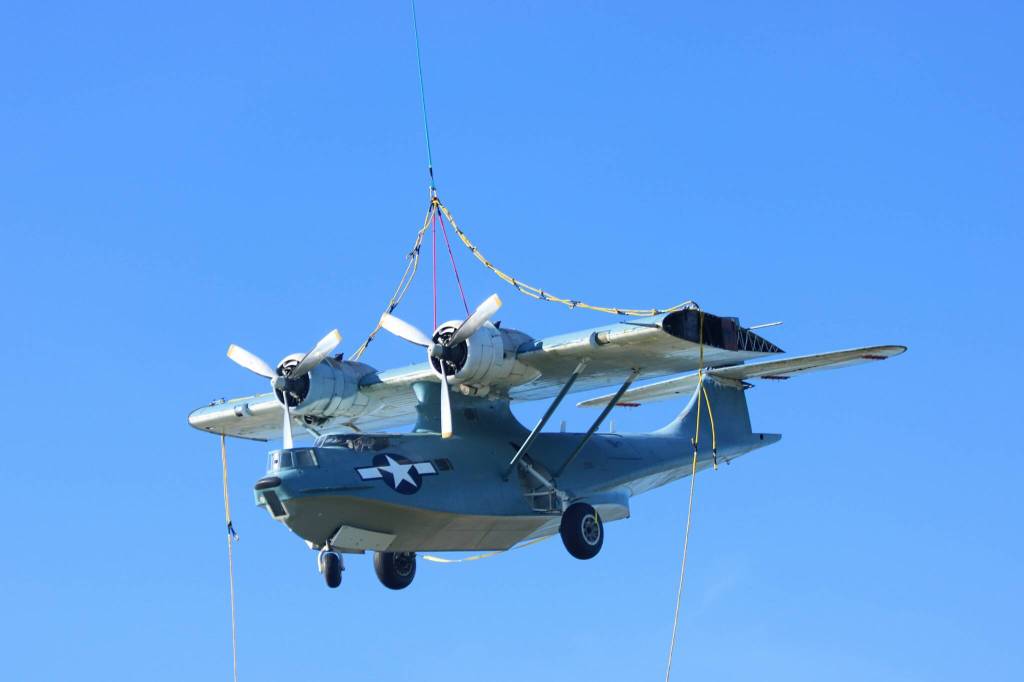
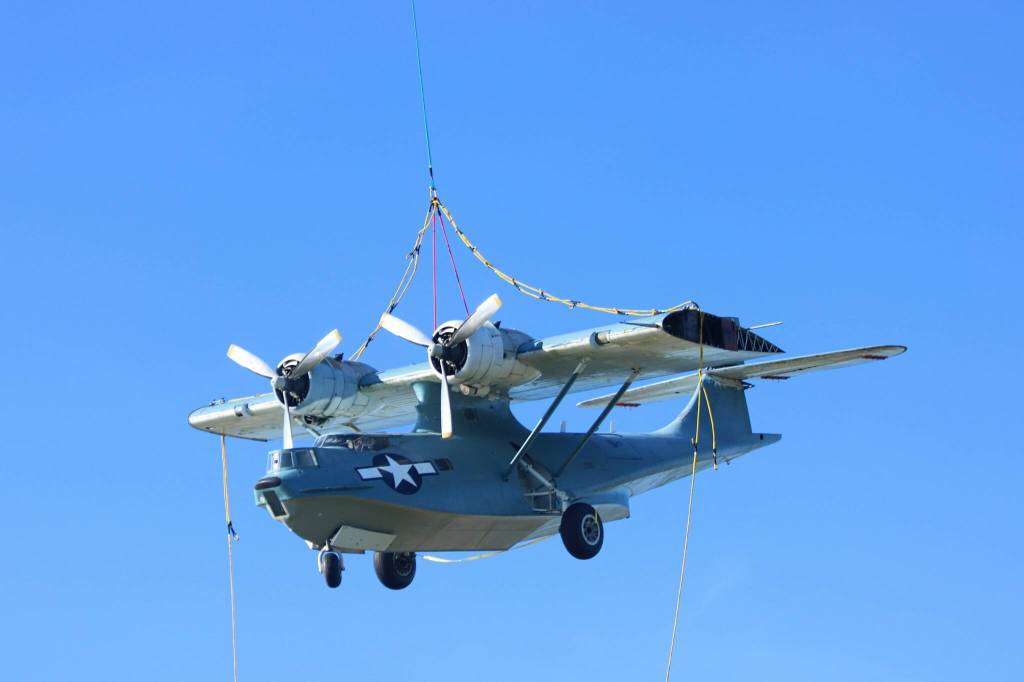
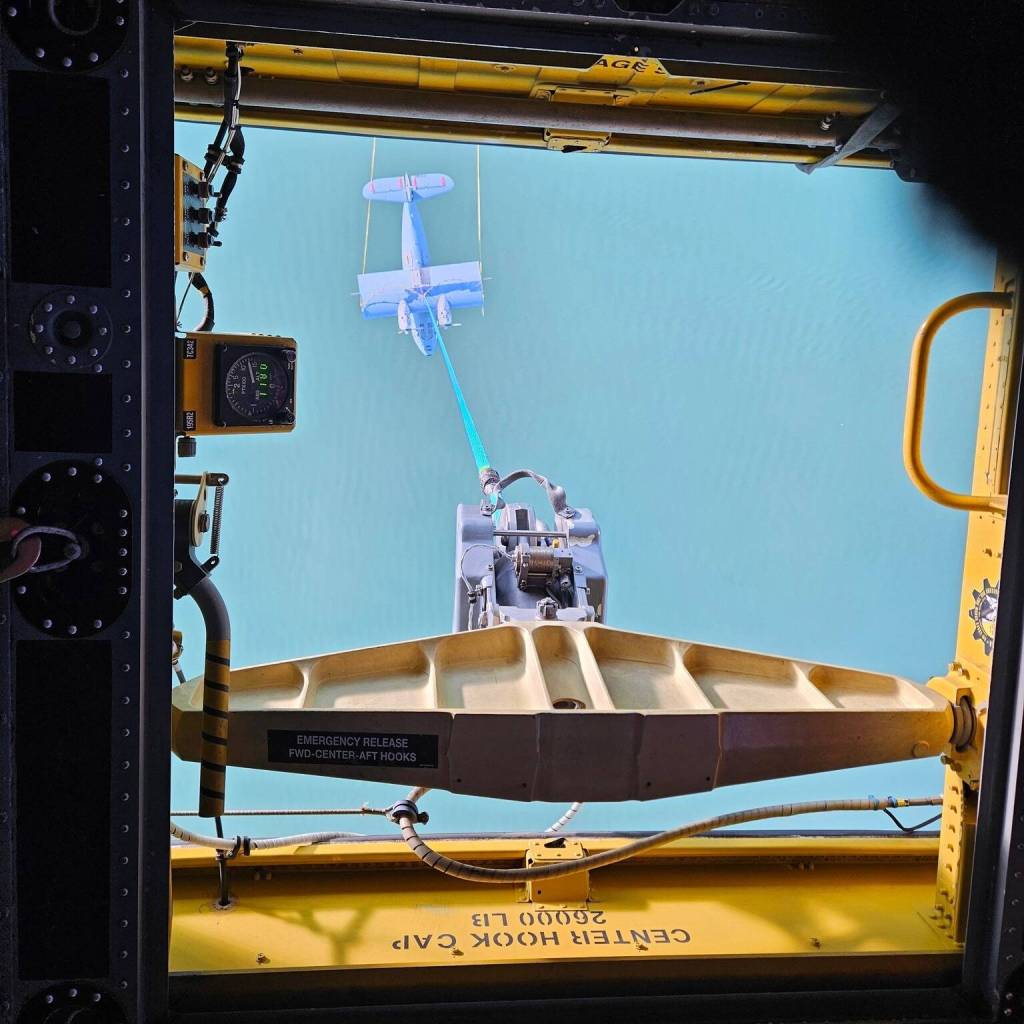
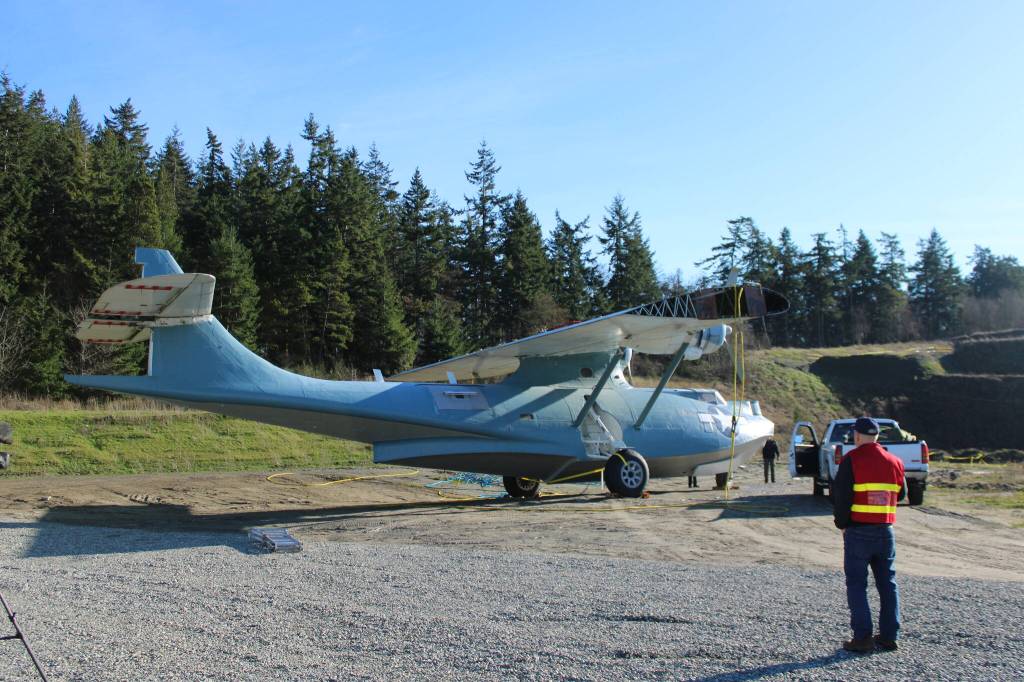


It’s a bird, it’s a plane — actually, it’s an amphibious patrol bomber.
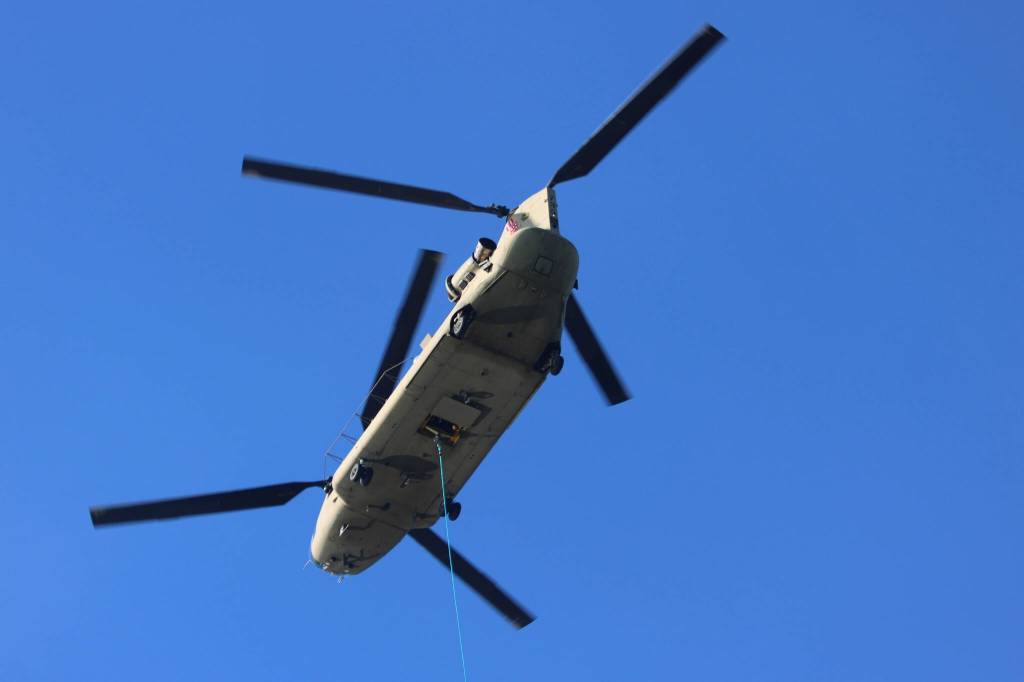
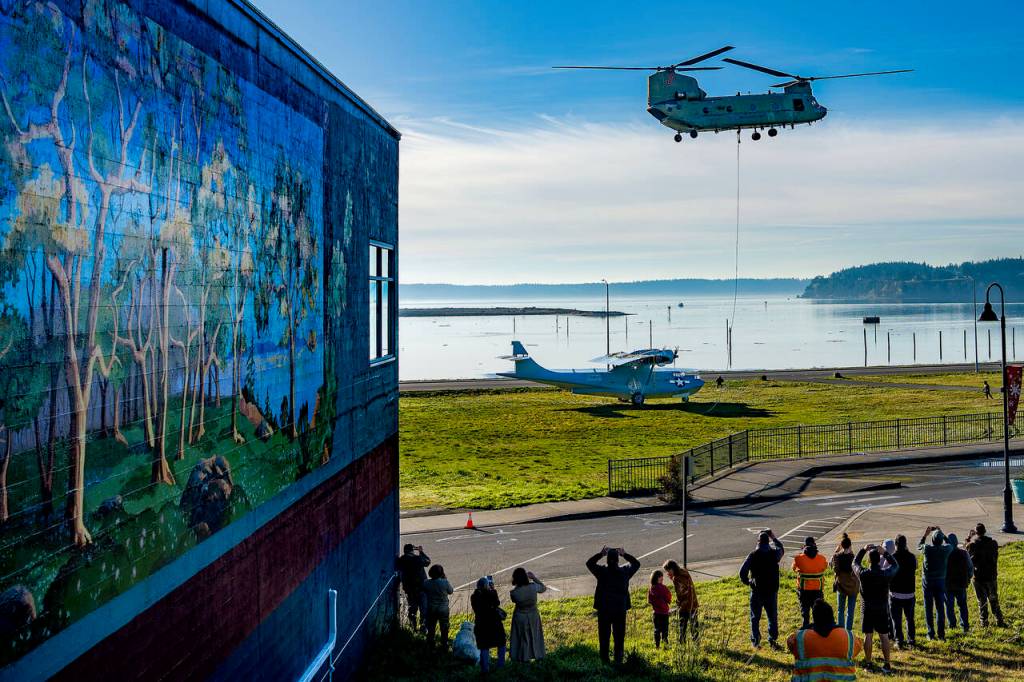
Wednesday, the Pacific Northwest Naval Air Museum’s World War II-era PBY-5A Catalina took flight for the last time in a uniquely Whidbey spectacle. Airlifted by a Washington Army National Guard Chinook helicopter, the PBY landed safely at the museum’s new location on Ault Field Road that afternoon.
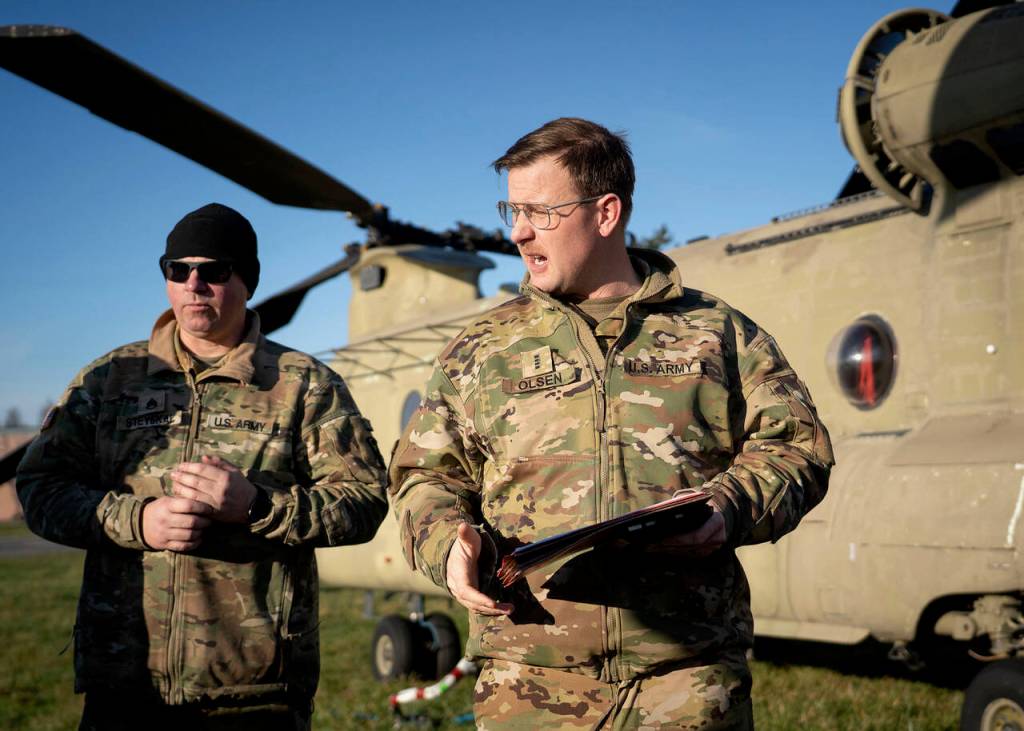
Barry Meldrum, the museum’s executive director, appreciates the Washington Army National Guard’s professionalism and dedication throughout the process of planning, then executing, the airlift. To have finally transported the PBY is a “relief” for Meldrum.
“I got a good night’s sleep last night,” he joked in an interview on Thursday.
Issues with the Chinook’s grapple system and the PBY’s positioning while suspended forced the airlift, originally planned for Tuesday morning, to be postponed a day.
While the approach to the airlift remained largely the same, a few adjustments were necessary ahead of Wednesday’s attempt to ensure the PBY became airborne safely.
A different Chinook helicopter sling-loaded the PBY and carried it to its destination. Doubling the length of the cable carrying the PBY from 150 to 300 feet reduced the effect of rotor wash, the powerful wind created by helicopter blades which caused the PBY to angle upwards instead of downwards as intended. Straps were applied to the wheels to prevent them from turning during takeoff and touchdown.
“It was a great learning experience for everybody, especially on that first day,” Meldrum said. “And I don’t think (the Washington Army National Guard) would have seen that first day as a failure. I think they would just see it as a process of getting it done.”
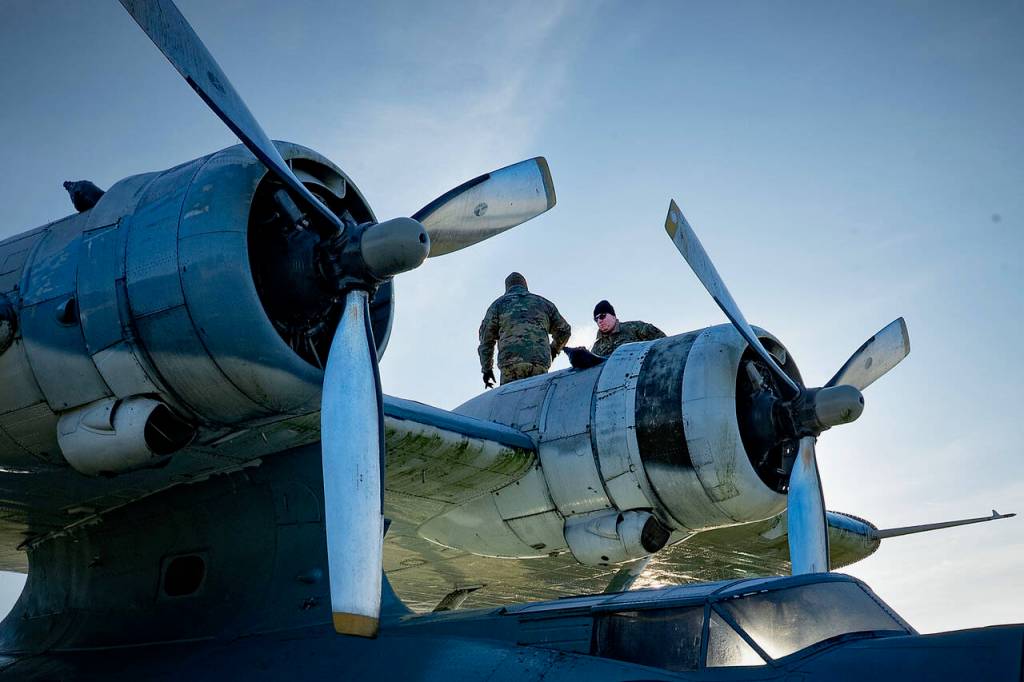
An assessment revealed no damage had come to the 83-year-old aircraft once the Washington Army National Guard “gently deposited” it at the museum, according to Meldrum. Museum volunteers planned to move the PBY to a pad on the museum’s property on Friday. Over the next several months, the PBY’s wings will be reattached, its corrosion will be addressed and, eventually, it will be repainted.
“Luckily by the spring we’ll be open for at least exterior tours, and then shortly after that we’ll open up again for our summer season of internal visits,” Meldrum explained. Viewers are asked to remain at a “safe distance” for now, he added, while the aircraft is “under construction.”
Meldrum is encouraged by the support the museum has received from the community over the course of the airlift, both in-person and online. It bodes well in the likely event the museum makes another acquisition.
“It makes us want to think about looking at another airplane in the future,” he said. “That’s a teaser.”