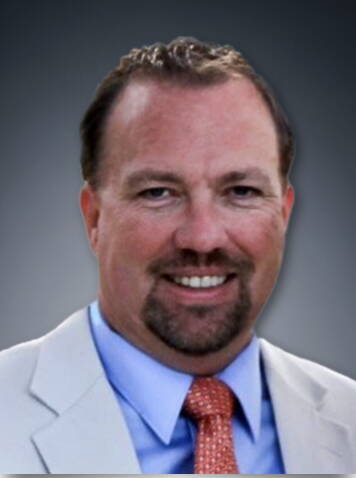
The WhidbeyHealth board fired hospital CEO Nathan Staggs in a hasty 3-2 vote Thursday but then rescinded the decision after the medical staff descended on the meeting en masse to passionately decry the action.
On Friday, Hospital Commissioner James Golder resigned.
During the board’s regular meeting Thurday, doctors, nurses and other medical staff members criticized the board, threatened to quit and discussed recall elections while offering unyielding support for Staggs. At one point, the executive team walked out.
Several people spoke about how past boards had hired a sad parade of unqualified and toxic CEOs over the past decades and that Staggs was finally someone they could get behind.
“Now you have a medical staff who actually likes the CEO,” Dr. Robert Johnson said, “has increased their morale phenomenally. We’ve seen increased services, we’ve seen increased productivity and now you want to reverse course and go back to those type of CEOs? Are you kidding me? This is a hit job.”
Hospital Commissioners Golder, James Canby and Dr. Mark Borden voted to terminate the CEO while Marion Jouas and Dr. Kirk Gasper voted against the motion. The meeting was the first for Borden and Gasper, who were elected in November. Canby was also elected in November but had been appointed to the board earlier last year.
The hospital commissioners voted 3-2 to remove Jouas as president of the board and replace her with the former president, Golder, before later reversing that decision too.
Staggs and several others claimed that Golder was behind the termination and that he was upset with the CEO for calling him out on unethical behavior, which led to Golder being removed as the board president last year.
“This is you retaliating against me for bringing up issues about you,” Staggs said after being fired. “So it’ll be handled in court.”
Golder said the action was about finances.
“I mean, you’re running this hospital into the ground,” he said to Staggs, later claiming that the hospital was near closing.
Others in the room countered that the financial situation was the best it has been in years. Staggs said Golder’s claim that the hospital was more in debt today than when he arrived was “a lie.”
During a presentation after the drama, CFO Paul Rogers said the hospital had 27 days of cash on hand in December 2025, which was up from 11 days in December 2024.
Throughout the meeting, Jouas was pointedly critical of the effort to terminate Staggs and the unusual way the action occurred, apologizing to Staggs and saying that a “voting bloc” on the board was “hellbent” on getting rid of him.
“There is no cause to terminate this CEO,” she said. “…This is obviously a railroad job to remove the CEO. He has done great things here. Much of the medical staff is highly appreciative of him as is everyone in the hospital.”
Later in the meeting, Gasper reiterated what had occurred for the benefit of a growing audience and said he was shocked.
“It was rammed through very quickly without any discussion, certainly without any way to prepare for it,” he said.
The board voted 3-2 to name Gregory Rickner as the interim CEO. Jouas pointed out that she had never seen his resume before and questioned how HealthTech, the company providing management services to the hospital, had a interim CEO lined up without talking to her since she had been president of the board for three months.
Arguments and comments during the raucous meeting made it clear that the administration from HealthTech was involved in the unprecedented episode, with Dominic Symes, HealthTech’s executive vice president of staffing solutions and chief revenue officer, even attending an executive session to talk about Staggs; a couple of board member admitted there was friction between Staggs and the company.
In fact, a staff member accused Symes of planning the “coup.”
During the height of the meeting, with speaker after speaker criticizing the three hospital commissioners, Symes summoned Golder and Canby into the hallway as the meeting continued, a highly unusual move. When they returned, audience members continued to loudly criticize the board, but Symes interjected that Golder was going to say something, at which point Golder announced that the board had heard the comments and was going to take a vote to rescind the termination.
Borden clearly changed his mind earlier in the meeting after members of the medical staff spoke up. He said he was in physical pain during the meeting over the uproar, saying that the reason he ran for the position was to protect the medical staff. He said he has been ailing over the last few months and hadn’t been able to speak to the staff to get the pulse of the hospital.
Borden explained that he was presented with financial information prior to the meeting.
“The numbers thrown in my face were enough to scare the heck out of me,” he said. “I don’t want the hospital to close.”
Staggs, however, was critical of Borden, saying he had his mind made up before knowing the facts.
“These two are retaliating against me,” Staggs said to Borden, referring to Golder and Canby, “after I called them out on the carpet on things they were doing outside of their role as commissioners and they got you convinced before you even spoke one word to me. That is not the role of a commissioner.”
Late last year, Staggs called the board members into a closed-door executive session, after which the board voted to remove Golder as the president and replace him with Jouas. The hospital commissioners did not publicly discuss why they made the decision, but former hospital Commissioner Gregory Richardson told the News-Times at the time that hospital leaders had concerns about Golder overreaching in his role as commissioner.
The hospital board sets policy and the budget but is not supposed to be involved in administration, which is the purview of the CEO. Any action the board takes must be voted on in a public meeting.
During the meeting Thursday, Richardson attended via Zoom from his new home in Portugal and said the prior board hid Golder’s “unending unethical” behavior from the public. He gave several examples, saying Golder demanded a member of the executive team be fired and took it upon himself to ask a senior vice president of a bank to extend a line of credit to the hospital, threatening her “with the removal of accounts from WhidbeyHealth personnel.”
Gasper agreed with several audience members that there was obviously communication between three hospital commissioners outside of the meeting, which is a violation of the Open Public Meetings Act. Under the law, a quorum of the board cannot meeting outside of a regular meeting. This includes “polling” or serial meetings in which three board members communicate about hospital business outside of public meetings, even if they are not all together at once.
In the end, Richardson described the actions of the medical staff and executive team as “transformational.”