Just keep swimming: Single salmon makes a splash in Maxwelton Creek
Published 1:30 am Friday, January 9, 2026



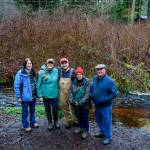
The recent sighting of a lone adult salmon swimming upstream in Maxwelton Creek is a symbol of hope and resilience, shedding light on the need for further study of a complex watershed.
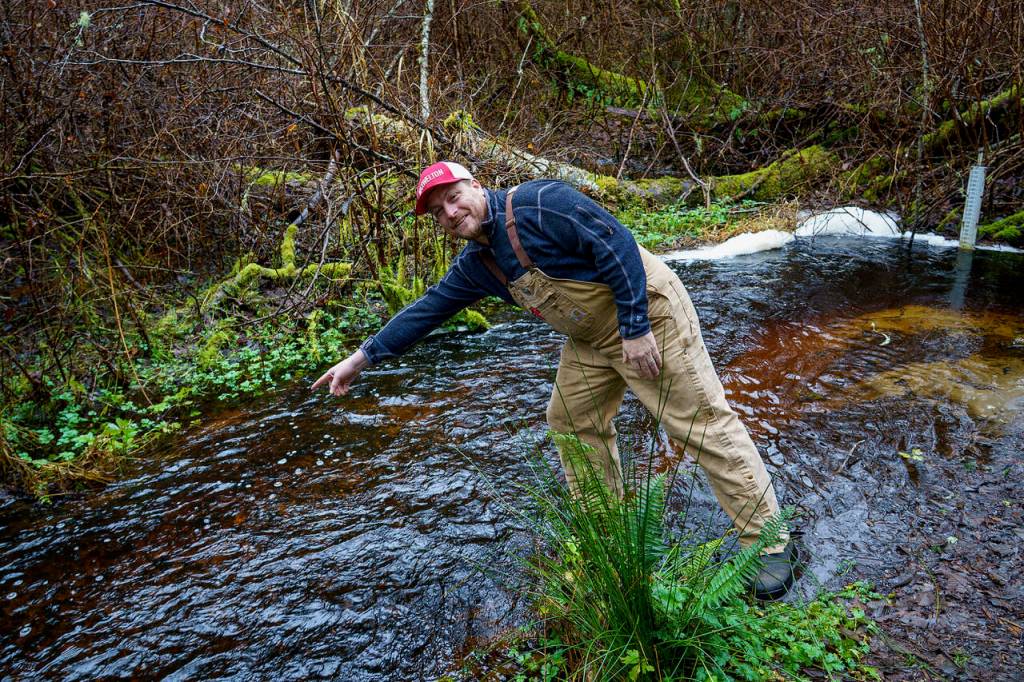
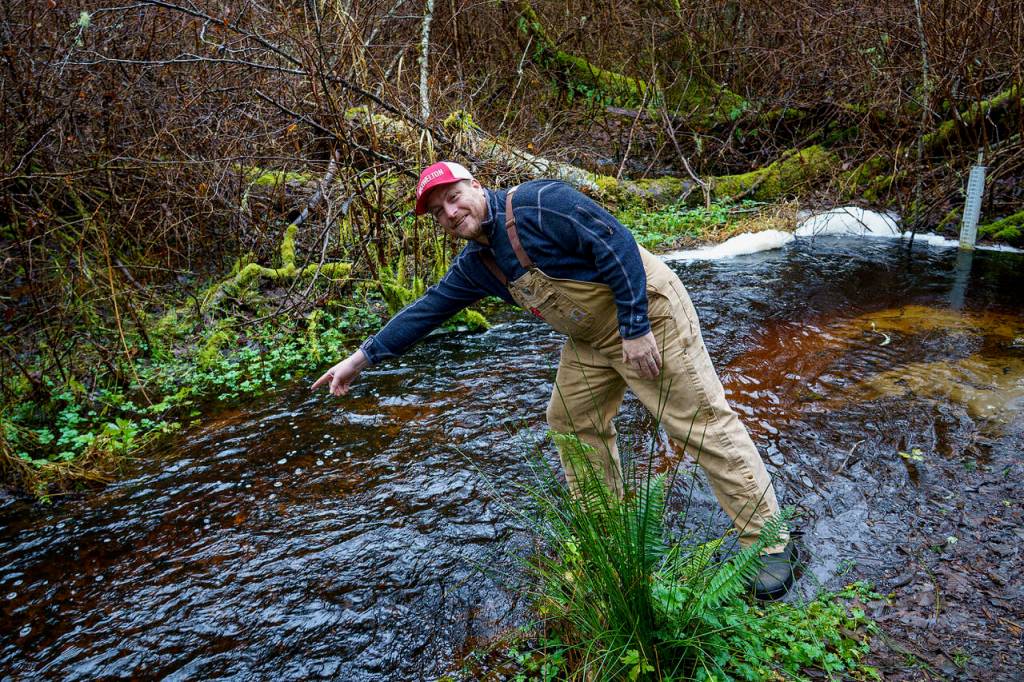
Emily Ruef and Paul Grubb, owners of the neighboring Cascadia Meadows at the Little Brown Church, were out for their regular walk at the Rene Neff Maxwelton Outdoor Classroom on Dec. 7 when they heard the splashing of a fish in the creek, at the same area where South Whidbey schoolchildren release coho salmon fry every year.
“It was wild,” Grubb said. “We were both really surprised to see a big old salmon in the creek.”
The couple was too far away to identify the type of salmon, though they were able to capture a cell phone video that is now posted on the home page of the Whidbey Watershed Stewards’ website. The nonprofit organization provides educational opportunities to youth and adults who visit the Maxwelton Outdoor Classroom and works with land owners to restore and protect habitat on their creekside properties. The late Neff, the teacher who the outdoor classroom is named after, was instrumental in its creation as a way to encourage salmon spawning in Maxwelton Creek. She also helped form the Maxwelton Salmon Adventure, the precursor to Whidbey Watershed Stewards.
According to Whidbey Watershed Stewards, the sighting marks the first time a returning adult salmon has been witnessed in Maxwelton Creek since 2005. This does not account for the ones that may have slipped by unseen in the intervening years.
Laina Stonefelt, the environmental education coordinator for Whidbey Watershed Stewards, said November is prime time for salmon spawning. She surmised that the early December visitor arrived because of the atmospheric river in the area at the time, which allowed the salmon to make its way up the creek.
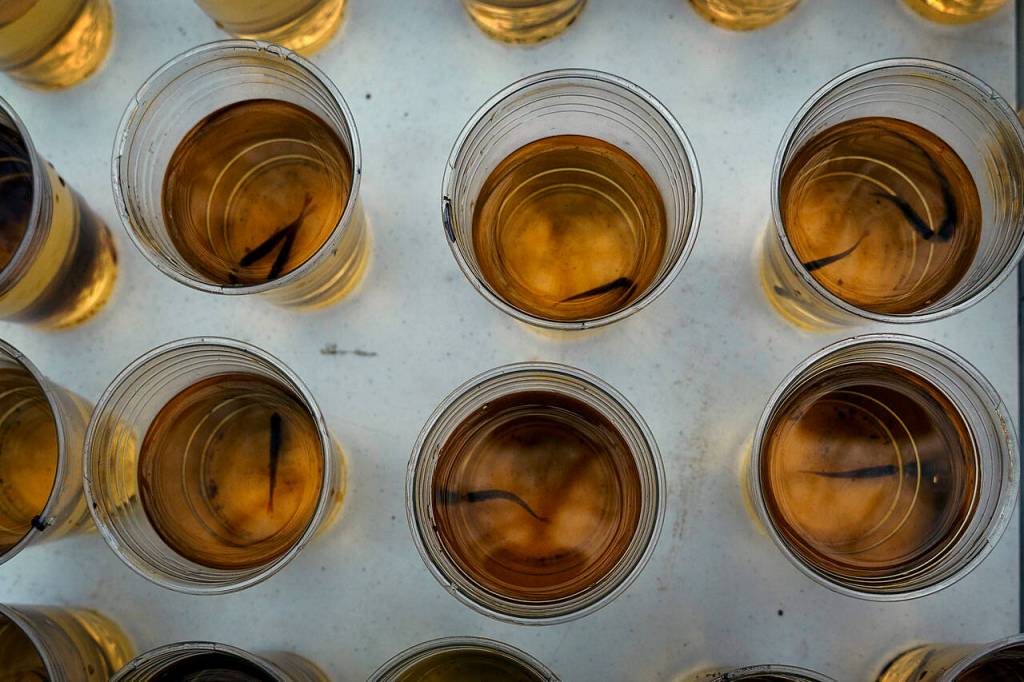
Every March, third grade students from South Whidbey Elementary School release coho fry into the creek after raising them in an aquarium set up outside of teacher Lori O’Brien’s classroom. Like many others, O’Brien is excited by the sighting and wonders if the lone adult was released by one of her students as a fry.
“The kids and I have been releasing salmon fry into the Maxwelton Creek for the last 11 years,” she said. “Even though spawning salmon haven’t been seen I have held out hope that they have been there all along, perhaps in a remote section of the creek.”
And for the first time this year, fourth graders from Oak Harbor are also raising coho fry to release into the stream.
But just how many salmon return to the Maxwelton Creek, especially in recent years, is an unanswerable question without more data. Many suspect it is currently not an ideal environment for spawning for a variety of reasons, hence why recorded sightings of adult salmon are few and far between.
Regular monitoring of smolts hasn’t occurred since 2015. Annual counts between 2000 and 2015 found tens to low hundreds of coho – a sharp contrast compared to historical reports of plentiful salmon in the creek, with one neighbor claiming they were so loud they purportedly kept her awake at night.
According to the book “A Journey Through the Maxwelton Watershed” by Ann Linnea, before the dike was built in 1914 and a tide gate installed at the mouth of the Maxwelton Creek to protect farmland and homes, there was a 200-acre estuary used by chum and coho salmon. These are anadromous fish, meaning they need both freshwater and saltwater.
Over the years, different tide gates have been installed, changing the condition of water flow. Improvements to the tide gate to allow better passage for fish, as well as the installation of a more salmon-friendly culvert under the road, have long been discussed as possible solutions to the barriers that prevent more salmon from spawning in the creek. Dave Anderson, a commercial fisherman and former legislator who built the first incubation boxes for salmon eggs back in the 1990s, said chum salmon are “real spooky” and don’t like swimming into dark areas.
But there are also environmental factors to contend with, such as warmer and lower waters in the summer that may discourage smolts from finding their way to the Salish Sea. Predators, like eagles, are another issue.
About eight years ago, a group of property owners living along the creek formed the Maxwelton Creek Alliance. The nonprofit organization has been trying to obtain state funding for a feasibility study, but with little success. It’s a costly endeavor, and often the state has bigger fish to fry and awards funding to more established areas for salmon spawning.
“Grants are tough to get because we’re too small,” John Williamson, a member of the Maxwelton Creek Alliance, said.
According to a 2023 status report from the nonprofit, the creek has changed greatly over recent decades, particularly below French Road where it is now more wetland than creek. Stream flows no longer move the sediment in the creek, and the channel is filling up, causing water to flow out onto the adjacent land.
The overall health of the stream is another consideration. Outdoor Classroom staff annually test the waters to determine turbidity, dissolved oxygen and pH levels, and according to Stonefelt, the stream meets criteria for salmon-bearing habitat. She also pointed to robust populations of frogs and macroinvertebrates, which serve as primary bioindicators of a resilient ecosystem.
Island County Public Health Director Shawn Morris said Maxwelton water quality is currently “good” based on samples taken between October and December 2025.
“Historically, the creek has faced pollution challenges due to high bacteria, high temperatures and low oxygen,” he said. “The county is actively working to find and fix pollution sources through a dedicated pollution identification and correction program.”
Indeed, a Record story from just last year noted that Maxwelton Creek scored poorly as one of the sites tested in 2024 by Island County Public Health. Another older Record story identified the presence of fecal bacteria in the creek in the 2010s.
While fecal bacteria like E. coli does not directly harm the health of salmon, Morris said, it serves as an indicator, “and high levels often suggest environmental shifts — like increased runoff — that can affect dissolved oxygen and water clarity, which are essential for healthy salmon spawning cycles.”
The creek’s unique “Pepsi-Cola” coloring comes from the infusion of tannins as it flows through peat bogs on its way to Useless Bay, according to “A Journey Through the Maxwelton Watershed.”
And as for the presence of a single salmon, there are some who are hesitant to celebrate, including those who first spotted it.
“If it truly is just one lone salmon, it is kind of like Bruiser or our recent bear visitor or a lot of animals that visit the island – it won’t be too successful in mating,” Grubb said.
Kit O’Neill and Tom Leschine, also members of the Maxwelton Creek Alliance who have been trying to secure funding for a feasibility study, are also not optimistic unless major changes are made.
“One fish does not a salmon run make,” Leschine said.
O’Neill agreed.
“It takes at least two,” she said.
Drawing inspiration from the Ballard Locks in Seattle, where visitors can access a fish ladder viewing room, Williamson proposed adding a 24/7 camera to the tidegate to watch for salmon entering Maxwelton Creek. The year before, he reported seeing a big cutthroat trout near the gate, though he acknowledged it’s possible it could have been a salmon.