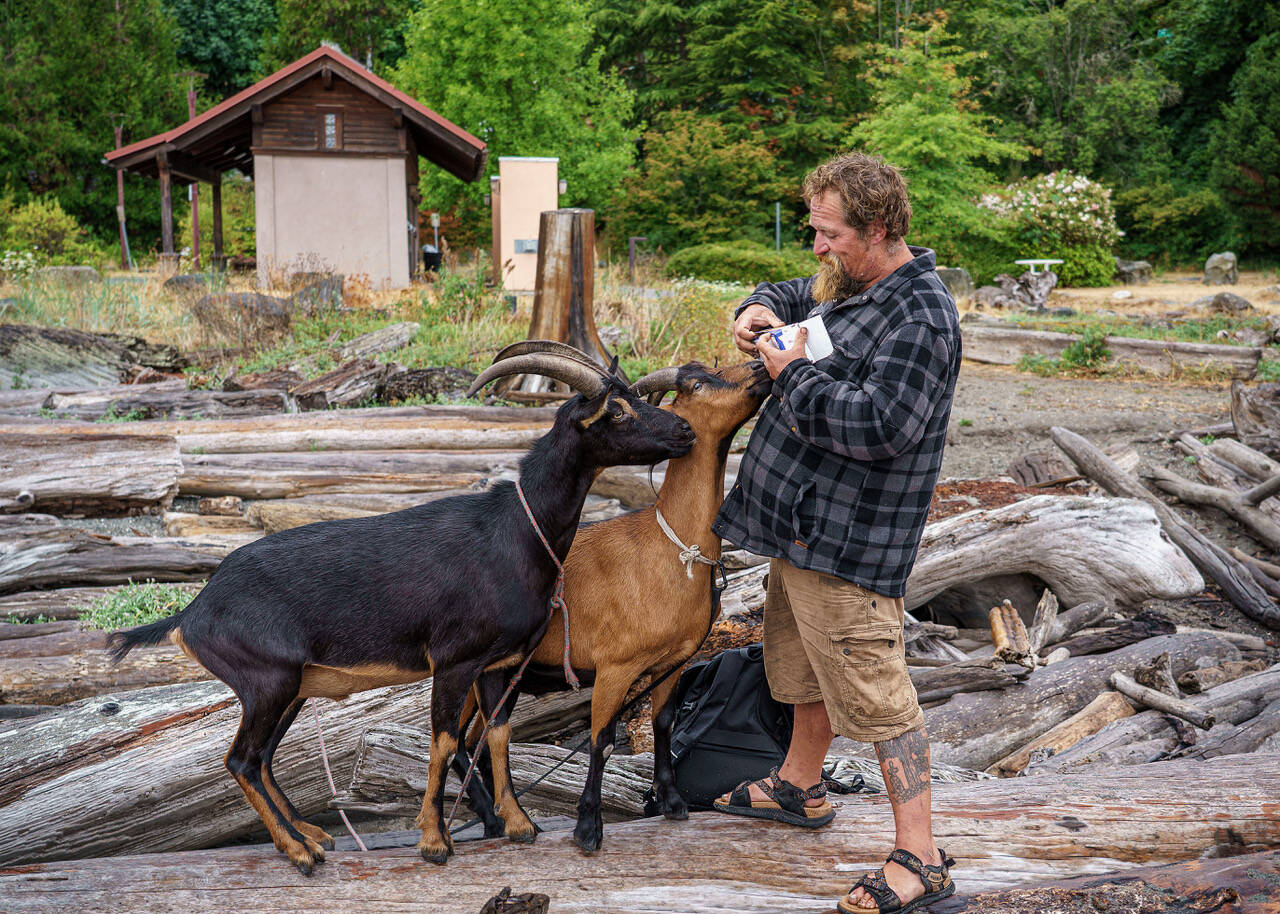
Whidbey’s newest celebrity, the homeless “goat man,” has been seen walking the side streets, beaches and highway, with dazzled fans snapping photos of him and his muscular goats.
Comments and pictures of the trio have flooded Whidbey social media circles in recent days. “Pleasant fellow, sweet goats,” someone commented on a picture of them on Facebook.
“I have some blackberries I need gone!!!” another commented, requesting to rent the goats.
Mark Cole and his two goats, 5-year-old Loki and 1.5-year-old Stilly, trekked through Skagit County and Whidbey during the last few months, attracting a lot of attention along the way. The nomads are stopped daily by impromptu paparazzi across Whidbey and on their occasional ferry rides.
It appears to be a good life for the ungulates, who graze on Whidbey weeds and feast on the occasional gummy candy, which Cole said is one of their favorite snacks. They hike during the day and camp at night. The two male black-and-brown goats are both purebred Oberhasli, though Loki’s colors came out unstandard, with a mostly black coat, Cole explained.
“They’re my kids. I’m kind of like herd leader and mom at the same time, ” Cole said during an interview at the Clinton ferry terminal.
It’s a more challenging existence for 41-year-old Cole. Besides the rigors and uncertainty of homelessness, he deals with his companions’ penchant for eating whatever they please — which has included his tent, his money and even his cigarettes, an unhealthy habit that led Cole to stop carrying his own.
Cole acquired the goats as a dairy farmer at St. John Creamery in Mount Vernon, where he had worked since 2019. After Loki was born on Cole’s birthday, the two started hiking together when the baby goat was just a month old. He would warm up a milk bottle for the furry kid and take him to the beach, intermittently nursing him.
Later, Cole adopted Stilly when he was a few months old. Stilly quickly took to the hikes with Cole and Loki, following behind like he’d never done anything different, Cole said. Stilly, he noted, was still a “brat.”
In April 2024, Cole’s landlord got in trouble for letting people live in trailers, so Cole and others were evicted with less than a week’s notice. Since then, he and his goats have been on the road, seeking adventure.
The goats are trained to do tricks like shake hooves and play-fight. On trails and beaches, they follow closely behind Cole off-leash and respond to their names. Cole attributed their shiny coats to the goats’ regular baths in natural bodies of water. The goats, he added, love beaches.
“Few people would probably try to make their goats swim, but it’s such an essential part of my lifestyle,” he said. “I mean, there’s no way I would try to homestead on an island if I wasn’t confident in their swimming abilities.”
Stilly and Loki can pretty much go anywhere one can take a dog without being too much of a problem, he explained. He just ensures they don’t get up to too much trouble or get hit by cars.
They forage for their food, noshing on plants wherever they go, with a special affinity for the blackberries soaked in sea salt growing at the high tide line. However, the goats’ diet is far from ordinary. They love to nibble on whatever sweet treats he has, Cole explained. They regularly dig into Cole’s pockets, tongues searching for the packets of sugar he always carries for them. While the goats’ diet isn’t standard, Cole claims that they are healthier than the ones he’s seen on farms, where they often need their hooves trimmed and to be treated for worms. These are problems his goats don’t have, he attested.
“It’s never been an issue for these two,” he said. “And it’s this lifestyle.”
The trio’s day-to-day often includes treks of around 10 miles or more.
Over the last few months, their journey has taken them to Mount Vernon, La Conner and Anacortes, Cole claimed. Eventually, they made their way to Whidbey, stopping in Deception Pass before heading to Oak Harbor. Within two days, Cole and his goats arrived in Coupeville to do their “most epic hike,” he recalled.
“I went to Fort Casey a lot when I was a kid and I thought it’d be so great to take these guys through there,” Cole said. “And then by about the time I got to Coupeville, I was told there was a gigantic dead gray whale on the beach. I had never seen a beached whale.” They walked a large loop out to Fort Ebey and then followed the beach to Fort Casey where they witnessed the whale’s body “undulating” in the water. The trio then hitched a ride to Langley, where Cole hoped to bring his goats to the Whidbey Island Fair. Cole was disappointed to learn that no pets were allowed.
Finally, the trio walked to the Clinton ferry terminal, a resting spot for now, though he might not stay for long. Cole intends to make the most of the summer days and continue adventuring. Where he is going next, he is unsure.
Despite having been offered over $1,000 for the pair, Cole asserted he would never sell his goats. Besides his affection for the mischievous beasts, they make it easier to be homeless.
“With the goats, people are happy to come talk to me, and I add some value to it. I make you smile,” he said. “We help each other out, really.”
Cole admitted that he once struggled with a heroin addiction. He used to be the kind of person who would leave a mess in the woods and commit thefts, but he hasn’t been in trouble with the law for at least five years, he said. Now that he has goats to take care of, he refuses to get irresponsibly inebriated with drugs or alcohol.
He would love to find a permanent home again someday, he told the News-Times. Since he doesn’t want to go goat-less, Cole said housing on a farm seems like his best option. He hopes to find part-time or full-time agriculture work with a place for him and his goats to stay for the winter; even a tent spot with power and water would suffice. He envisions potentially incorporating his goats into his work as attractions at farms or forts.
“I could give an awesome tour of Fort Casey right now, and the extra bonus would be the goats walking around on all the battlements and everything. I think it would be really fun,” he said, noting his qualifications from his four-year history degree.
Cole is in the process of writing a book about being homeless with the goats. He hopes the book’s final chapter is about finding more permanent housing.
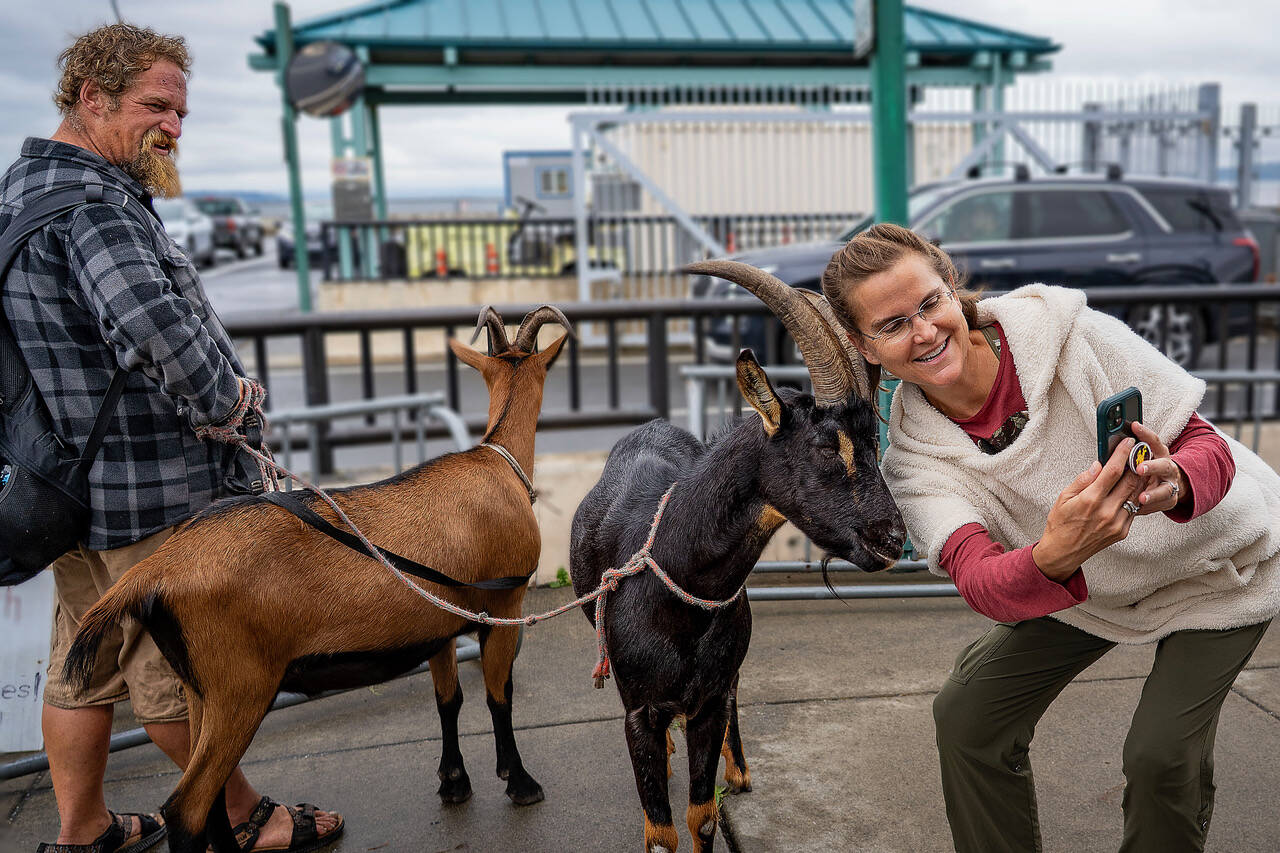
(Photo by David Welton) A passerby cheeses for a selfie with Loki while Stilly acts camera-shy.
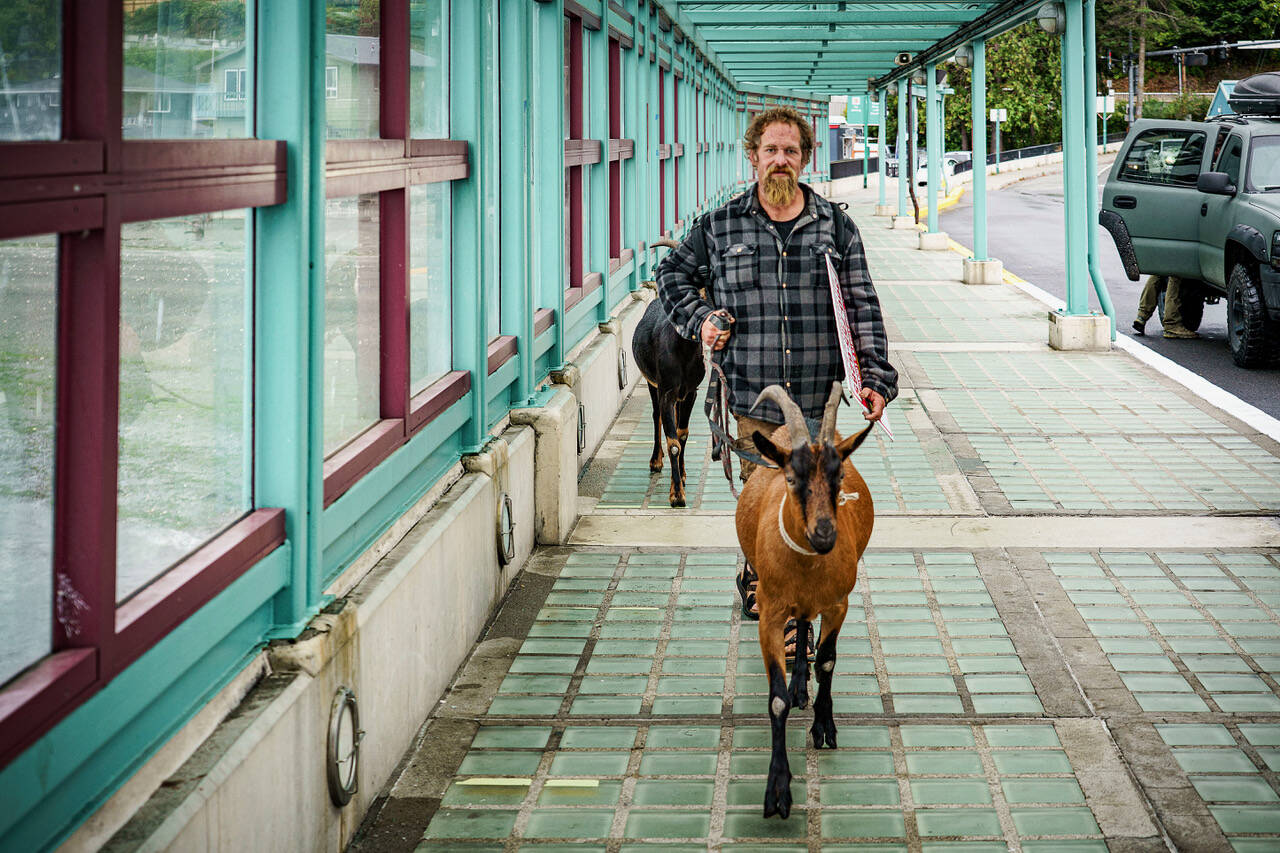
(Photo by David Welton) Cole sets off for the ferry to Mukilteo with his goat entourage, who are now regular passengers.
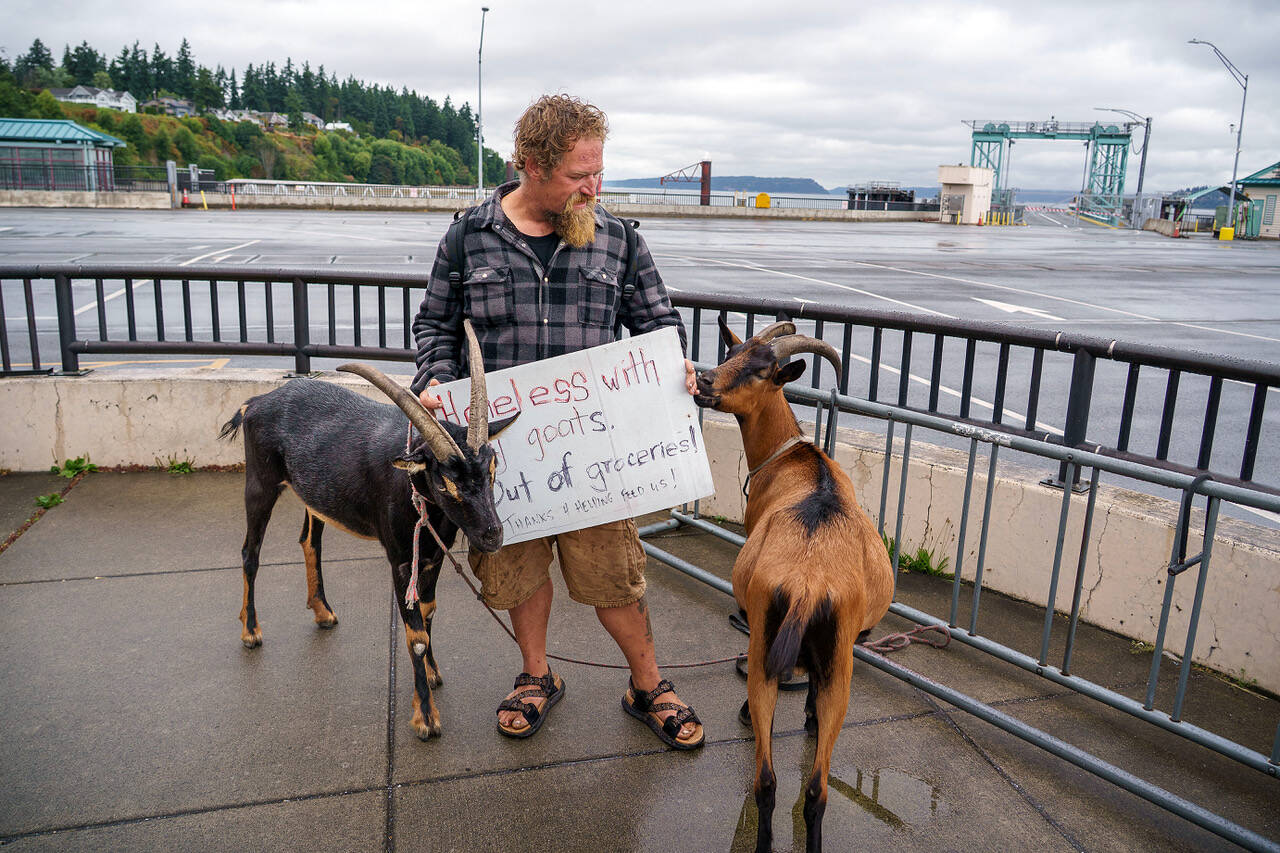
(Photo by David Welton) Cole stands by his goats as he panhandles with a sign.
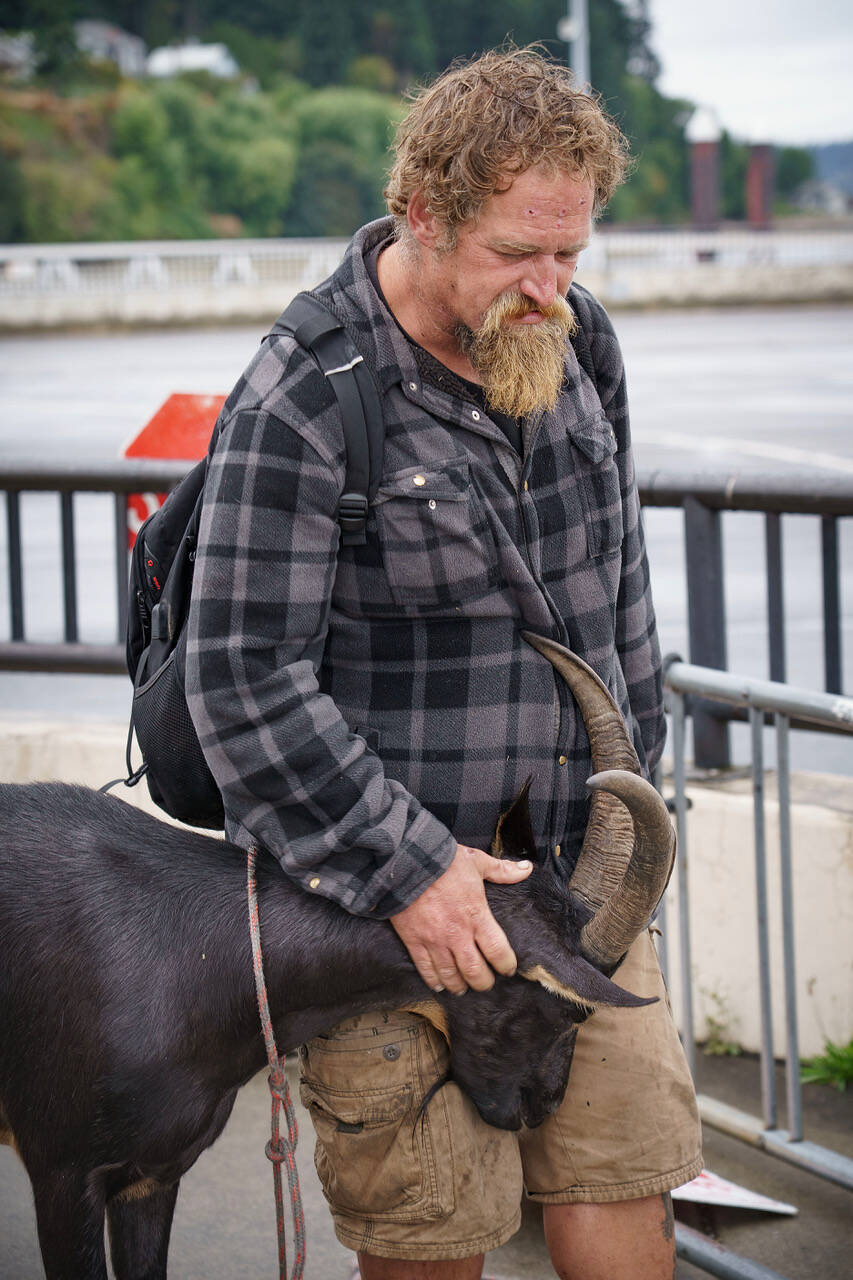
(Photo by David Welton) Loki leans into his “mom,” Cole, with affection, but really he is probably searching for treats.
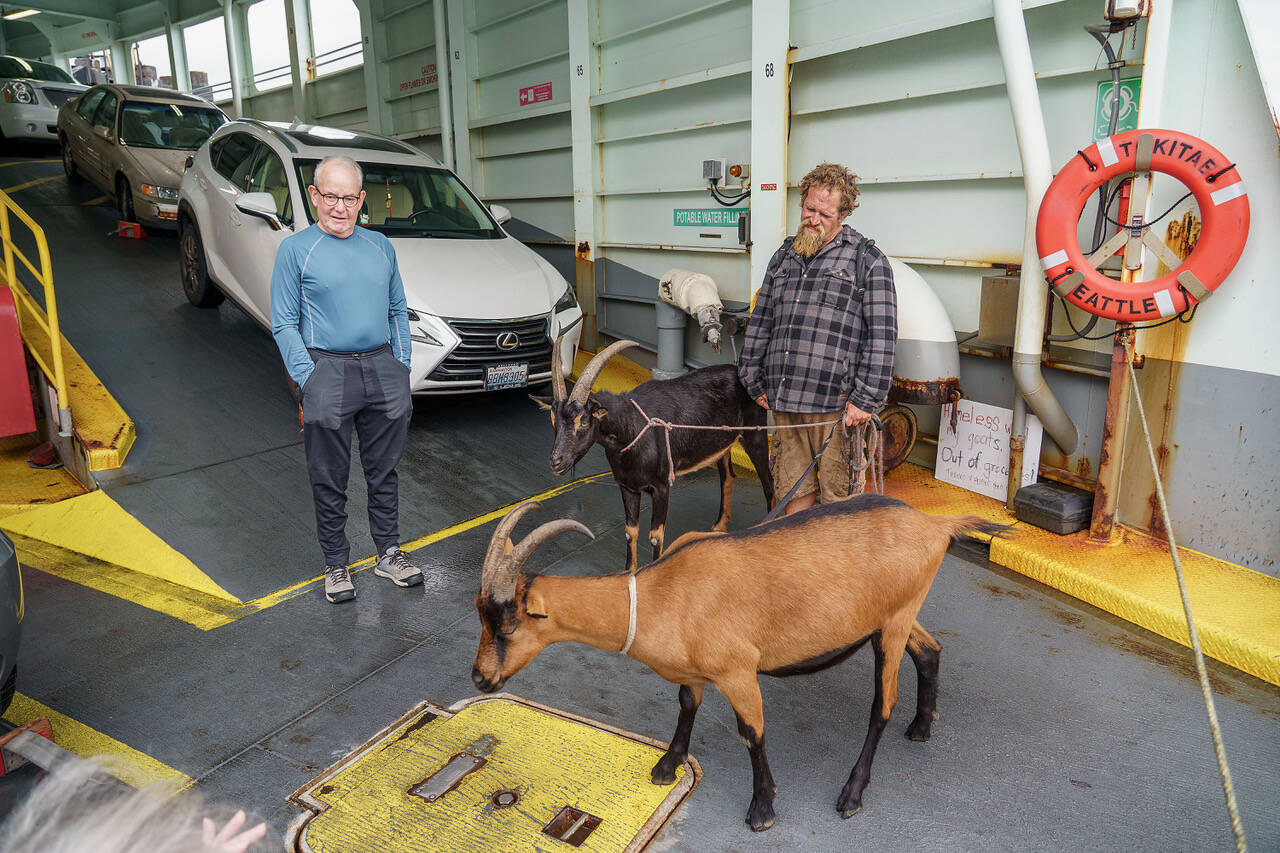
(Photo by David Welton) A ferry-goer admires Cole’s goats.
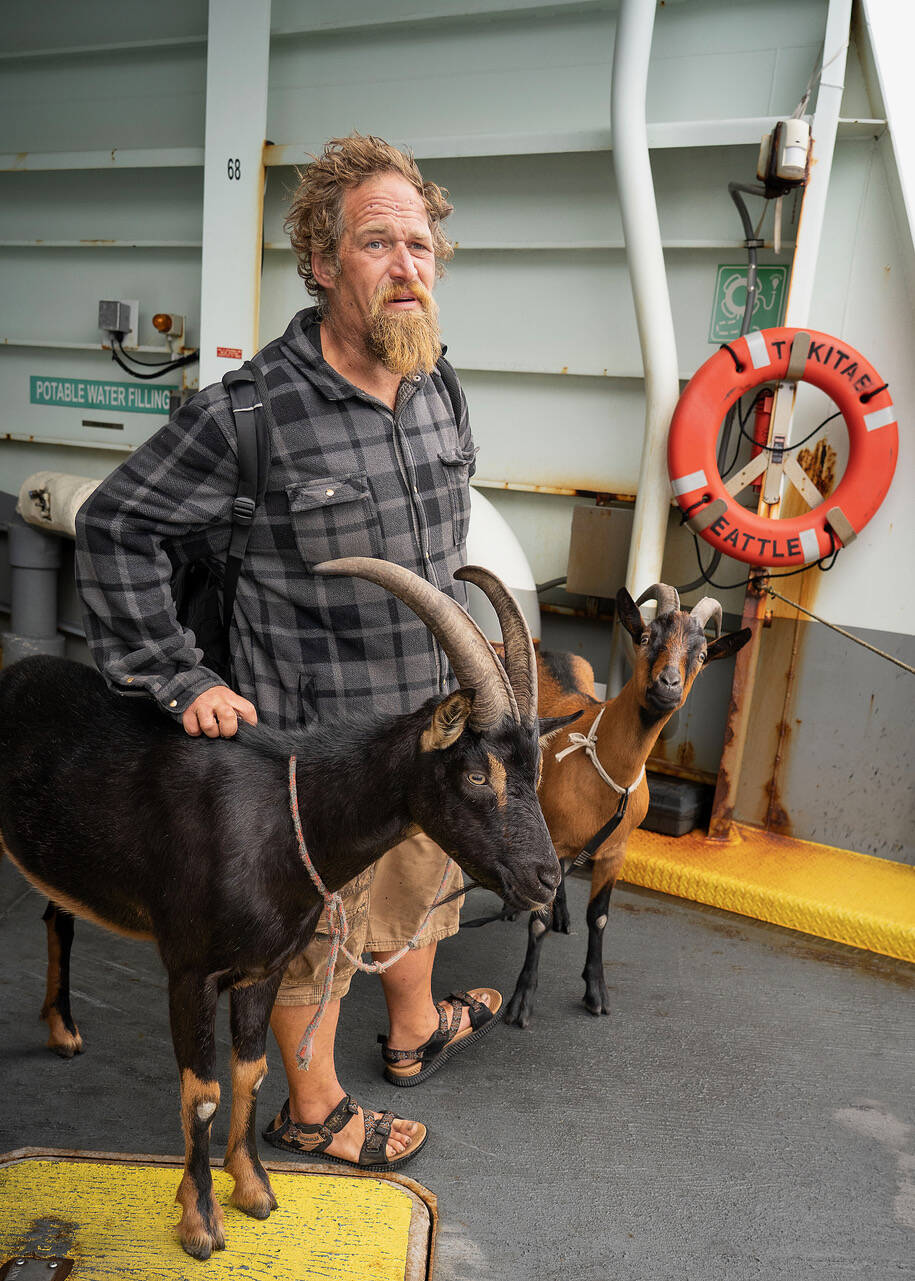
(Photo by David Welton) Mark Cole takes the ferry with his two goat sidekicks.
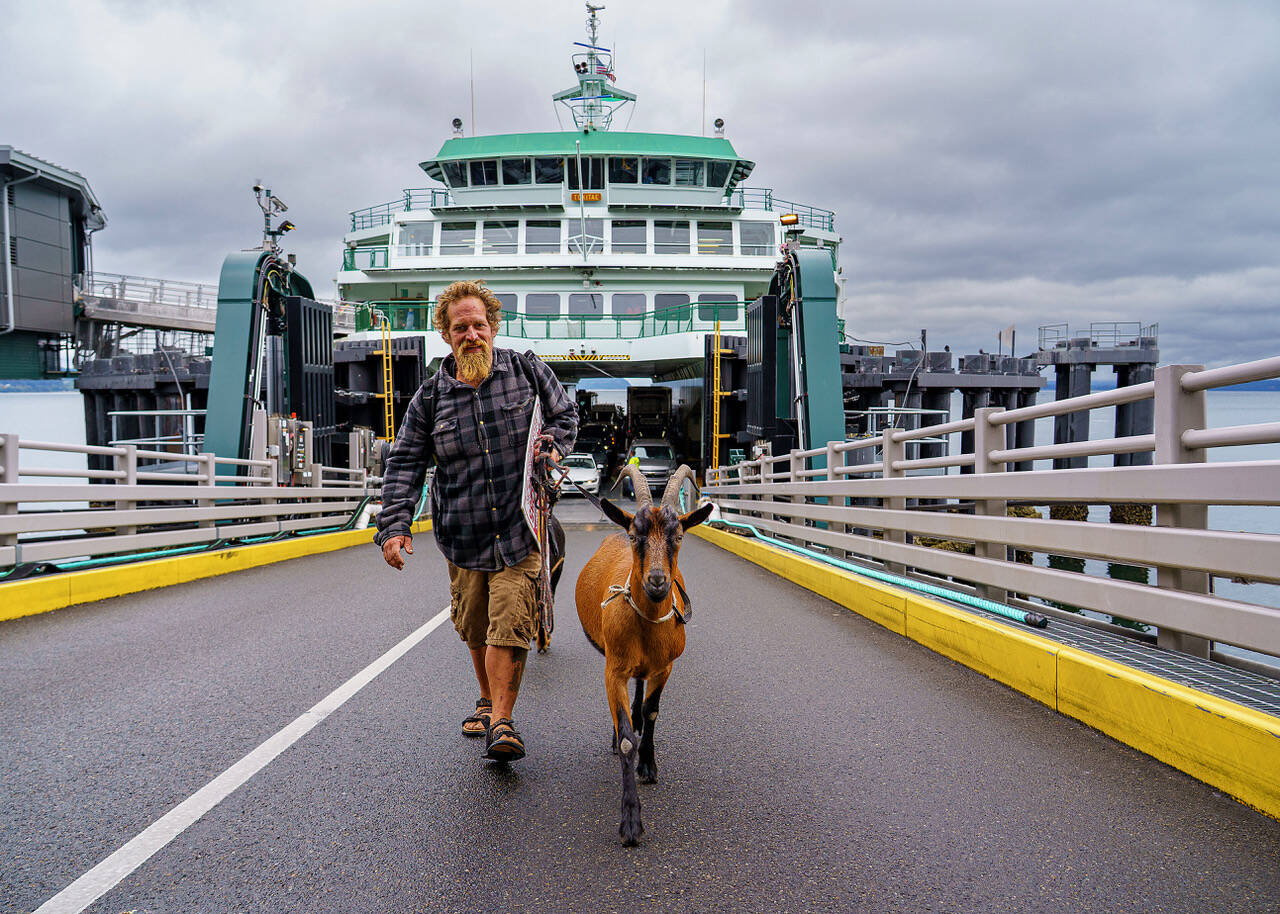
(Photo by David Welton) Cole exits the ferry with his four-legged crew.