
While Whidbey Island has no shortage of remarkable birds to watch, it can be easy to overlook some of its more common yet equally entertaining species.
According to a bird expert in the state, there’s been an increase in crow numbers on Whidbey in recent years, which is good news for those cheering for the crows in their mostly friendly rivalry with gulls.
When it comes to food sources, crows and gulls are known squabblers, competing for similar things to eat. Steve Ellis, a member of the Whidbey Audubon Society, said a crow would rob eggs from a gull nest if given the chance. But apart from this form of predation, most of these scuffles are bloodless affairs.
“Crows are just the right size to prosper around humans,” Ellis said, noting that the jet-black birds can eat large food items, such as half a hamburger bun, or something small like a tiny berry. “That and their intelligence makes human habitations ideal for them.”
Though gulls are absent from forests – their wings don’t do well among tree branches, Ellis explained – they can be found on the farm fields in the interior of Whidbey, picking up earthworms and other goodies exposed by plowing.
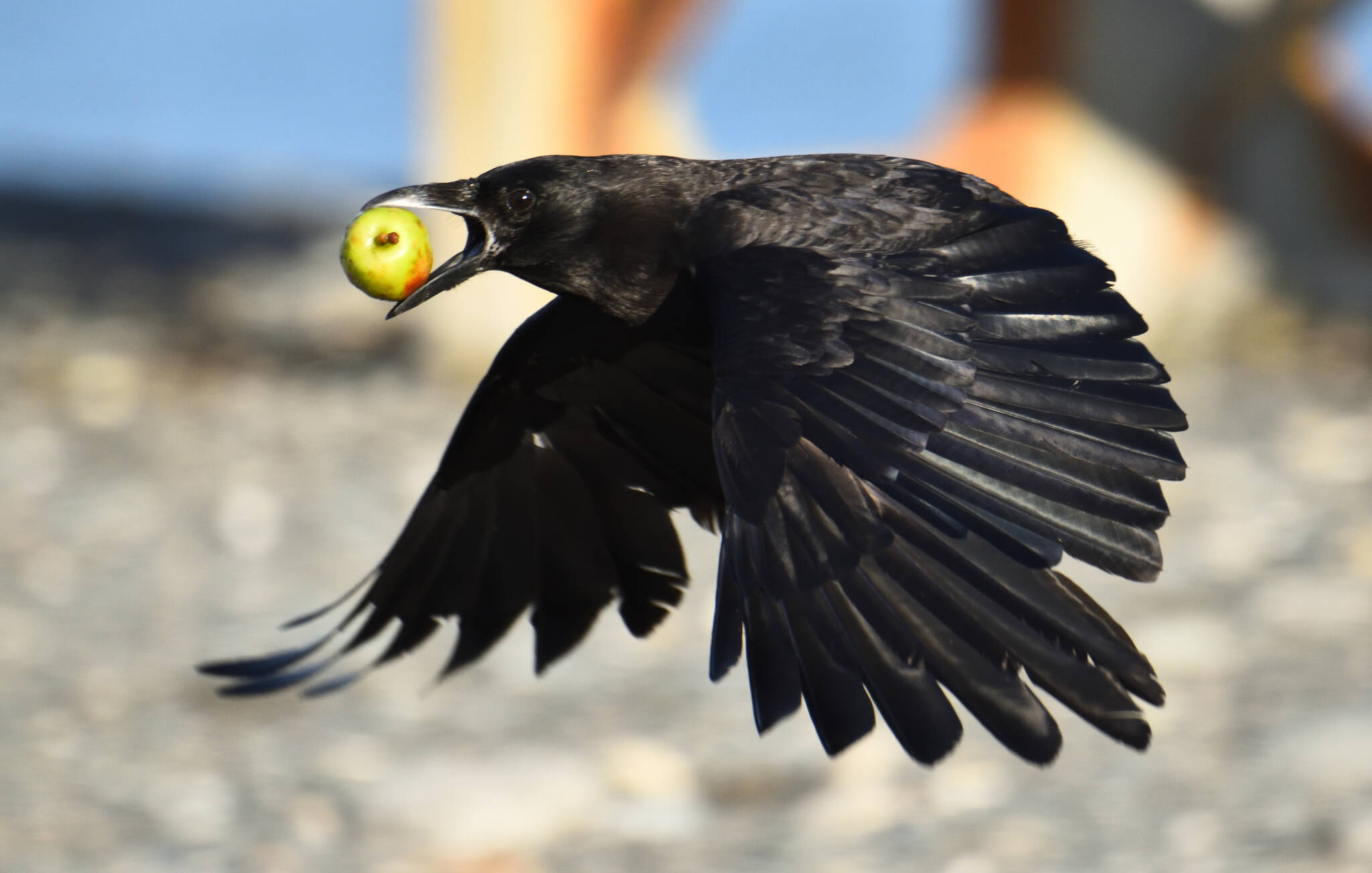
Jennifer Holmes, a wildlife photographer who lives in Coupeville, has noticed that crows use some of the same feeding behaviors as gulls. They will take a seashell, or some other item that’s difficult to get into, and drop it from up high so it cracks open. In fact, Holmes captured a photo of a crow in mid-air with a shell.
Her other photography shows many other ways the two types of birds feed, from a crow with an entire apple jammed in its maw to a gull catching a sand lance with its beak. She has also watched them fight over food before.
It’s a behavior familiar to Constance Sidles, a master birder and University of Washington instructor. As an example, a gull may have caught a fish too large to swallow, so it may fly off to a place where it can dismantle its meal and eat all the pieces. If a crow decides it wants the fish, it might follow and harass the gull, either in flight or on the ground.
“I’ve seen such food fights go on for a long time, first with one bird grabbing the fish, and then the other, and then back again – back and forth so many times that by the time one of the birds gives up, there isn’t much left of the fish,” she said.
She surmised that conflicts between crows and gulls are more abundant on the shores of Whidbey – not difficult to find, since coastline is all around the island. Both birds are smart and opportunistic feeders that will eat anything they find, including garbage and people food.
She believes Whidbey’s crow population has increased over the years, due to deforestation and urbanization that favor the birds. Ellis, on the other hand, expects a small dip in crows as the island’s population of common ravens rises; ravens will eat crow eggs and nestlings.
As for the gulls, most species populations on the island are stable, except for the western gull, which Sidles said is becoming a species of concern because of habitat loss and excessive hybridization with other types of gulls. Climate change and warming waters could also have an impact on the seafood that gulls like to eat.
Adding another element to the mix, bald eagles have been known to prey on both gulls and crows.
“It’s common to see gulls and crows trying to drive away an eagle,” Ellis said. “Whether they actively coordinate their efforts is something that hasn’t been proved to my knowledge.”
Both birds have a fierce side. Crows, Ellis explained, live in clans and can be quite territorial during certain times of the year. He once watched a clan at the Coupeville boat launch kill a crow that twice tried to come onto their turf. Crow society is highly regimented.
Sidles noted that most gulls are very territorial and aggressive during breeding season, defending their nesting territory, driving off and sometimes killing any other bird that threatens their nests, which includes crows.
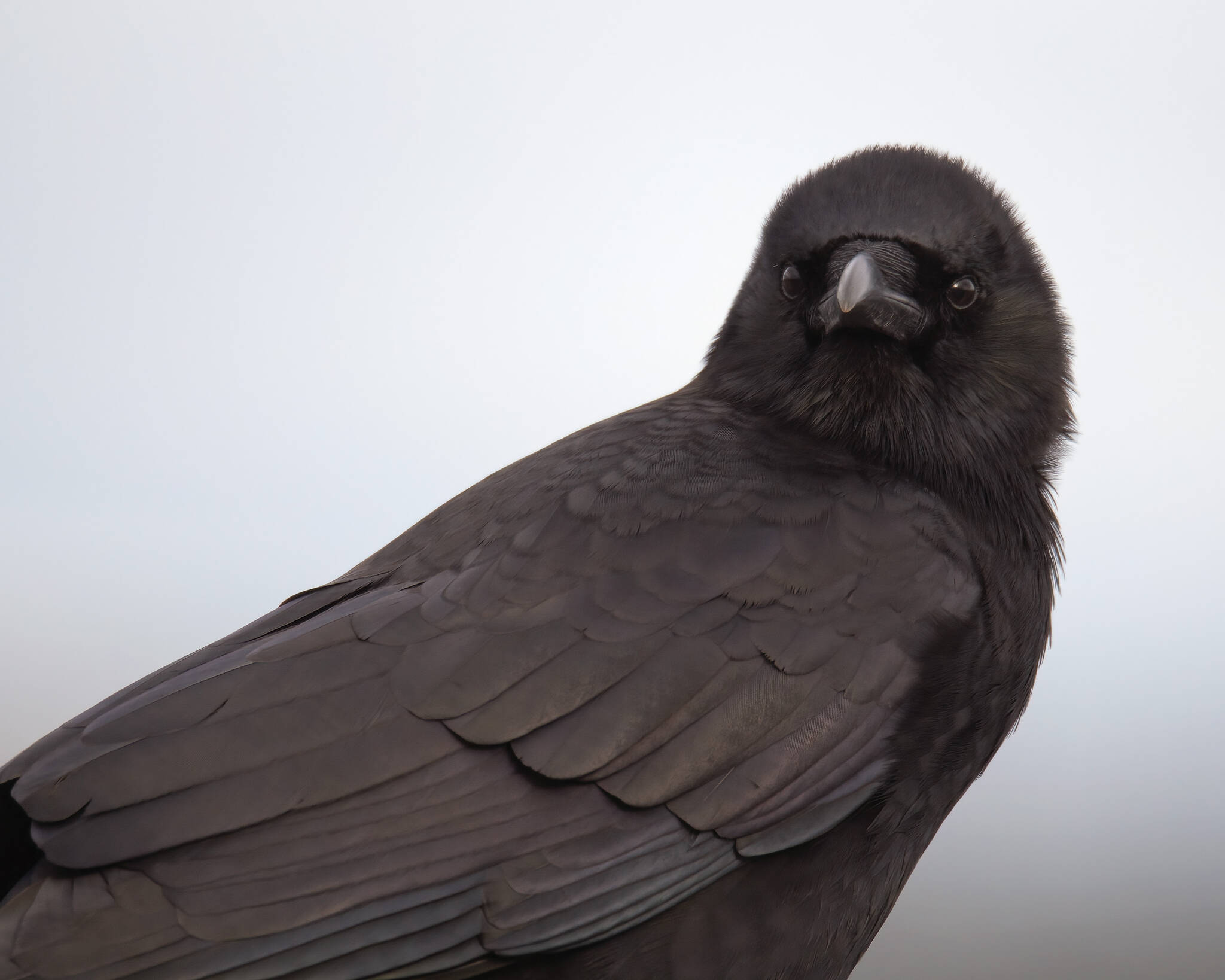
(Photo by Jennifer Holmes) Majestic and intelligent, crows can be found on the shore and in urban areas of Whidbey Island.
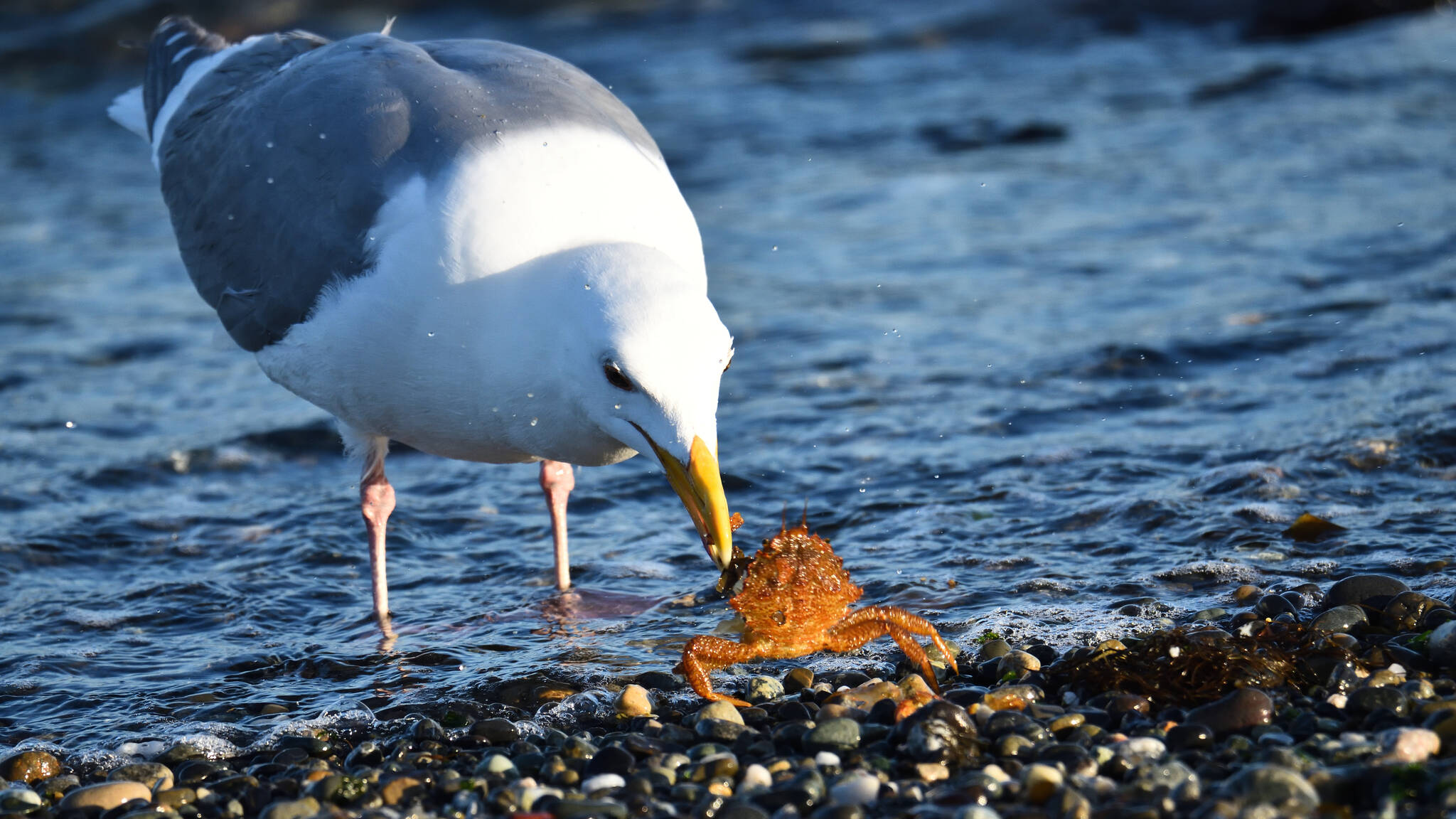
(Photo by Jennifer Holmes) A gull prepares to feast on a crab.
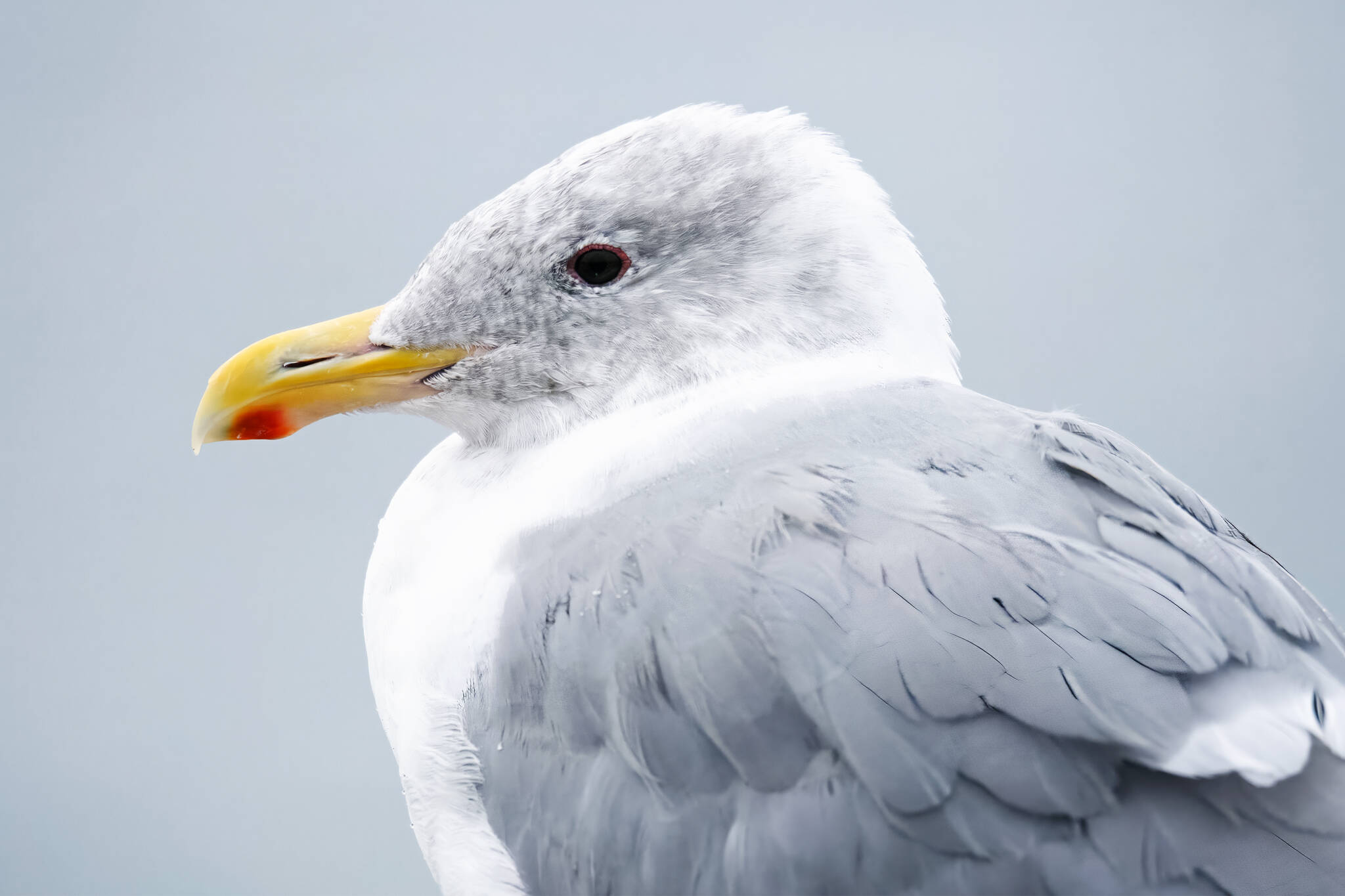
(Photo by Jennifer Holmes) Thriving and resourceful, gulls congregate on beaches but have also been known to scavenge plowed fields for food.
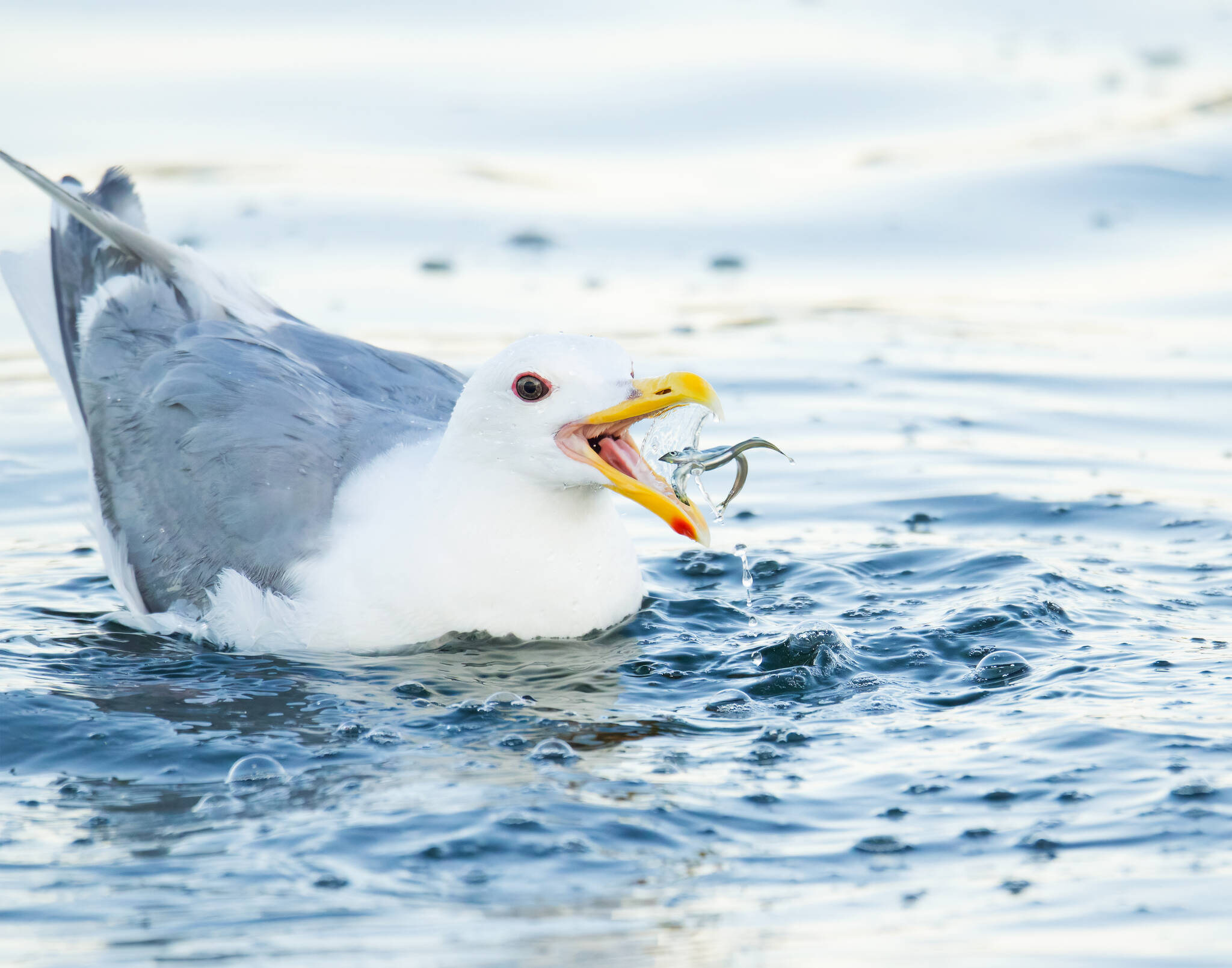
(Photo by Jennifer Holmes) A gull catches a sand lance in its beak.

