Volunteer team rescues stranded goat
Published 1:30 am Friday, July 10, 2026
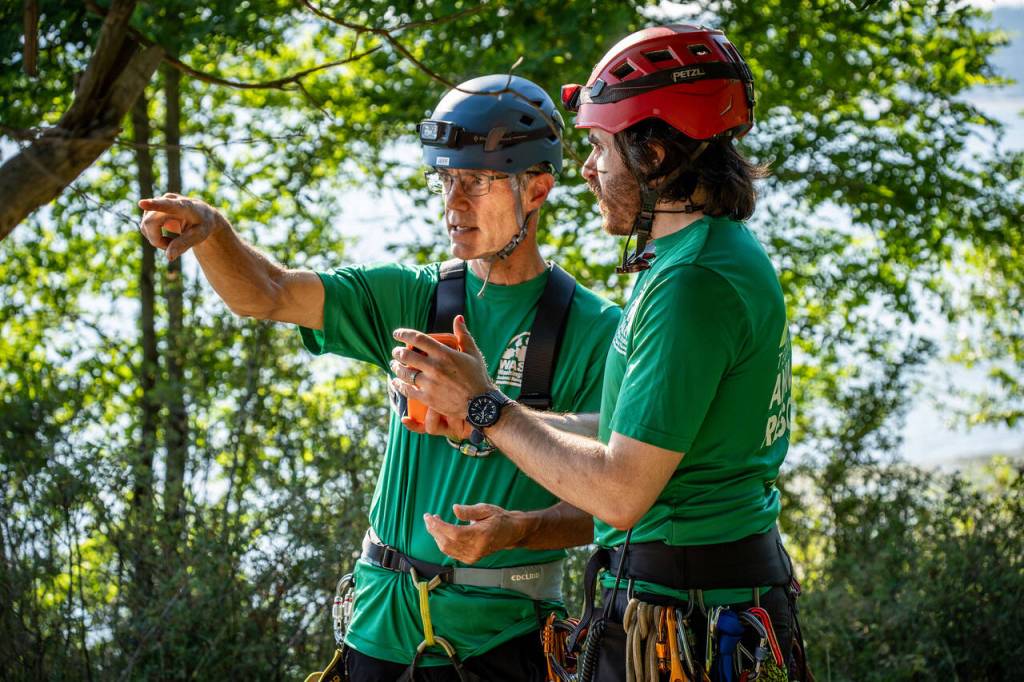
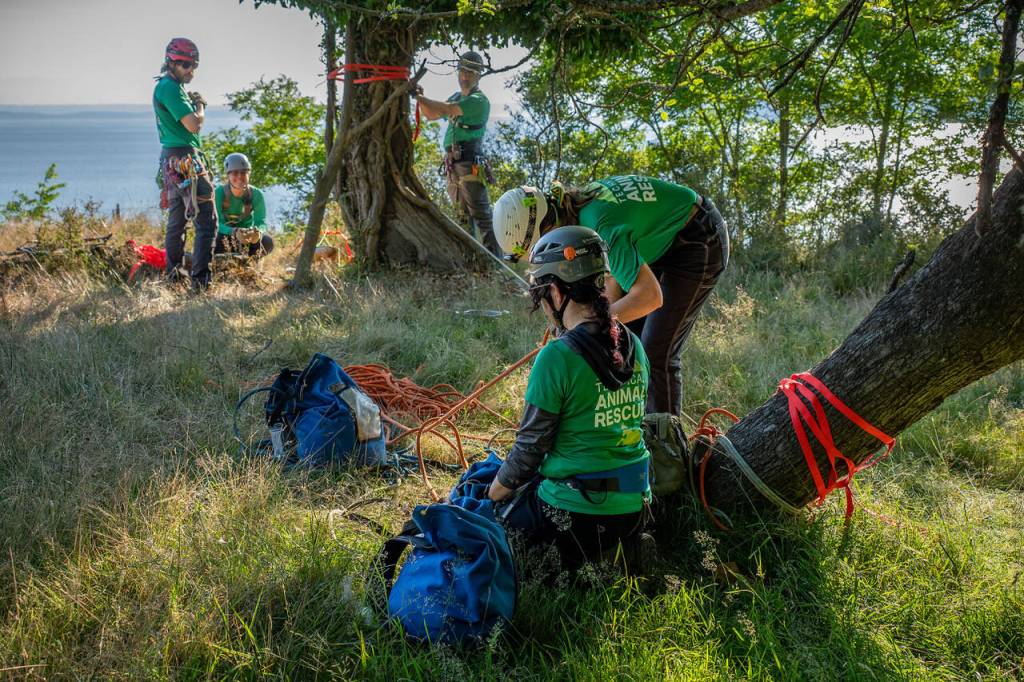
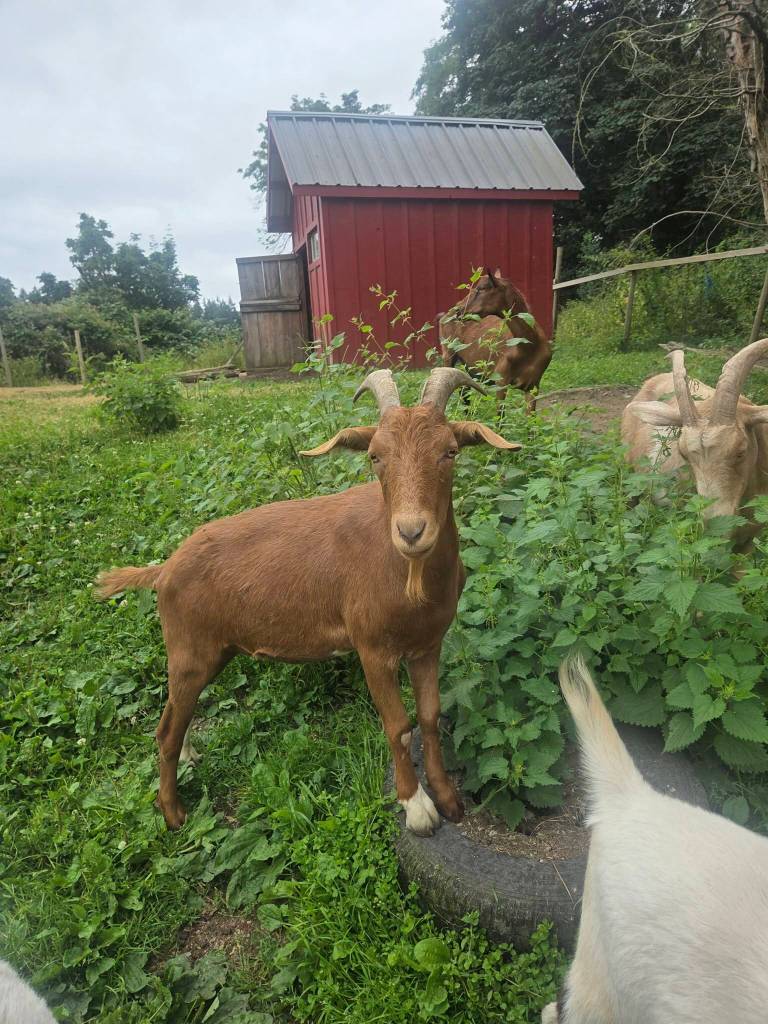

A volunteer technical rescue team rappelled down a South Whidbey bluff Monday night to rescue a pet goat stranded on a narrow ledge.
Clinton resident Kristine Tyler’s pet goat, Beau, spent the Fourth of July weekend trapped partway down a nearly 130-foot bluff. After all other options were exhausted, the nonprofit Washington State Animal Response Team came to the rescue Monday night.
Although the group rescues animals statewide, Michaela Eaves, the public information officer and a volunteer with the group for more than a decade, believes this was the group’s first rescue on Whidbey. Ensuring the public’s awareness of the group is one of its “biggest challenges,” she said.
Tyler hopes Beau’s ordeal helps raise awareness of the little-known organization.
“Everyone should know about them,” she said. “This is all they do. They’re highly trained.”
Exactly how Beau got himself stuck on the bluff on the afternoon of July 3 remains a mystery. Tyler wonders if another one of her pet goats bucked him over the edge while playing, or if he climbed on a tree which gave out. Either way, he could not hoist himself back up to safety.
Eaves estimates Beau only had enough room on his ledge for himself and a couple of people.
While fire departments on Whidbey periodically perform animal rescues like this, Tyler said in this case, firefighters informed her they were “uncomfortable” doing so. According to a previous News-Times story, most departments on the island were kept busy with firework-related incidents.
Eventually, Tyler got a hold of Island County’s animal control officer, who referred her to the Washington State Animal Response Team.
The group, founded in 2007, lends a helping hand to animals in difficult situations, according to its website. Though volunteers most frequently rescue horses and dogs, they are equipped to handle most pets, some small mammals and common livestock. Animal owners, fire departments and Sheriff’s Offices usually request rescues, which occur a couple times a month, Eaves said; the group does not self-deploy.
Rescues come at no cost to owners, and the group is instead financed through “memberships, training fees, donations and grants,” per its website. Volunteers undergo whatever training is required by the state, as well as other training offered by the group.
“I didn’t know they existed. I don’t think the fire department knew they existed,” Tyler said. “I’m glad (the animal control officer) knew they existed.”
Eaves explained that the group does not have a dedicated headquarters. When calls come in, a text is distributed to volunteers — many of whom reside in the I-5 corridor — and those available to help respond accordingly.
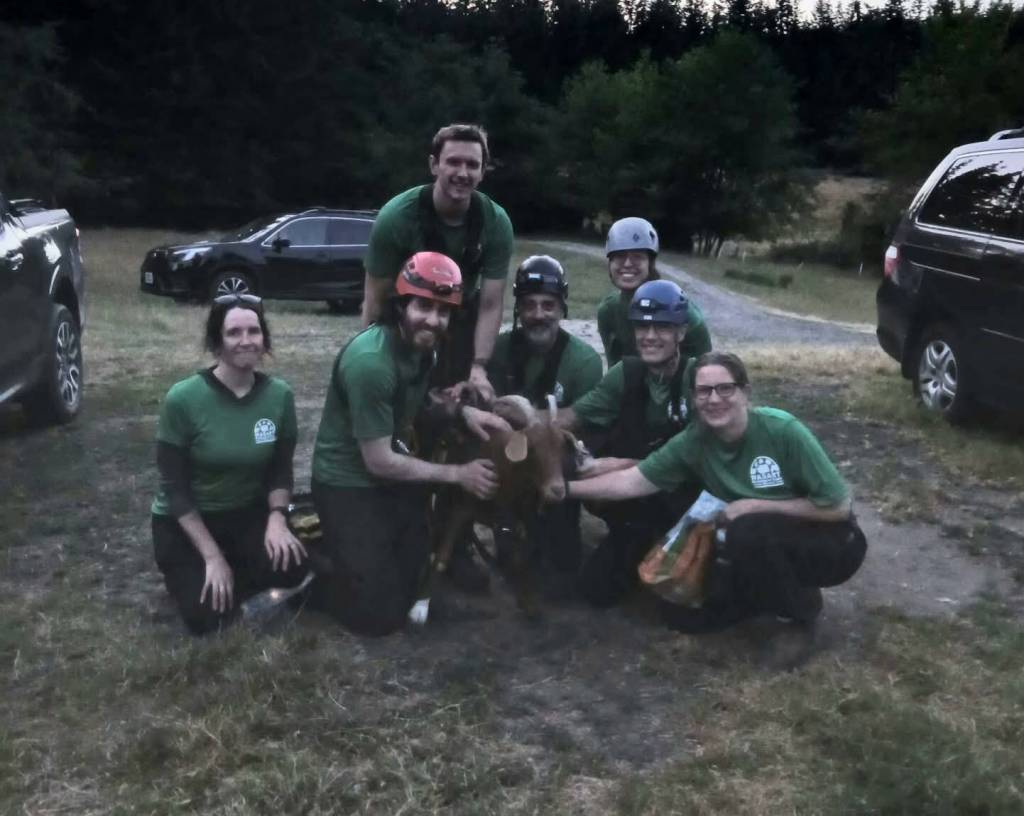
A team of six or seven rescuers traveled to Whidbey and arrived at Tyler’s home that evening. Tyler trusted their expertise from the get-go.
“I didn’t have any reservations talking to them because at this point, he’s been up there three days and three nights, and that was his only hope because he was not coming down,” Tyler said. “There was just no way to get him down.”
Despite the bluff’s height, Eaves explained that the rescuers found it more difficult to earn the crag-fast goat’s trust. It took about two hours to calm him down before he could be harnessed and lowered to the beach below.
“Beau wanted nothing to do with them,” Eaves said, laughing.
When Tyler finally reunited with her pet, she said she felt “overjoyed” and extremely grateful.
Reactions like these are what make the job worth it to volunteers like Eaves. Stories of stranded pets are so common on social media, she explained, and the helplessness they can inspire is disheartening.
“Being able to go there and help out in a situation where otherwise, something could happen either to the animal or the human that owns it is just really nice,” she said.
As good as the happy ending to Beau’s story feels, Tyler hopes this is the last time one of her goats finds itself in such a pickle.
“Trust me, there’s a fence going up there now,” she said.