70 animals find homes as woman faces bench warrant
Published 1:30 am Friday, June 26, 2026
A North Whidbey woman convicted in Island County’s largest animal cruelty case is wanted on a bench warrant after allegedly failing to make court-ordered restitution payments.
Kristi Finch owes more than $100,000 in fines and restitution, most of which was supposed to go to Whidbey Animals’ Improvement Foundation for caring for dozens of her dogs and cats, which all suffered from the disease giardia and various levels of neglect.
Despite the conditions they endured, more than 70 animals — horses, dogs, cats, pigs, rabbits and chinchillas — seized from Finch’s Hastie Lake Road farm have since found new homes, thanks to WAIF and community volunteers. Two horses, however, were too malnourished to survive.
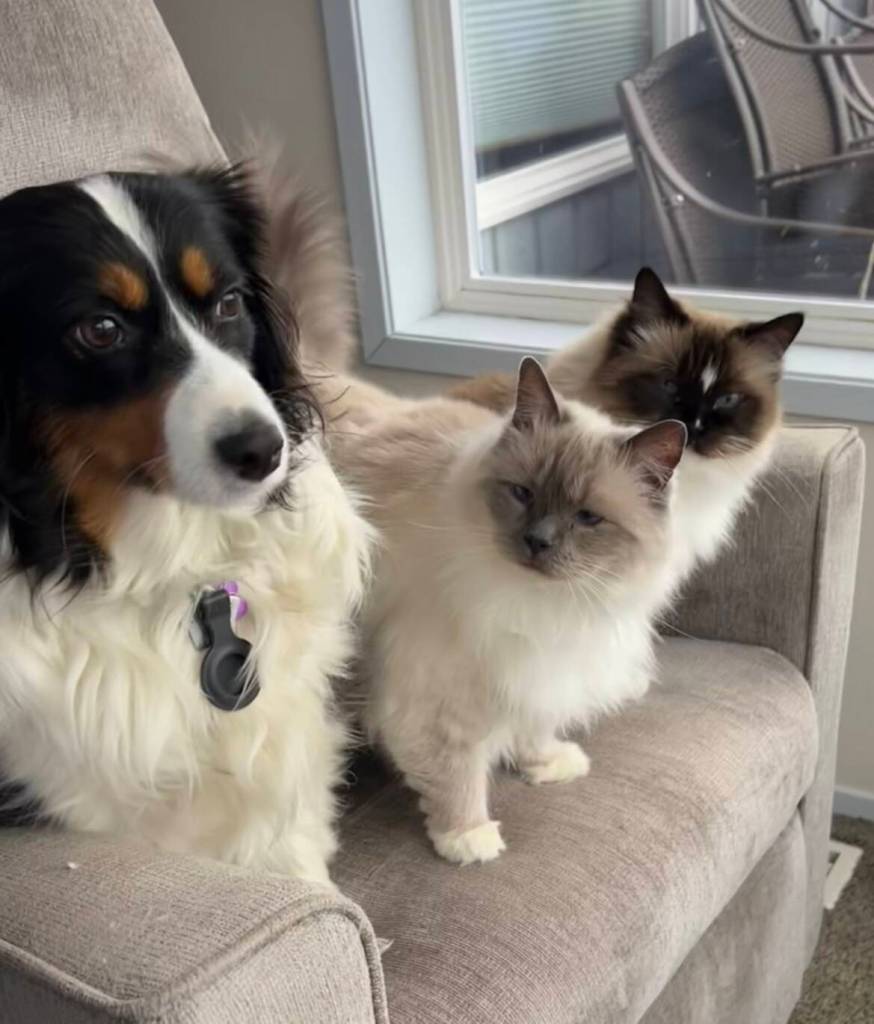
Omma and Kurt Christensen adopted two rag doll cats and a mini-Aussie that came from Finch’s place. Omma said the pets spent about a year at WAIF before they could be adopted and by then they were healthy and well socialized.
“We are so blessed,” she said. “We are so thankful to WAIF.”
The case started on Dec. 24, 2022, when passersby saw dead horses in her field and alerted deputies with the sheriff’s office, who then discovered and seized the mistreated animals on her property with the help of nonprofit organizations and volunteers.
In 2024, Finch pleaded guilty to two counts of animal cruelty in the first degree and two counts of animal cruelty in the second degree in Island County Superior Court.
In addition to a six-month jail sentence, Judge Christon Skinner ordered her to pay more than $100,000 in fines and restitution. At the sentencing hearing, Finch claimed she couldn’t afford to pay, but Deputy Prosecutor Michael Safstrom said she “manufactured her poverty” by selling her farm and then giving the money to a family member.
Skinner ordered her to pay $500 a month, suggesting she could get the money back from her family.
But Finch paid nothing, according to a certification from the county clerk. After she failed to appear at a hearing earlier this year, Judge Carolyn Cliff issued a $1,000 bench warrant.
As part of her sentence, Finch obtained a mental health evaluation. Based on the prosecutor’s statement in court, the intent of the evaluation was to determine if a mental health issue — such as a hoarding disorder — was causing her behavior, but the evaluator did not address this. The report states that Finch attributed her animal cruelty convictions in this case, as well as a charge in a Skagit County case, to financial hardship which impaired her ability to adequately care for her animals.
In 2009, Skagit County prosecutors charged Finch with animal cruelty and transporting or confining animals in an unsafe manner. Animal control seized 39 dogs from her, according to a Skagit Valley Herald story. She avoided the felony charge and pleaded guilty to two counts of transporting or confining animals in an unsafe manner, which is a misdemeanor, according to court documents.
The report concludes that based on Finch’s self-reporting, she does not meet the diagnostic criteria for a mental health disorder. It also states that she was being bullied by people in the community and was homeless and living at a campsite with her daughter.
One of the most difficult aspects of the case was caring for the animals. Cinnamon Hudgins, the executive director of WAIF, and shelter manager Donna Dunn said taking in 59 animals — 31 cats, 24 dogs and four chinchillas — put a strain on the Coupeville facility and its resources.
Finch owes WAIF a total of $88,550 in restitution. Part of the reason for the cost was the fact that many of the animals had to be held for eight months, which was not only expensive for the shelter, but it stressed the animals and reduced the amount of space available for strays and surrenders, the WAIF officials said.
As a result, WAIF increased staffing. The daily population remains high today, Dunn said, which may be due to a combination of economic factors. WAIF’s reduced ability to take intakes during 2022 meant a reduction in number of spays and neuters, which could contribute to the continued high number of dogs and cats in the shelter.
Finch surrendered 15 of the cats and 11 of the dogs about a week after they were seized. Once they were negative for giardia and were spayed and neutered, they were adopted out.
Finch refused to surrender the other animals while her case was pending, so the prosecutor’s office filed a motion for forfeiture. On Aug. 8, a judge agreed with the order, and WAIF was able to put the rest of the animals up for adoption.
All of the dogs and cats were successfully adopted out and are beloved pets in the community, while the chinchillas went to another shelter. Even though the animals had been living in filthy, crowded conditions on the farm, Dunn said some of the dogs genuinely seemed grateful when they arrived at the shelter.
Since Whidbey Island doesn’t have a rescue organization for large animals, a patchwork of community members took in the eight horses at their own expense. One of the volunteers made heroic efforts to try to save the two most malnourished horses, but they eventually had to be euthanized.
Caring for the horses, most of which had health problems, was no small matter.
One of the volunteers, who didn’t want her name published, said she took in a stallion that couldn’t be gelded while the case was pending, which created a dangerous situation on a farm with other stallions. She said sheriff’s investigators didn’t tell the volunteers to keep track of their expenses, so nobody sought restitution, though she conceded that she doesn’t expect Finch would pay anyway.
Today, the surviving horses are living on farms on Whidbey Island or at rescue organizations in Skagit and Snohomish counties. The pigs and rabbits also found homes with local residents.