Wildcat dribbler sinks his 1,000th point
Published 1:30 am Tuesday, January 27, 2026
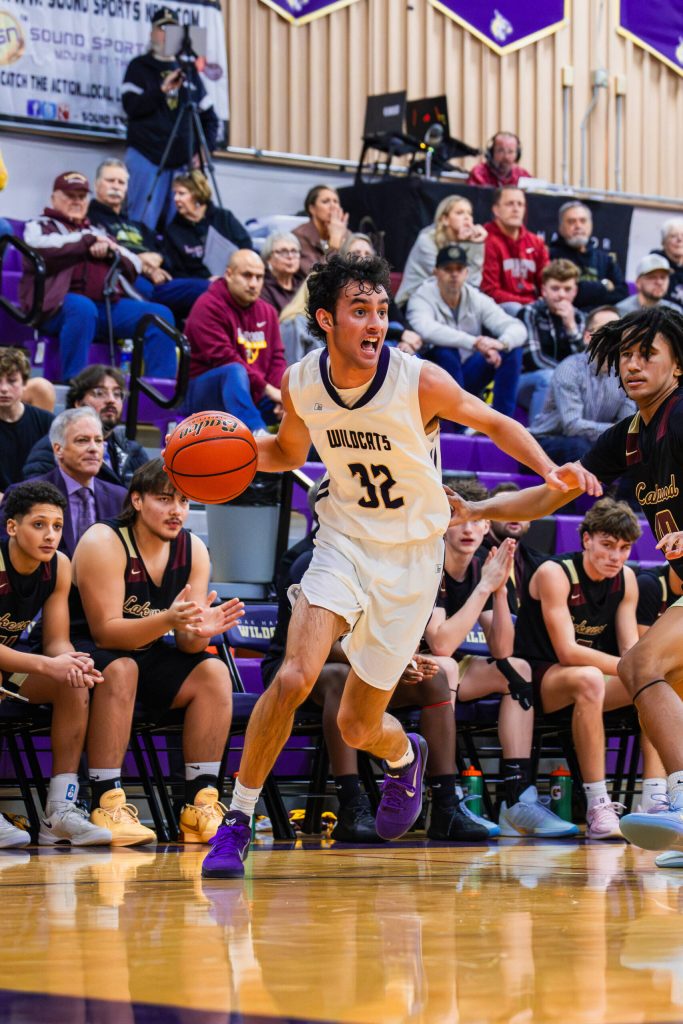
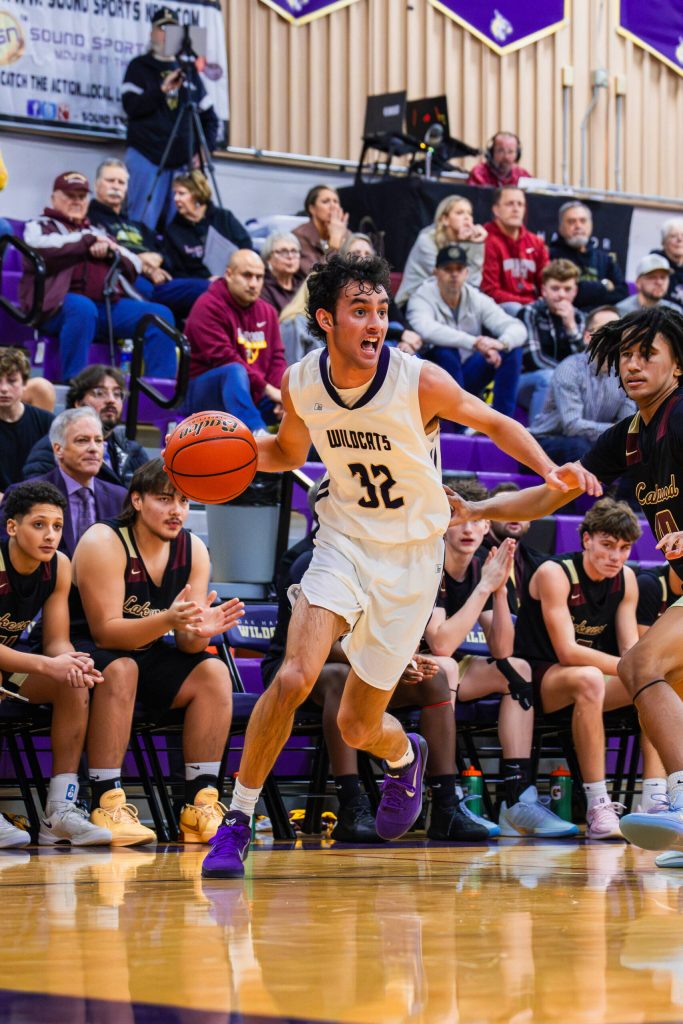
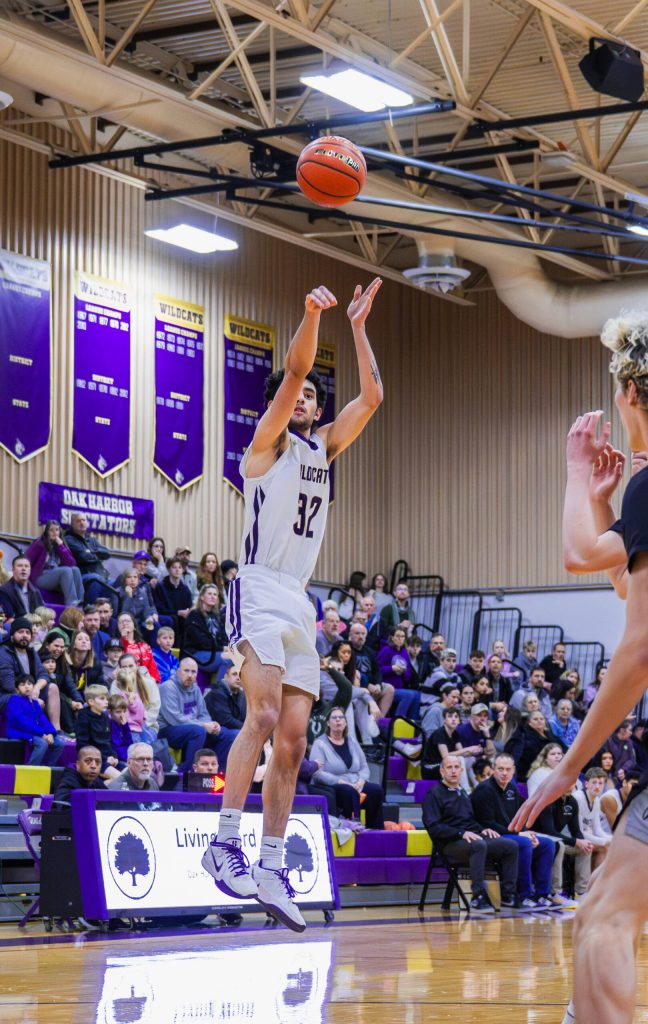


Senior guard for the Wildcats boys varsity basketball team Xavier Ochoa scored his 1,000th career point earlier this month, becoming just the fourth player in Oak Harbor High School’s history — and third in the last two decades — to do so.
Ochoa’s achievement is a testament to his skill and the likelihood of the collegiate career he eyes. It is also emblematic of the program loyalty increasingly valued in a Washington high school sports landscape where more student-athletes may be transferring in pursuit of success.
“Winning’s great but when I look back in 20 years, I won’t remember the record,” Ochoa said. “I’ll remember the memories I have with my coaches and my teammates.”
Two things stick out to varsity boys’ basketball head coach Justin Ronning about Ochoa: his work ethic and his basketball IQ.
Mid-season form for the Wildcats looks like five days of practice, informal weekend hooping sessions and typically two or three games a week. For Ochoa, that also includes strength training, conditioning and watching film.
Ochoa’s parents instilled a strong work ethic within him at a young age, he explained. Both of them work — his mom is a florist with her own shop, his dad is a civil structural engineer — helping to ensure Ochoa and his brother did not have to endure the same hardships their dad did in his youth, after his parents immigrated to the U.S. from the Philippines.
Ochoa recalls watching March Madness with his dad growing up and being “fascinated” by the college basketball tournament and the sport at large. He has been playing most of his life now, but did not start taking basketball seriously until age 12, when he joined club teams.
Basketball is therapeutic for Ochoa, a way to “step back from the whole world,” he explained, and his successes on the court are a means of bringing pride to his family. His dad had similar dreams — but not the same opportunities — as Ochoa.
“He’s given me so much,” he said. “And if I can give back a little bit of the joy of the game, that (would mean) the world to me.”
Ronning began coaching the varsity team ahead of Ochoa’s freshman season, recalling that his basketball IQ was high even then. The coaching staff decided to start Ochoa on the junior varsity team anyways, so as not to put too much pressure on him so early; their plan lasted about a game and a half.
“We knew we needed some help in some of the things that he was really good at on the varsity level,” Ronning said. “So we brought him up, and then we knew it was going to be his program for the next three years after that.”
At 6-foot-3 and 155 pounds, Ochoa acknowledged his smaller size is a weakness. While he struggles to use physicality to create scoring opportunities for himself and his teammates, he is smart enough about the game that he does not have to.
Ronning called Ochoa “one of the best passers I’ve ever watched” and praised his court vision, finishing around the hoop and ball handling. Ochoa said he models his game after players like the Golden State Warriors’ Steph Curry and the Washington Wizards’ Trae Young, comparable in height and weight, to learn “how they’ve been able to score with their size.”
“He’s always thinking a few steps ahead, and so he’s always ahead of the players on the other team,” Ronning said.
Ochoa hit 1,000 career points in a 73-72 loss to the Bellingham Bayhawks on Jan. 6. That same week, the Washington Interscholastic Activities Association named him an Athlete of the Week for his “consistency, court vision and defensive tenacity” and for the 45 points, 26 rebounds, 12 assists and 9 steals he recorded in two games.
Ochoa’s production is unaffected by a tough season for the Wildcats, who hold a 4-7 record against Northwest Conference opponents and a 6-11 record overall as of Jan. 26, according to the WIAA.
“I’ve always just had a knack to get to the hoop, and so I’ve never had to really worry about scoring. I’m more worried about finding my teammates, being more than just a one-dimensional player,” Ochoa said.
Ronning is confident Ochoa’s productivity will translate to the collegiate level; the senior is already fielding interest from schools in the Pacific Northwest and overseas.
Wherever Ochoa ends up playing after graduation, his contributions to Oak Harbor High School basketball will not soon be forgotten.
“In the short term, (Ochoa’s success) provides a positive spotlight for the program and gives younger players a model of what is possible through hard work,” athletic director Jay Turner said. “Long term, it helps build pride in the program and reinforces a culture of commitment and competitiveness.”
Ronning and Turner attested to an increase in high school student-athlete transfers in Washington — especially in bigger cities like Seattle — since the WIAA relaxed its transfer rules, making players like Ochoa even more important to the success of sports programs.
An amendment passed in April now permits students to transfer once “during their four-year high school career, but only within designated transfer windows,” according to the WIAA. Student-athletes are then rendered ineligible for a portion of the season’s varsity competition.
According to the Tacoma News-Tribune, student-athletes previously could only “retain their varsity eligibility” if their families moved, too. “Unique circumstances concerning the student’s physical or emotional status” were one of a few exceptions.
The WIAA’s website asserts the amendment does not create a “transfer portal” like the kind used by the National Collegiate Athletic Association. There, the number of Division I student-athlete transfers to other NCAA schools has increased steadily since 2022, with more than 15,000 graduate and undergraduates transferring in 2024, according to the NCAA.
Sean Bessette, the WIAA’s director of communications, said 1,949 transfers have been recorded for the 2025-26 school year. Of those, 421 “have accessed the redefined window of transfer” since Aug. 1, the day the new transfer policy was implemented.
Turner acknowledged that “there are a variety of factors that contribute to that trend” of increasing student-athlete transfers in high school sports, also including “family moves (and) academic opportunities.” However, he added, “it makes accomplishments from student athletes who stay committed to their programs even more meaningful.”
Ochoa and Ronning think teammates, coaches and a better shot at championships may be reasons why student-athletes decide to transfer. For Ochoa, teammates and coaches are a reason to stay.
“I never had any thought to go somewhere else … It’s a great group of guys, and we’ve stayed quite close,” he said.
Ochoa and the varsity boys basketball team are scheduled to play four more games before the end of the 2025-26 season, including three home games Jan. 28, Feb. 2 — senior night — and Feb. 6.