Whidbey’s grassroots success story: Celebrating the 25th anniversary of no-spray movement
Published 1:30 am Friday, September 12, 2025



By KATE POSS
Special to the Record
Decades ago, the sides of roads on Whidbey Island were “scorched earth” swathes of toxic chemicals sprayed each spring.
It’s been 25 years now that the island has green roadsides, with wildflowers and salal bordering the byways. Most residents may not know that a hard-won local citizen victory in Island County inspired a movement statewide that in turn influenced many other states to decrease herbicide use on the miles of public roadways across the nation.
A small group of committed individuals and a supportive local Whidbey community took action to reverse habitual county practices about herbicide use, refute corporate spin tactics by chemical companies and shake up passive acceptance by the population. Several factors came together to make this difference.
Back in 2000, a number of people on the island were not able to drive to the grocery store during the spring roadside spray campaigns because just driving next to those toxic chemicals would make them ill.
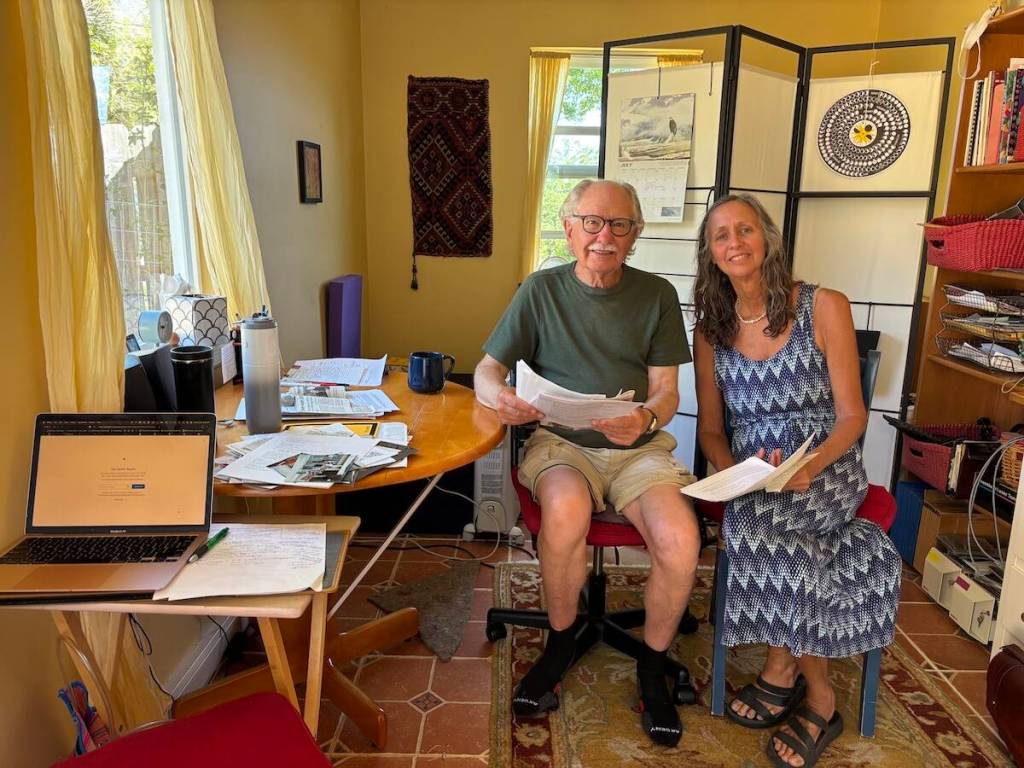
Two of them, Theresa Gandhi and Lori O’Neal, along with Brad Weeks, spoke out about it at an event. Inspired by their story, Laurie Keith, a Langley massage therapist and yoga teacher in the audience, decided to step up and help.
“I wanted to do something to care for my local bioregion,” Keith recalled.
She enlisted some friends who were also choosing to take on a project to care for the earth as part of a local study group facilitated by the Northwest Earth Institute, now known as ecochallenge.org.
They created an organization of individuals and groups that shared this interest and formed Whidbey Island No Spray Coalition, known as WINS. Whidbey Environmental Action Network, known as WEAN, joined WINS and provided procedural and legal guidance.
Fifteen years previously, WEAN formed in part to negotiate with the county to implement and respect orange “no spray” signs posted by residents along their roadside property. This attempt helped a percentage of roadsides remain herbicide-free, but getting progress on further reduction measures stalled while spraying was growing ever more potent.
WINS received a remarkable amount of support from the Whidbey Island public.
“Email was a new and novel thing at that time,” recalled Keith, president of WINS. “People were eager to get an email inviting them to write a letter or come to a commissioners’ meeting. They weren’t overloaded with too many causes as people often are these days. Meanwhile, at one point WSU sent in a Monsanto-funded economic entomologist to explain to the commissioners the safety of Roundup. People showed up.”
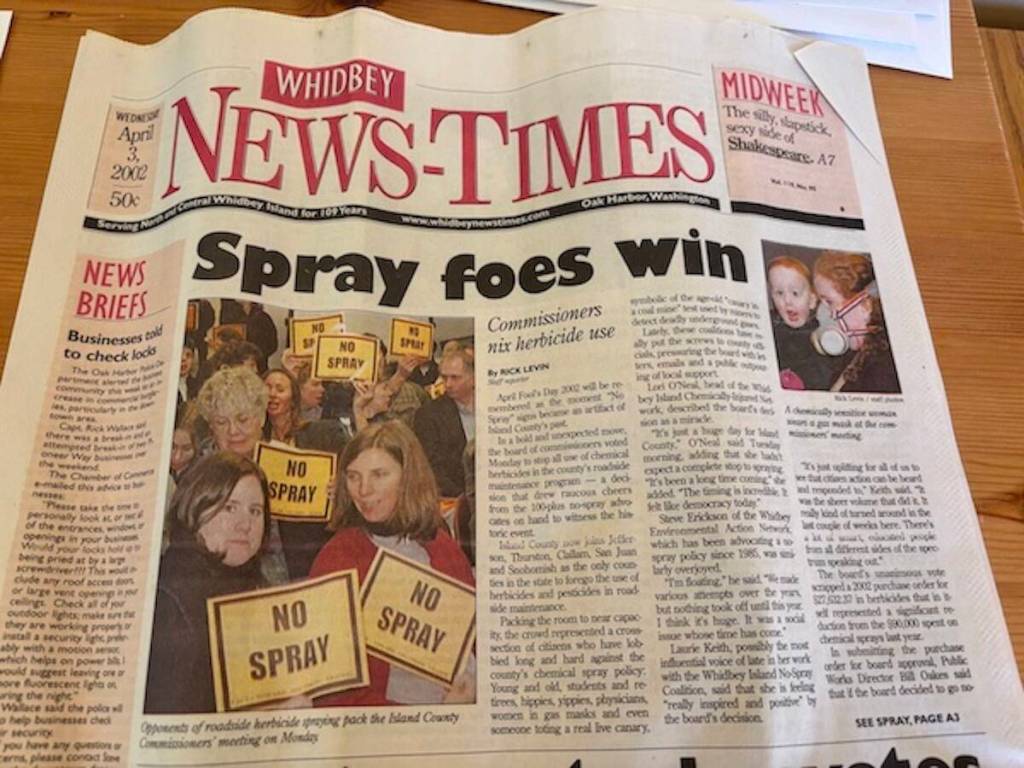
People sent in letters, spoke at meetings, waved signs and signed a petition that garnered 2,000 signatures. The aforementioned Gandhi showed up every week at the commissioners’ meetings with her fake canary in a cage, a gas mask on her face and her brazen reading of the research conclusion that these herbicides cause “testicular atrophy and erectile dysfunction in frogs.”
After carefully prepared meetings with the county road supervisor, stressing worker hazards, soil damage and other hidden costs to herbicide use, WINS also got a fortuitous boost with the election of a more sympathetic commissioner to its cause.
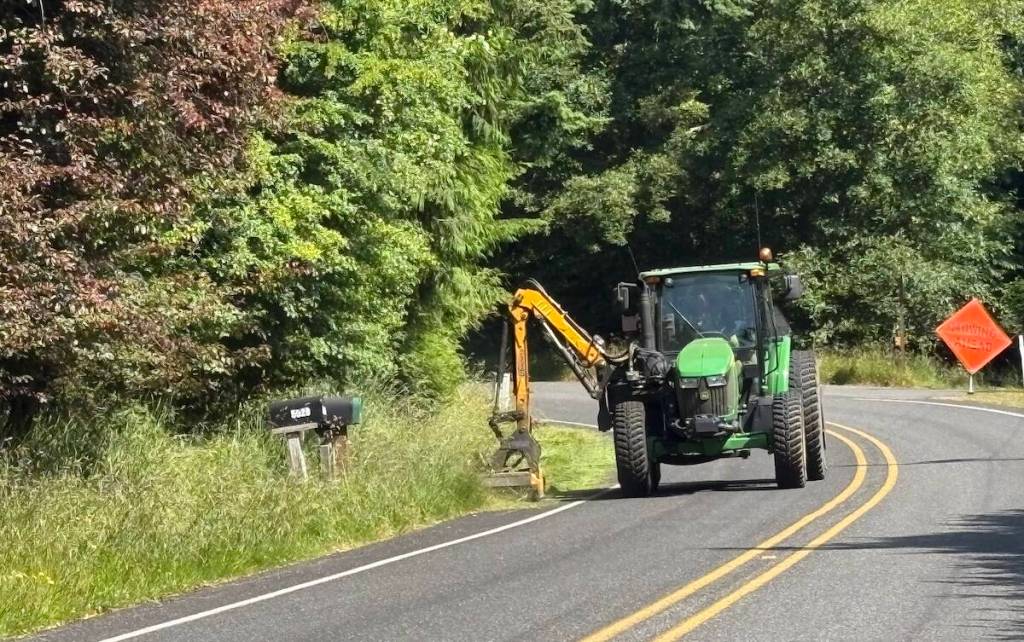
The continued pressure merited a commissioners’ vote. Finally, on April 1, 2002, an anxious, boisterous crowd arrived at the commissioners’ meeting just before they voted on the policy of vastly reducing the chemical spraying and reverting to integrated vegetation management and relying strongly on mowing.
“Just before their vote on April 1, 2002 at the commissioner’s meeting, there was standing room only,” said Mark Wahl, a WINS member who focused on the potential cost savings analysis.
On that day, April Fools’ Day, the commissioners cancelled their standing order to buy more and more pesticides (each year the amount escalated because of increased resistance to the herbicide) and purchased mowers instead.
What finally brought the commissioners around? Was it all the letters, 2,000 petition signatures, the cost analysis, the numbers of people showing up? The good research on alternative practices and examples of other no-spray counties? The new commissioner?
The April Fools’ Day vote wasn’t the end. About a year later, Clallam County residents asked WINS to work with them to get the state to stop spraying.
WINS, with WEAN’s full participation, joined Clallam County activists and solicited the support of Washington Toxics Coalition and Northwest Center for Alternatives to Pesticides and went to work. Two years later, WSDOT held an information event in Coupeville to try and calm the WINS coalition that they now called “Whidbey Is Never Satisfied.”
Instead of people being appeased by WSDOT’s presentation, one after the other of Whidbey residents stood up to speak out against the state’s spraying of herbicides along state highways. Again it was a packed house. Keith described the energy then as “Whidbey rocks!”
Doug MacDonald, who headed WSDOT at the time, listened and eventually responded. He was newly hired following his successful campaign at cleaning up polluted Boston Harbor.
Ray Willard, a state roadside maintenance chief architect, was empowered by WSDOT and emboldened to craft a truly green Integrated Roadside Vegetation Management Plan, first using 18 miles of Whidbey’s state highway as a pilot.
Wahl and Marianne Edain — a cofounder of WEAN — kept the pressure on the state during that pilot, including attending several extensive work sessions with a variety of groups, all with the goal of developing a plan for an effective alternative roadside management plan. Over two decades later, the collaboration crafted a pre-eminent plan cutting between 50% and 70% yearly of herbicide use when compared with usage in 2000.
In 2018, Willard returned with a cadre of his top staff to Whidbey to give a vivid visual presentation before the original WINS and WEAN members. He showed how radically evolved the roadside maintenance plan for highways on Whidbey — and then Washington state — had become.
New roadside management methods employed GPS, iPads and smart apps to help map species locations, water runoff patterns and timing of treatments. The goal was to promote the native plants already there or installed, using minimal mowing around native plants and naturally choking out noxious weeds. Workers and planners capitalized on detailed plant knowledge.
Willard recently shared that this integrated roadside management approach has been the defining work of his career. He said Washington state is a model for Integrated Roadside Vegetation Management, getting regular requests from other states to share plans and methods. Another payoff is that about 1.5 million pounds of active ingredients of toxic chemicals are not going onto the earth and into its groundwater for the past 20-plus years.
While the efforts prompted the county and state to revise vegetation management plans to rely on mowing, both still spray herbicide for certain weed species, under guardrails and before some paving.
Looking back, Keith said it’s important for people to know the “cool history” of Whidbey’s no-spray movement during which the little guys and the community made a difference in the face of the “Big Boys.”
“I like offering some good news, bright light, inspiration, positive vibes,” she said, “so people can feel a lift, some glee as I do when they drive down the roads seeing the salal and grasses waving in the breeze, or the mowers.”
Laurie Keith and Mark Wahl contributed to this story.