Seagull deterrent program soars to success in Oak Harbor
Published 1:30 am Friday, May 29, 2026
Seagulls, beware.
Oak Harbor City Council members were pleased with the progress of the falconry-based abatement pilot program in Oak Harbor led by Sky Bird Patrol, which was discussed at a workshop on Tuesday.
A surplus of seagulls in the city means an increase in feces and associated public health concerns, said Public Works Director Steve Schuller. Falconry-based seagull deterrence is a humane and non-lethal way to deter the gulls from congregating on business roofs around town, he noted. The pilot program runs through July.
So far, it is clear from the program that local businesses and residents feeding the birds contribute to an increase in the population in the city, Schuller noted. To combat this issue, city staff have put up signs along its waterfront parks, telling people not to feed the birds, and are expanding community outreach about the issue as well.
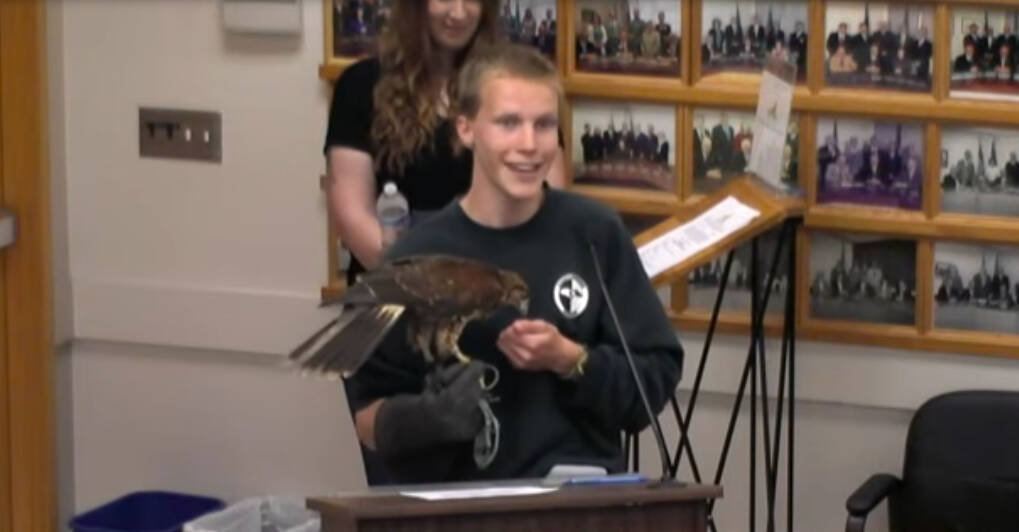
Cole Serad, the falconer spearheading the pilot program in Oak Harbor, is finishing his senior year in high school and will receive his associate’s degree in biology next month as a Running Start student. To deliver his report about the pilot program, Serad brought the trained raptor Mantis, Oak Harbor seagulls’ no. 1 nemesis, who was eager to be there thanks to the constant flow of snacks delivered by Serad.
Mantis’s job, Serad explained, is to prevent seagulls from nesting on roofs and dropping feces. Through the data Serad collects daily throughout Oak Harbor, he has seen a reduction rate of 80% in seagulls in Oak Harbor daily. Fewer seagulls around town means more savings for the city, Serad assured the council members.
However, as nesting season approaches, Serad said he expects an increase in gulls in the area. He estimates that there are about 150 nesting pairs downtown and 500 seagulls in the greater Oak Harbor area. Those 150 nests, without a falconry program in place, would make about 400 chicks, costing the city even more money. Yet, Serad believes with the program’s current reduction rate, the city is set to have a maximum of 30 nests downtown, he said.
Residents and businesses feeding the birds remains a big issue, he advised, and creates an obstacle to the effectiveness of the program. On April 12, there were eight feeding events, the record day of feed, which he documented. The pilot program’s success decreased by 50% in that one day. He has also documented several instances where businesses fed the seagulls over five pounds of food. Since speaking with local businesses, this seems to be a non-issue, Serad noted, but he still regularly sees people drive around and drop food scraps, hindering the program’s success.
“That goes to show just how effective feeding is at keeping the gulls in town and why it should stop,” Serad said. “That’s why we recommend that we implement potentially civil ordinances or whatnot to stop it from happening in the future.”
Serad noted that the city’s efforts in speaking with business owners and putting out signs has already decreased the number of feedings.
Though the pilot program costs $35,000 to the city, the program is already saving money around water filtration costs, public works costs and more, Serad said. Based on “very conservative estimates,” the falconry abatement program has saved the city about $17,000 dollars or more so far, Serad said.
Councilmember Bryan Stucky, who owns a business downtown, attested that he can see a difference in seagull activity there. He agreed he would be interested in an ordinance prohibiting people from feeding the gulls.
Echoing his approval, Councilmember James Marrow noted his original skepticism about the program has dissipated since seeing its results. He agreed that he would like law enforcement to be able to do something about people who dump food in the future.
“I’m delighted to see that there are results,” Marrow said.
A longer 30-page report about the falconry-based abatement program will be released to the public after the city reviews it, Serad said.