Fire district feels burned over new rating
Published 1:30 am Friday, May 15, 2026
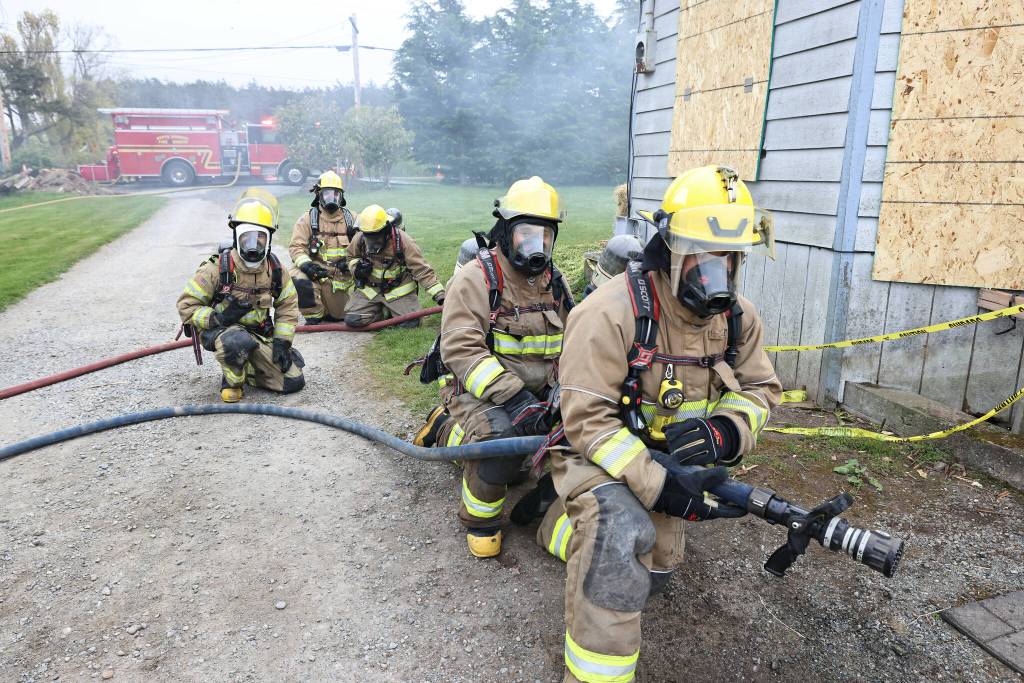
North Whidbey Fire and Rescue is contesting its protection class rating.
A draft report indicates that the rating worsened, moving from a five to a six since the independent, nonprofit Washington Surveying and Rating Bureau last evaluated the district and its surrounding community in 2020. Six is a common rating in the state, according to the bureau, and 10 is the worst.
Ratings evaluate a district’s fire protection and suppression capability via the condition of its facilities, equipment, apparatuses and staffing; its water supply; its fire safety control, or fire code enforcement and education; and its emergency communication systems.
Numerous criteria are evaluated within each of these categories.
Relevant information is collected from “fire chiefs, fire marshals, water purveyors, emergency dispatch center managers and other community officials,” according to the bureau’s website. A points system is used to evaluate how well criteria are met.
Some insurance companies use these ratings to determine the risk of fire and other natural disasters in an area and set property owners’ fire insurance premiums accordingly. Better ratings generally mean lower premiums.
North Whidbey Fire and Rescue performed significantly worse in evaluation of its hydrants’ inspection and condition, as well as its arrangement and operation of water system components, per the draft. That, along with receiving 0% of the available credit for fire code inspections of existing occupancies — down from 32% previously — contributed to the district’s downgraded rating.
But the bureau administered the rating without receiving important information from water districts and Island County.
“It’s very disheartening,” Fire Chief Chris Swiger told the News-Times.
An email to Swiger from Jason Sanders, a fire protection analyst with the bureau, states that 18 water districts failed to provide “a completed water questionnaire, maintenance records of hydrants and control valves and any current hydrant flow data” at the bureau’s request.
Swiger sent a letter to water districts requesting similar information in light of the rating but told the district’s board of commissioners at a meeting on Tuesday that he only “got one back.” Further, he informed the board that the bureau has yet to receive information about fire building inspections it asked the county for.
Kevin Bloomfield, the county’s fire building inspector, explained that inspections are supposed to be completed annually and include any publicly accessible buildings. Fire extinguishers’ functionality and the presence of electrical hazards are some things which are evaluated.
Sanders said in his email that “in 2025, it was my understanding that Island County had recently taken over the inspection program of the existing commercial properties, and that prior to this occurring, there were no inspections conducted since 2020.”
Fire commissioner Marvin Koorn explained in an interview that a contract with the county previously empowered districts to conduct their own fire building inspections on the county’s behalf. Districts and the county each received a percentage of the cost of these inspections, but ultimately, the county was in charge of keeping record of them.
Tamra Patterson, a building official with the county, confirmed that the county assumed responsibility of these inspections for North Whidbey Fire and Rescue in October 2023 after creating a fire building inspector position earlier that year. Only Central Whidbey Island Fire and Rescue still conducts its own inspections, according to Bloomfield.
“Either they didn’t get the information from the county or the rating bureau didn’t request it from the county,” Koorn explained. “That’s why we’re arguing the points that we lost.”
District officials stressed the importance of contesting the rating given the cost which could come to the community as a result of an evaluation based on incomplete information.
“No organization wants to see any evaluation of their organization decrease, especially when they’re not in full control of that evaluation,” fire commissioner Gerald Smith said via email.
Koorn believes the rating inaccurately reflects the department’s capability.
“Every time they knock you down a rating, it basically says that you’re not as good as you were,” he said. “And we think we continue to improve.”