Concerns raised about kratom use on Whidbey
Published 1:30 am Friday, April 17, 2026
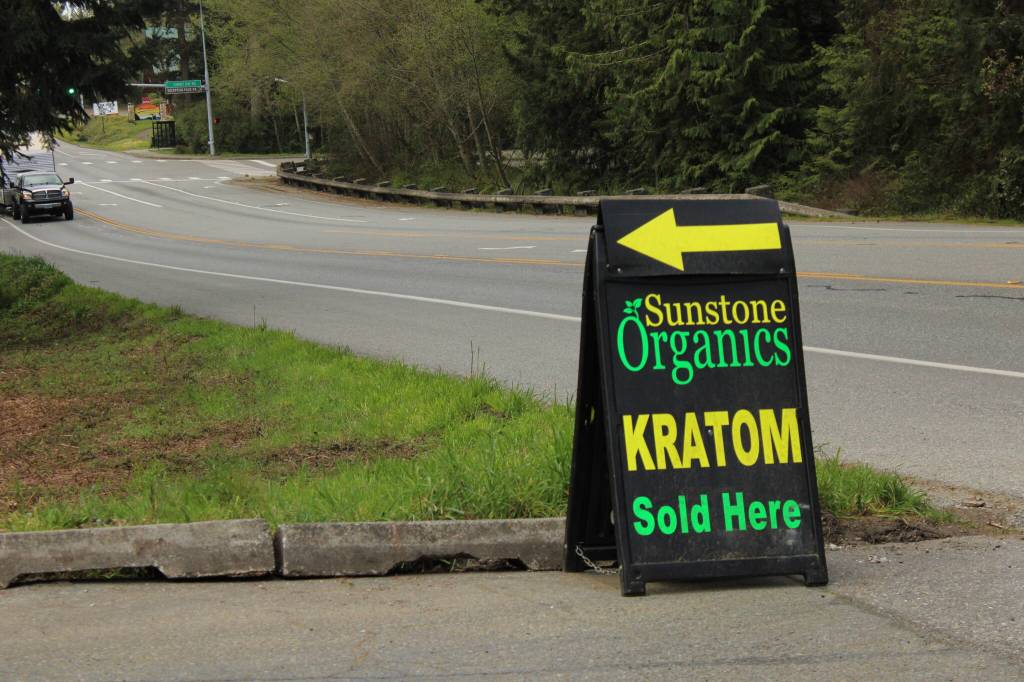
Imagine your 12-year-old stops at a gas station after school and buys a pack of gum and a colorful drink. Little do you know, the drink is the synthetic version of kratom and is highly addictive. In Island County and across Washington state, that scenario is completely legal.
Oak Harbor City Council members took up the issue Tuesday during a workshop, discussing whether to regulate the sale of kratom within city limits.
Amy Walden, coordinator for the Oak Harbor Youth Coalition, warned council members that the substance poses risks to both youth and adults. She was invited to speak by Mayor Ronnie Wright after she brought up her concerns at a Wright Blend talk.
Kratom is a plant native to Southeast Asia. In its natural form, it can produce effects similar to strong coffee, Walden said, but at higher doses it can act like an opioid. Because it is not federally regulated and Washington state has no specific restrictions, manufacturers are not required to fully disclose product contents. That lack of oversight, she said, increases the risk of contamination from undisclosed variants or substances like heavy metals and salmonella.
Locally, kratom is widely available. Walden said it is sold in at least eight locations across Island County, including gas stations, convenience stores and vape shops. While smoke shops require customers to be 21 or older, other retailers impose no age restrictions. The products are often marketed as gummies, energy shots or brightly colored drinks.
Walden pointed to national data to illustrate the risks. Calls to U.S. poison control centers have risen sharply since September 2023, coinciding with when the more potent compound known as 7-OH was introduced to U.S. markets. Although 7-OH occurs naturally in small amounts, she said, some companies concentrate or mislabel it as kratom, increasing its danger. In 2025, she said, Island County public health reported a spike in poison data from kratom use without being paired with any other drug.
“This is not kratom,” she said. “This is not your natural kratom that you find in nature, and it’s not a powdered form that was made for human intake.”
According to Walden, synthetic forms have been linked to serious side effects, including tachycardia and respiratory depression.
Oak Harbor Police Chief Tony Slowik said standard opioid tests do not detect kratom, leading to inconsistent data on overdoses and use. Additionally, officers cannot mitigate what manufacturers include on product labels.
Walden said the drug’s short half-life contributes to addiction by making it easier for users to build tolerance.
“It binds to multiple receptors in the brain, but specifically to the mute opioid receptors, and it’s proven to do so more potent than morphine,” Walden said. “It gives you an opioid-like high.”
She added that the largest group of users tends to be middle-aged, middle-class, educated white women. Many use the substance to manage pain, anxiety or depression. Because some users may already be dependent without knowing, Walden urged a cautious response, including a “six-month moratorium on the sale of all products containing mitragynine and its variants.”
She also recommended working with health care providers so consumers can safely manage their withdrawal symptoms.
Council members generally agreed that action is needed, though opinions differed on the approach.
Councilmember Barbara Armes expressed support for the ban of kratom and its variants in city stores. She favored working with public health to influence state officials to do a statewide ban on the substance.
“I think this is a great idea, and I think it’s probably long overdue,” she said.
Councilmember Eric Marshall supported broader coordination beyond city limits.
“I support the idea of doing this at Oak Harbor, but we are just one municipality, right? You just go right outside of our limits and then they have potential to purchase it there as well. So the most effective approach, obviously, I think is the broader that we can do this,” he said.
Walden said efforts are already underway at the county level, with a presentation scheduled for the Board of Health in June.
Councilmember Tara Hizon urged caution about a full ban, referencing how some residents may rely on kratom to self-medicate their health conditions.
“I would be more towards regulations rather than an all-out ban,” she said, though she was still open to create regulations. “I would certainly support the city taking some kind of age-restrictive action.”
Slowik note the enforcement would likely require action from public health authorities, who would need to categorized the issue as a public health emergency. Another option is for the city to enact a code enforcement measure that would prohibit the sale of kratom and variations of the drug. However, since it isn’t restricted within the state, law enforcement wouldn’t be able to enforce possession of it or force the manufacturer to be transparent about what is in the product, Slowik warned.
Councilmember James Marrow adamantly agreed that the drug use should be mitigated. He said it will take a multi-prong approach to directly address the supply side.
“We need a groundswell of public support to oppose addictive and destructive substances,” Marrow voiced.
Like Marshall, Armes and Marrow, Councilmember Wiegenstein noted his agreement for kratom sale restrictions, yet he highlighted the importance of addressing the root of addiction.
“Prevention isn’t just teaching our youth about what not to do, it’s about encouraging communication in the family at the home and making sure the mental health is taken care,” he said.
Wright said the city plans to push the issue at the county level for greater impact as an Island County Board of Health member.
If the council ultimately votes to ban kratom sales, Oak Harbor would join Cle Elum and Spokane as the third city in Washington to impose restrictions on its sale.
If you or someone you know is overdosing on kratom, call 911. Naloxone can be used to stop an overdose.