Sound Off: Why Misdemeanor Courts Matter More Than You Think
Published 1:30 am Wednesday, April 8, 2026
By RON COSTECK
Island County District Court judge
Within legal circles, a phrase sometimes surfaces to distinguish levels of the court system: “it’s just District Court.” The comment is typically meant to separate misdemeanor courts from Superior Courts, where serious felony cases can result in years in state prison.
At first glance, such a statement might seem dismissive. But as an Island County District Court judge, the notion that District Court is somehow lesser does not resonate with me. The phrase reflects a fundamental misunderstanding of where some of the justice system’s most impactful work occurs.
Rather than viewing District Court as a lesser venue, I see our court as a “community court”—one that operates at the front lines of public safety, behavioral health challenges and everyday quality of life.
To begin that conversation, I ask people to reflect on what it felt like to walk the streets of Seattle in the 1970s or 1980s, and then compare that memory to what they see today. If what comes to mind includes visible homelessness, open drug use, addiction and untreated mental health issues, then we are ready to understand why District Court matters.
I often refer to District Court as a “community court” because it handles the types of offenses that most directly affect everyday life. These include domestic violence, stalking, DUI, reckless driving, trespass, theft, shoplifting and disorderly conduct. These cases, while classified as misdemeanors, often reflect recurring patterns tied to addiction, mental illness and economic instability. They also represent the bulk of the justice system’s workload—District Courts frequently process three times as many cases as Superior Courts.
For many individuals, District Court represents their first—and often only—interaction with the justice system. For others, particularly those struggling with homelessness, addiction or mental illness, it can be a critical intervention point where meaningful change can improve lives and help break the revolving door of criminal behavior. Done well, this court has the capacity not only to change lives but also to reduce recidivism in the community.
One of the reasons for this is structural. Unlike Superior Court, District Court probation operates under the direct supervision of the presiding judge. When a person violates a court order or falls out of compliance with treatment, they return to the same court that imposed the sentence. This continuity allows the court to respond quickly and adjust conditions in ways that both protect the public and support long-term behavioral change.
Accountability and monitoring are essential. However, understanding the person in front of you—their challenges, their history and what might actually help them succeed—is equally fundamental to improving outcomes and reducing recidivism.
Supervision periods in District Court can last between two and five years, often longer than the monitoring attached to many violent felony cases in Superior Court. Over time, this extended contact gives judges and court staff deeper insight into the individuals they oversee. That familiarity can lead to more tailored approaches—balancing consequences with treatment opportunities in an effort to reduce repeat offenses.
While Superior Court plays a critical role in addressing serious and violent crime, everyone should understand that District Court is not “just” anything. It is where the justice system most directly intersects with the daily lives of the community. It is where accountability meets opportunity for change. And it is where, in many cases, the trajectory of a person’s life—and the safety of a community—can be meaningfully altered.
I would ask everyone to return to their mind’s eye of Seattle “then” and “now.” Like many, I see homelessness and drug use. But I also see criminal trespass and possession charges—misdemeanor offenses that present an opportunity for the court to intervene in addiction and mental health crises.
From that perspective, District Court becomes more than a venue for minor offenses. It serves as a form of community safety net—albeit one that exists only after other systems have failed. I see District Court—a community court—as the last, and arguably regrettable, social net, but one with the tools to protect the community and guide meaningful change in individual lives.
However, this role depends on consistent enforcement and adequate resources. If courts, judicial staff, jails, law enforcement or prosecutors’ offices are underfunded, these high-volume offenses are often under-addressed—and we risk making someone else’s “now” our permanent reality. We are fortunate in Island County and within our cities. I have witnessed behavioral health professionals, law enforcement, prosecutors and your District Court working hard on your behalf to preserve community safety, quality of life and the dignity of the people who appear before the court.
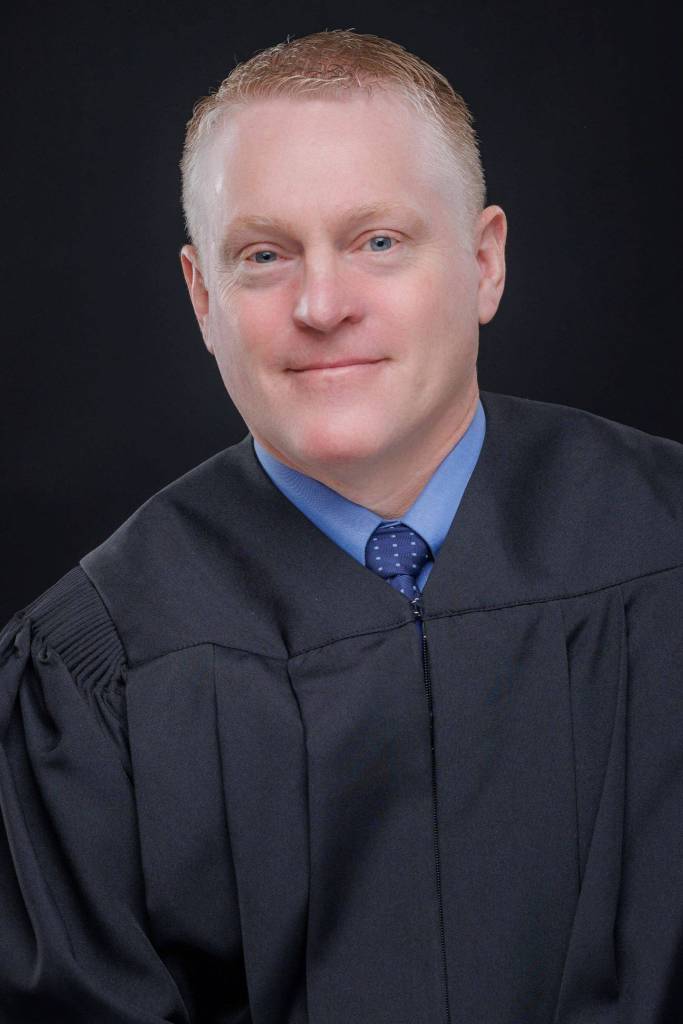
Ron Costeck is the judge for both Island County District Court and Oak Harbor Municipal Court.