Farmhouse on Ebey’s Prairie has historic charm
Published 1:30 am Wednesday, March 18, 2026
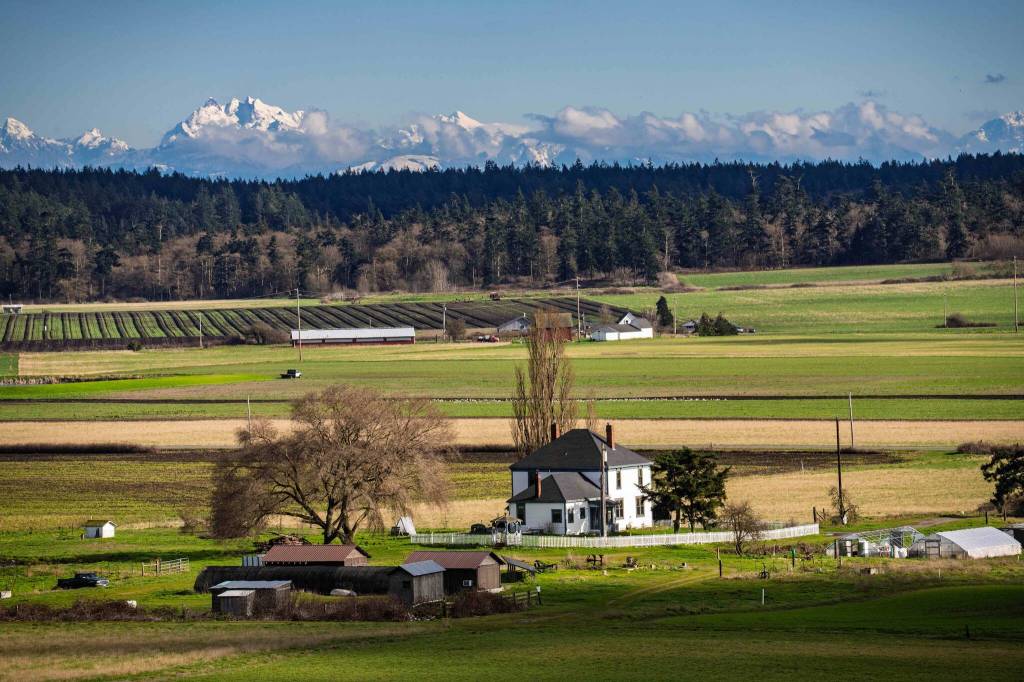
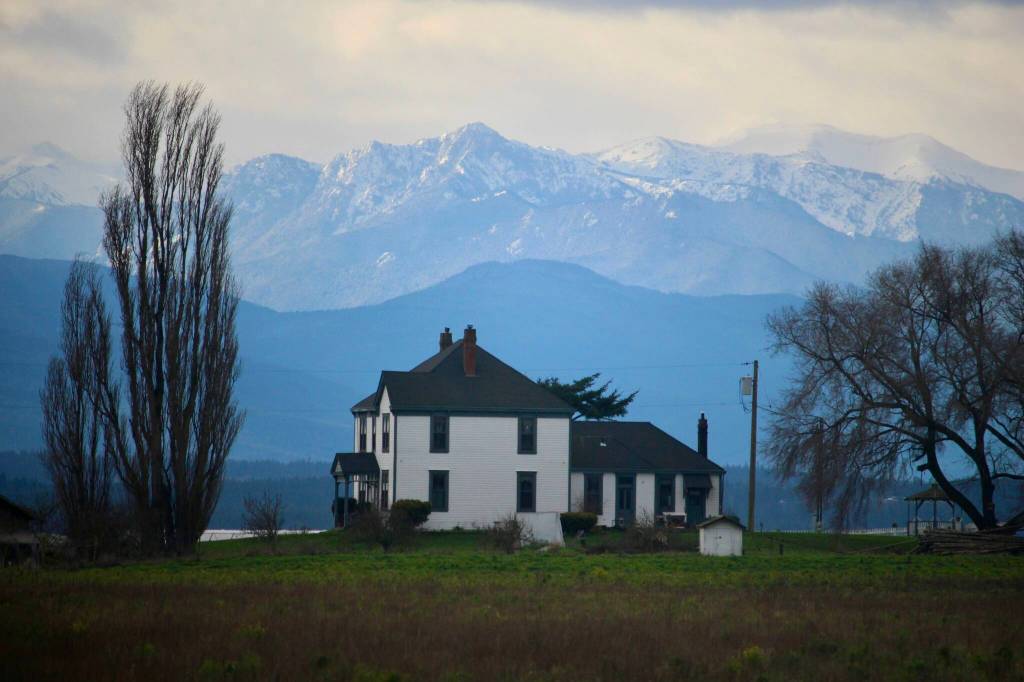
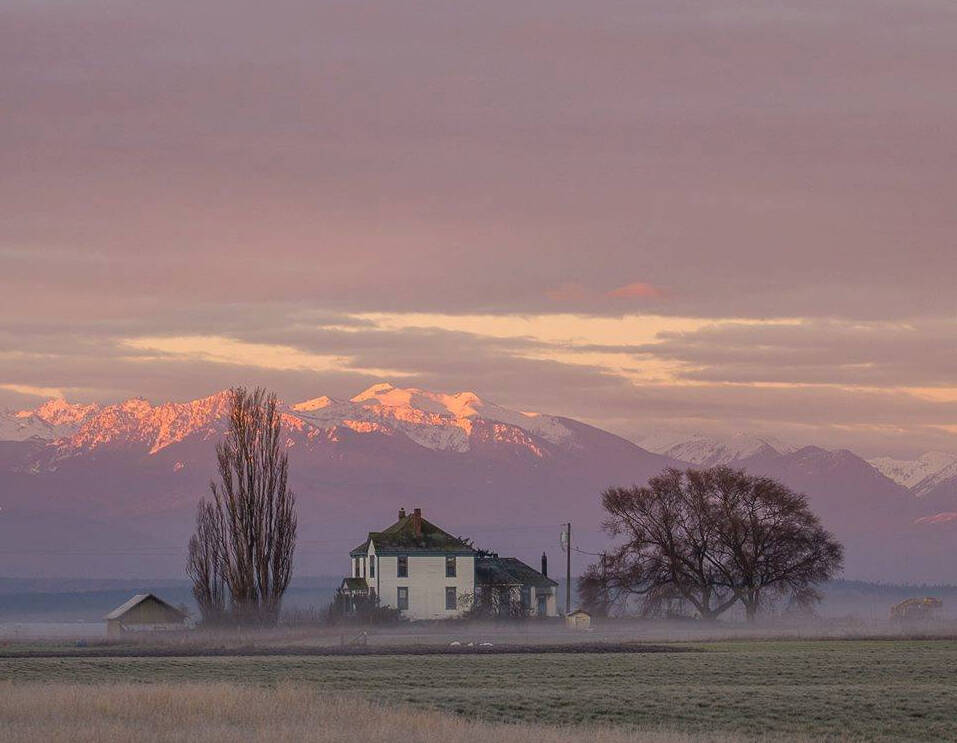
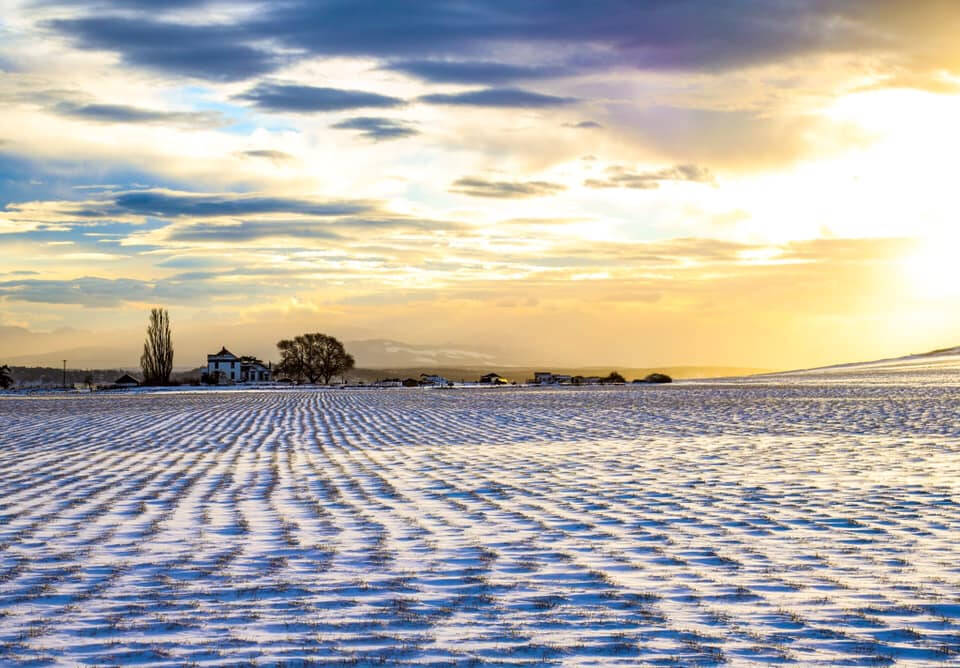
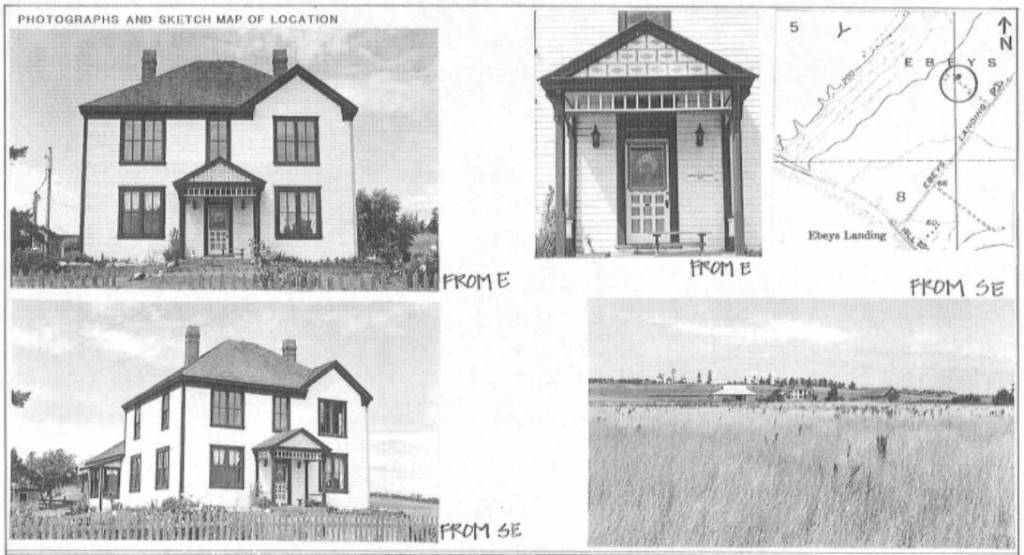







On a quiet stretch of Ebey’s Prairie, a white farmhouse has stood for more than a century, facing the wind that whips off the Admiralty Inlet. Inside the cozy structures, residents can see the shining water and the Olympic Mountains on the horizon.
The “Gould House” on Willowood Farm is one of the many historic houses, barns and buildings that have been lovingly cared for in Central Whidbey, home of Ebey’s Landing National Historical Reserve and the town of Coupeville, which is the second oldest town in the state.
The history of the house begins with the land. The habitation goes back thousands of years, with the Lower Skagit tribes thriving in permanent villages. With the passing of the Donation Land Claim Act in 1850, Congress agreed to grant land to White settlers willing to farm it. On Central Whidbey, Colonel Isaac Neff Ebey claimed 640 acres of land on Oct. 15, 1850, which is present day “Ebey’s Prairie.”
During the next seven years, as an active Democrat, he played a key political role in helping form Island County and the state of Washington, and served as a district attorney, according to the Historical American Buildings Survey documentation by Anne E. Kidd.
According to the documentation, Ebey was beheaded in 1857 by Tlingit Native Americans, indigenous people of the Pacific Northwest Coast, and ten years later, his land was divided in half, split into north and south sections among his two sons, Kidd documented.
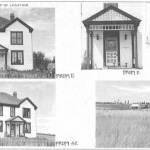
Eason Ebey took the northern portion and named it “Willowood Farm” after the willow trees on the property. Then, in 1868, he sold the land to John Gould, a two-time Island County treasurer. In 1896, Gould built the vernacular farmhouse with a wood frame set on a concrete and rock foundation on top of the original foundation of Eason Ebey’s home. It is now known as the Gould House and is separate from the John Gould House in Coupeville.
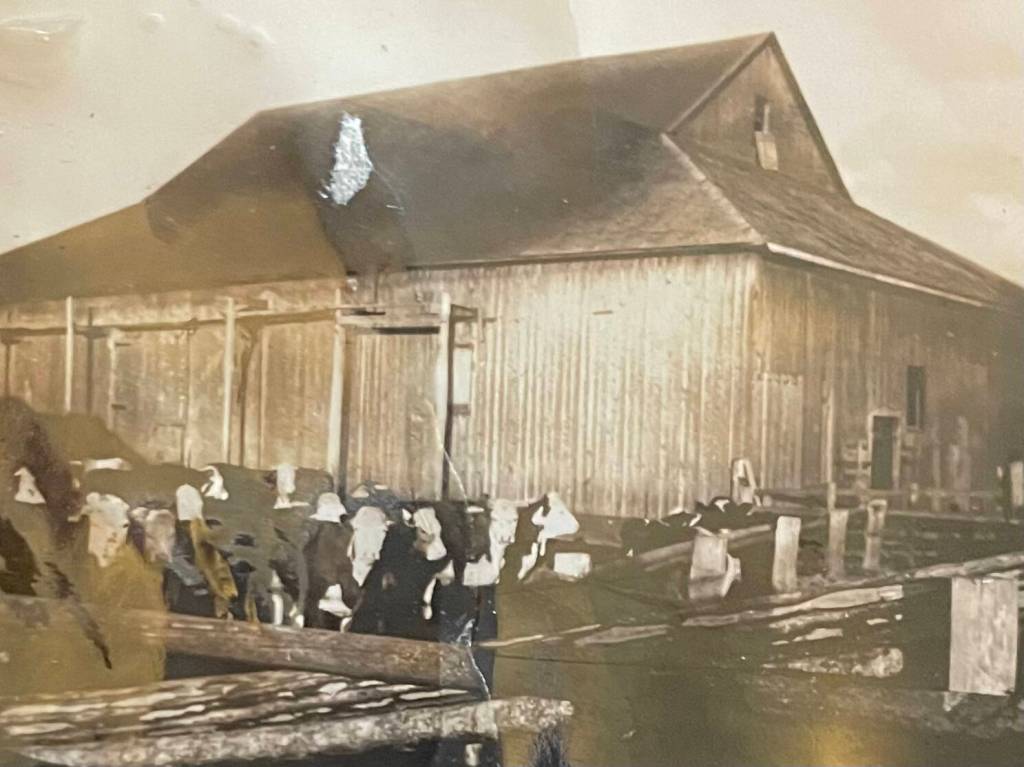
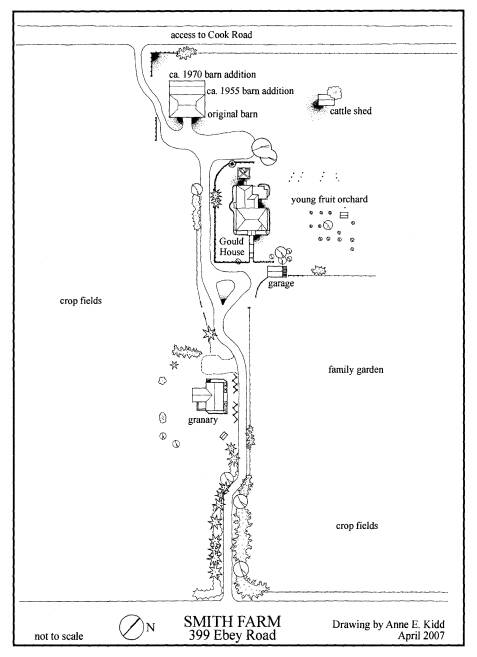
An accompanying granary was built around that time as well. Gould rented the property to Edward Jenne and his wife, Agnes Smith, to manage. At that time, they raised cattle, chickens, sheep and Angora goats. Chinese and Japanese workers lived on the land and helped on the farm.
Gould’s niece, Mary Hendrickson, inherited the estate after Gould passed. In 1919, the 314-acre property was sold to Agnes’ sibling, Harry Smith, and his wife, Georgia Smith, who had been tenant farmers on the land for years. The Island County Times called it the “largest real estate deal” made for some time in the county.
“We understand the consideration was $55,250 and we consider this a good buy,” the story stated. “The farm is well worth the money and Mr. Smith, who is an excellent farmer and a good manager, will undoubtedly make it pay.”
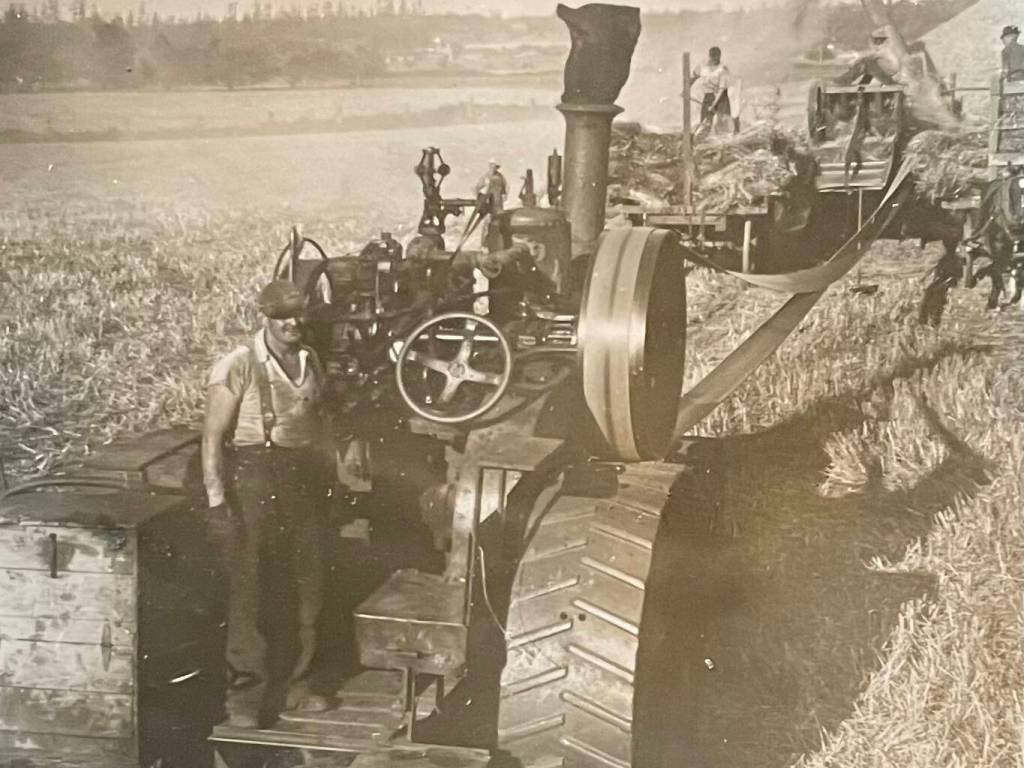
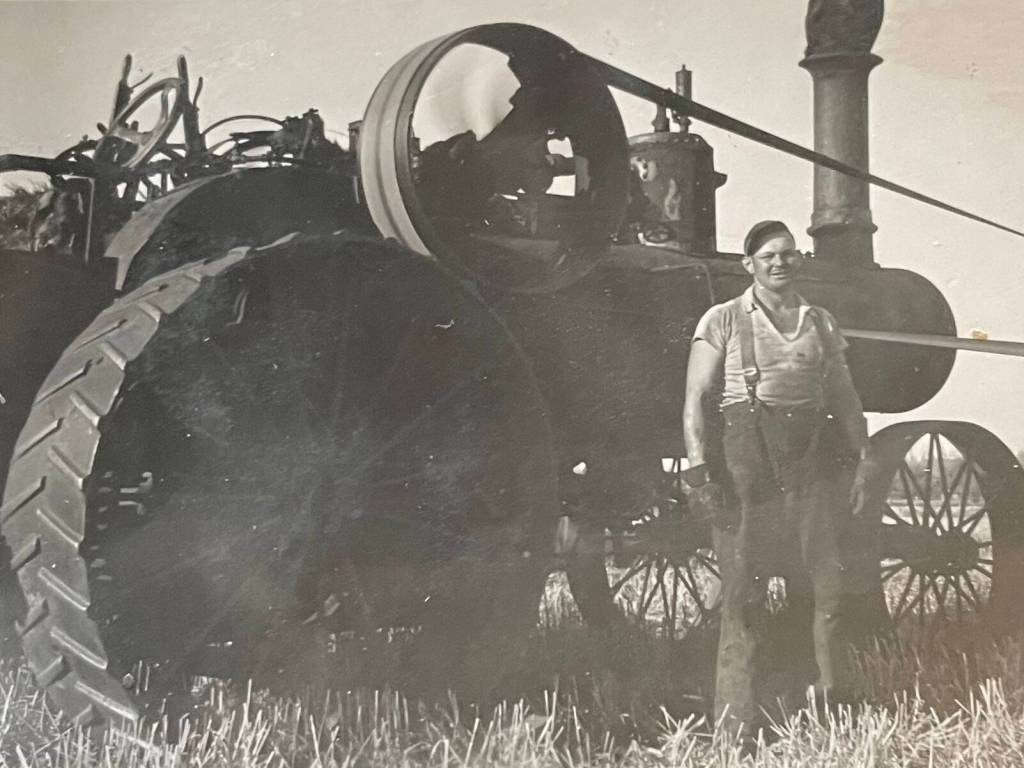
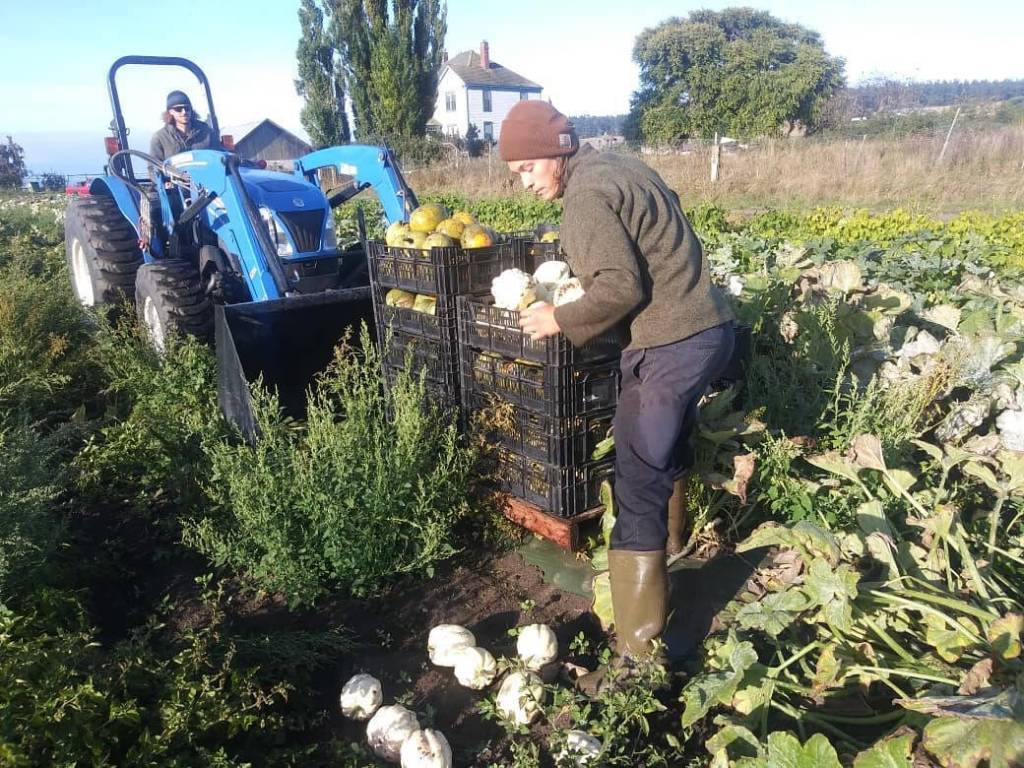
At that time, when Whidbey had more sheep than cars, the house served as the center of a hard-working farmstead. The couple raised chicken, turkey, cows, horses and a large herd of sheep. They harvested hay, wheat, peas, potatoes, squash, alfalfa, cabbage, iris bulbs and more.
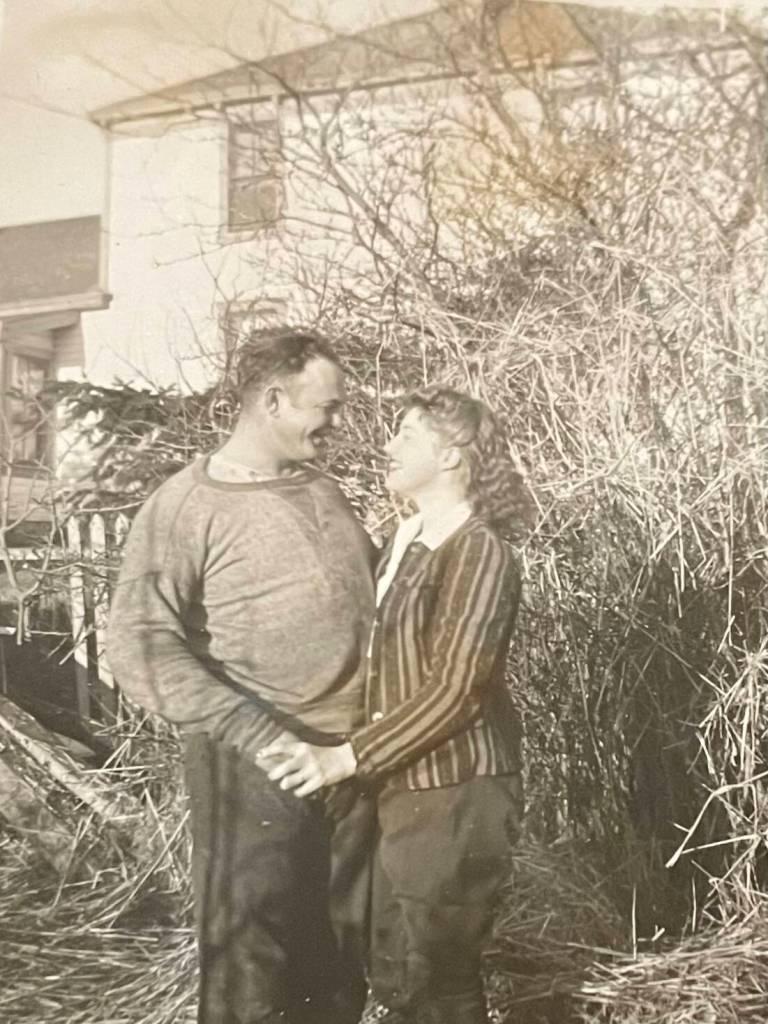
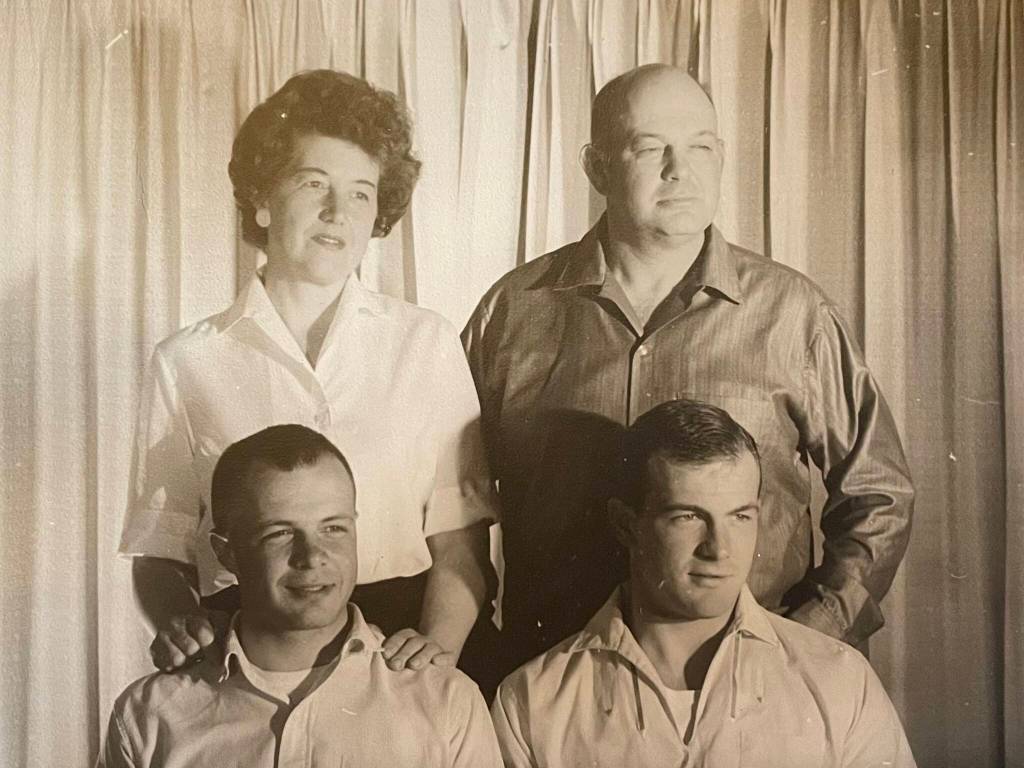
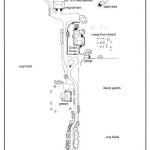
Harry and Georgia raised six kids in the house. The Gould house stood amid a much larger working farm that stretched to the beach and up the hill towards where the trail now lies on the left and all the way back to West Cook Road. The rhythms of the place followed the seasons: planting, harvest and bringing the goods to market.
For their grandson Bill Smith, who is now 85 years old, those years were defined by endurance.
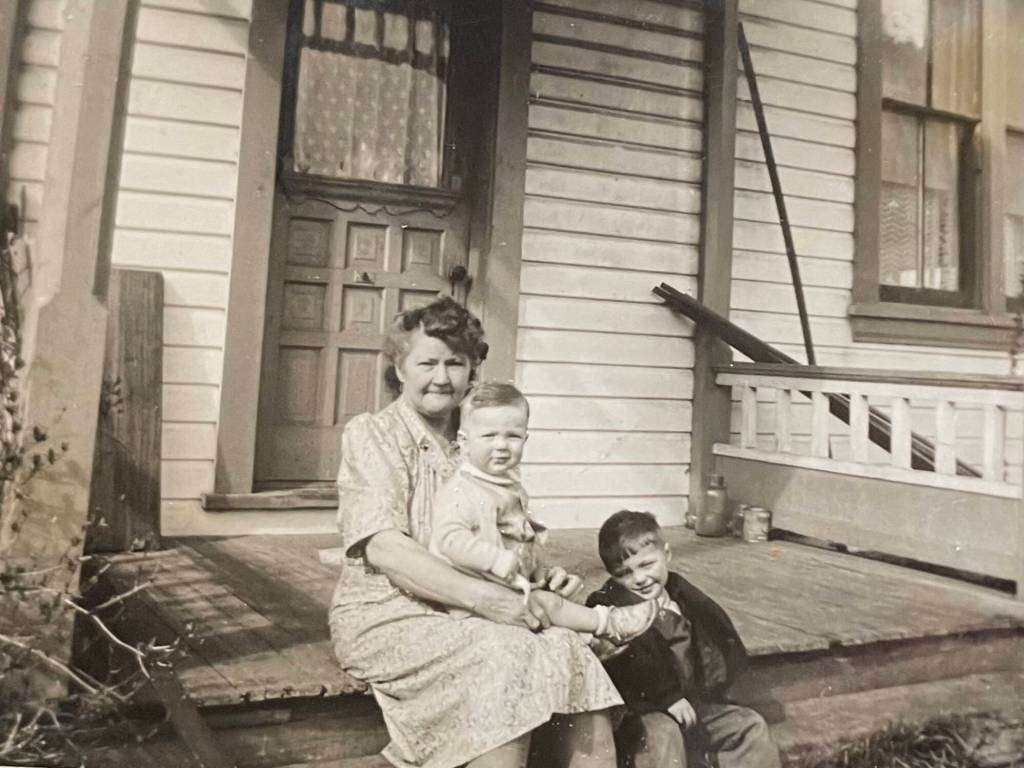
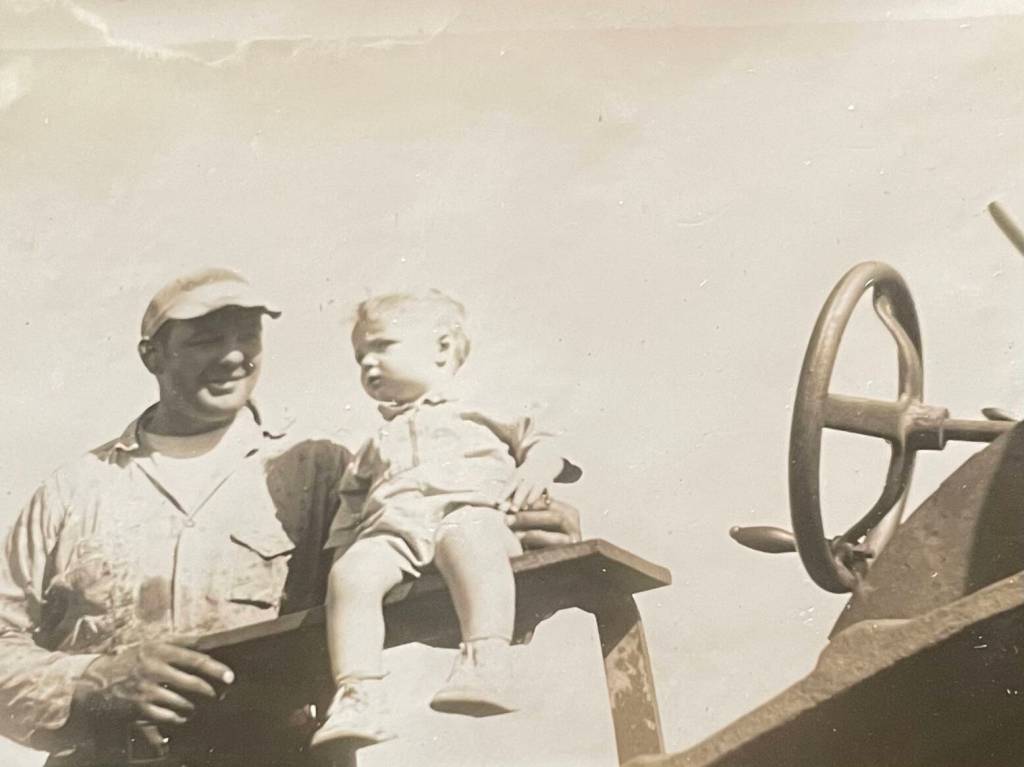
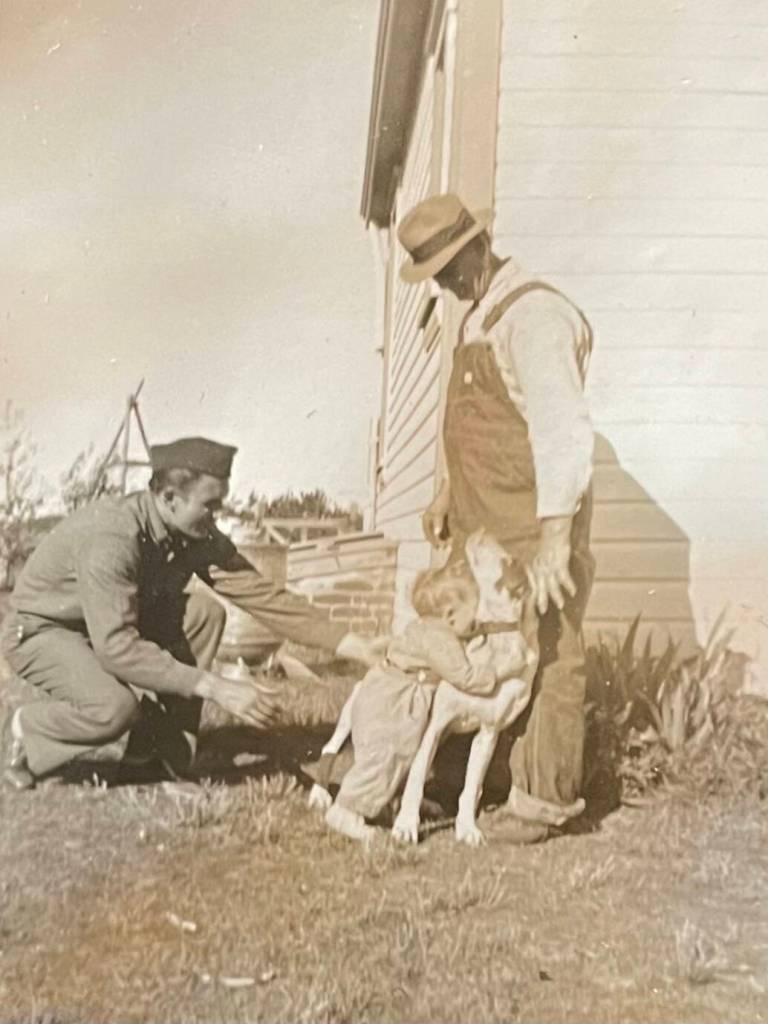
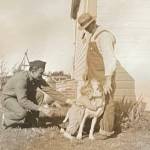
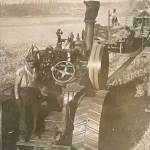
Even as a small child, he remembered life around the farmhouse vividly. Workhorses pulled equipment through the fields, around 45 cows were milked twice a day and a hired farmhand, Red Thompson, lived upstairs and helped with chores. Though his grandmother and grandfather lived in the house itself, Bill’s family visited often from another home nearby.
“I remember riding the workhorses when I was a little kid,” Bill said.
They would haul grain to the Coupeville Wharf and load it on a boat that would deliver the grain to Seattle. “It was the Mosquito Fleet,” Bill remembered.
Every week, the Smiths would go into the barn that stood adjacent to the estate, load squash onto a truck and haul it to Seattle to sell the produce, he said.
By 1951, Georgia and Harry had both died. Jeanette Henry, one of their daughters, received the “life estate,” and Knight and George Smith, her brothers, inherited the farm. They manned the fields along with their respective wives, Marion and Roberta Smith.
After the brothers died in the early 1970s, Marion and Roberta became deep in debt and owed unpaid inheritance taxes. The widows and a developer made plans to build a housing development. They reluctantly requested to rezone the prairie for residential development as agricultural activity on the island diminished. Their request was granted, but after that began a legal battle between the Smiths and small grass-roots groups that wanted to save the prairie from development, Bill Smith said. The activist groups, Friends of Ebey’s and Save Whidbey Island For Tomorrow, both filed lawsuits that went all the way to the state Supreme Court, according to a News-Times article.
After years of litigation, Congress passed Section 508 of the Parks and Recreation Act in 1978, which meant that 17,572 acres of farmland in Central Whidbey was officially part of Ebey’s Landing National Historical Reserve. The action was taken to preserve and protect the rural communities and offer an unbroken historical record of 19th century settlement in that area. The National Park Service bought the Smith’s farmland and development rights in 1980 for $2.4 million.
Time, however, had taken a toll on the old house. The interior walls were made of plaster over wooden lath strips, a common method of construction in earlier decades, but one that eventually began to crumble.
Bill and his wife, Renee Smith, bought the home in 1979. After they hired someone to build a smaller home on a different property for Bill’s aunt, Jeanette, they embarked on a huge renovation. The exterior shape of the house remained familiar, but inside almost everything changed. Despite their complete lack of experience, Bill said, they removed the plaster walls down to the studs, added sheet rock and insulation and re-varnished the wood with lacquer.
“The reason why I’m so successful in construction,” he teased, “is because I’m ignorant. I don’t know what the hell I’m doing. Otherwise I wouldn’t do it.”
They hired an electrician for the wiring and a plumber.
Living in the house while rebuilding it room by room, Bill hauled debris away in farm trucks and reused what he could, he said. He spread the stripped plaster onto his farm’s fields and disked it into the soil.
Underneath the house, Bill dug out a crawl space by hand with a shovel, hauling dirt away to make room for insulation and repairs. Bill then sanded off all of the old lead-based paint from the exterior of the house and repainted it in the same shade of white.
“Those were early days,” he said. “They’d send me to prison if I were to do that today.”
Later, the couple’s additions expanded the home slightly, including adding a utility area that hadn’t existed in the original structure as well as a porch and patio. Bill, his daughter Georgie Smith, and her husband, Charles Arndt, began renovating the granary into a family home in 1997. They dug out the foundation, did all of the structural work, fixed their own plumbing and electricity, and added sheet rock all by themselves. In 1999, Georgie started growing produce in a large kitchen garden and selling it at Coupeville Farmers Market. This led her to establish “Willowood Farm of Ebey’s Praire,” a farming business on the Smith acreage. Georgie and Charles moved in to the renovated granary roughly four years after they started working on the building.
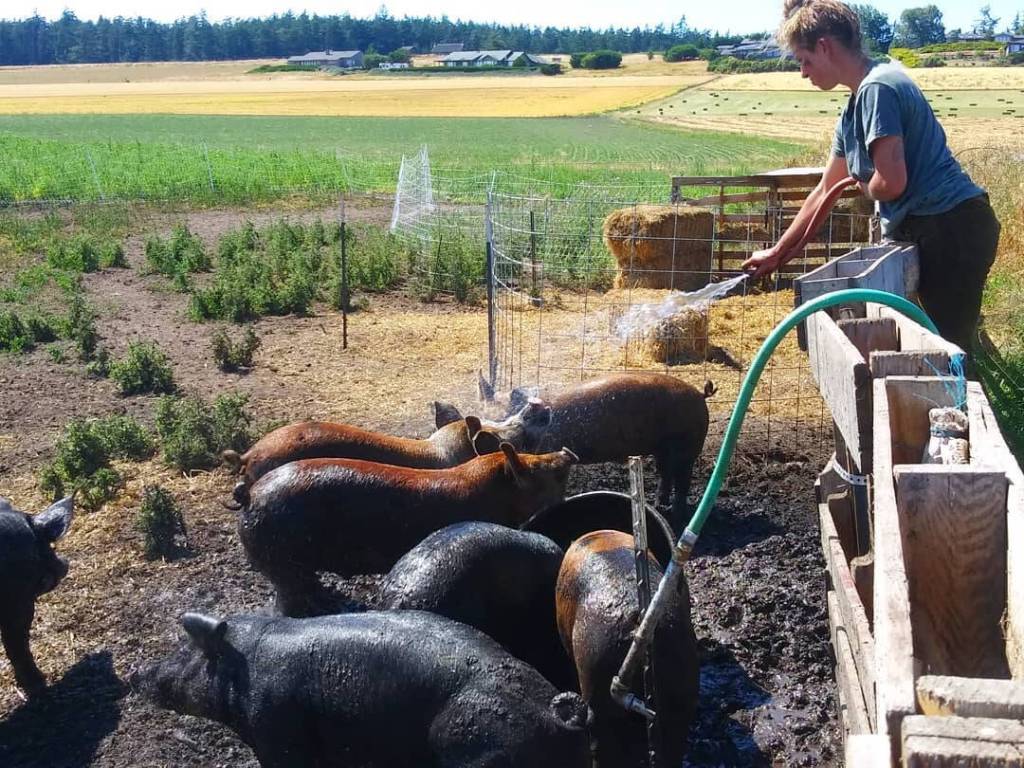
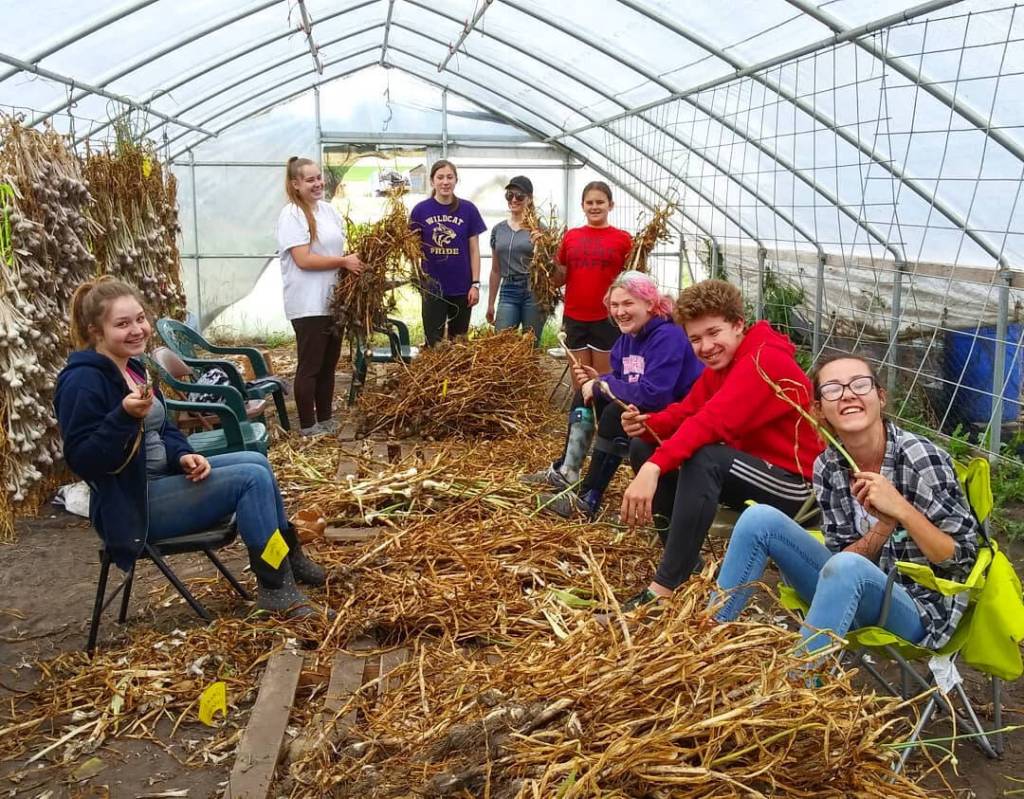
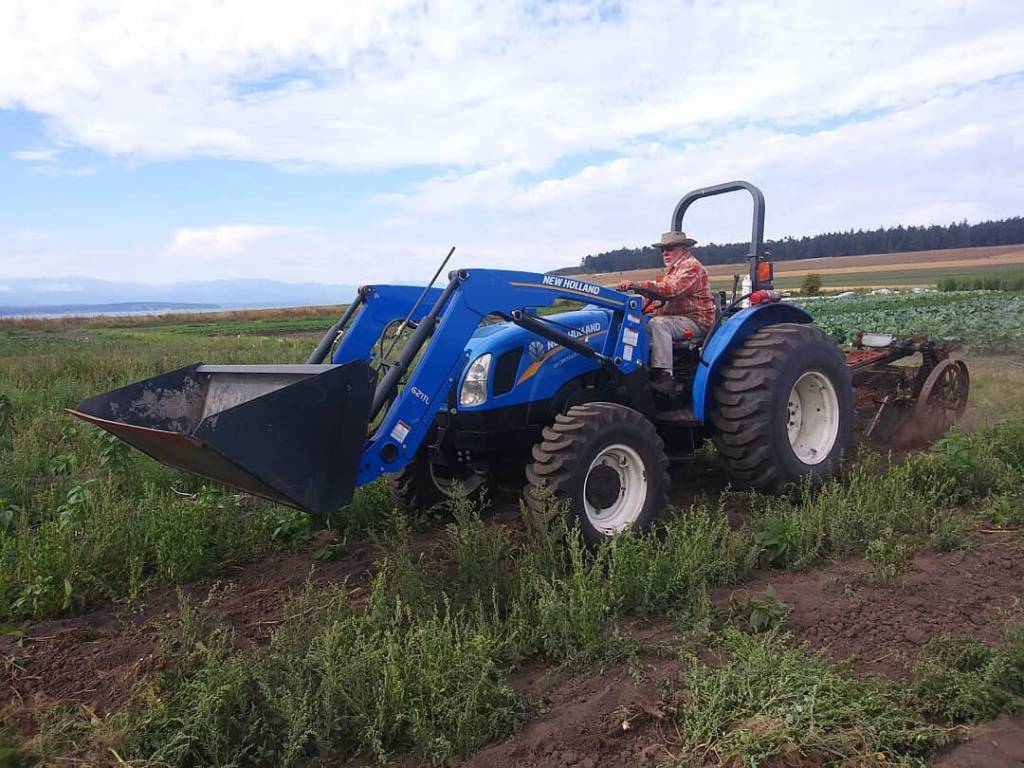
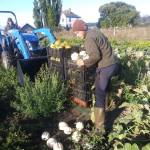
Willowood Farm eventually became the largest commercial vegetable farm in Island County, and one of the biggest in the Pacific Northwest, Georgie said. The produce was used in restaurants and specialty food and grocery businesses in Island, Skagit, King and Jefferson counties.
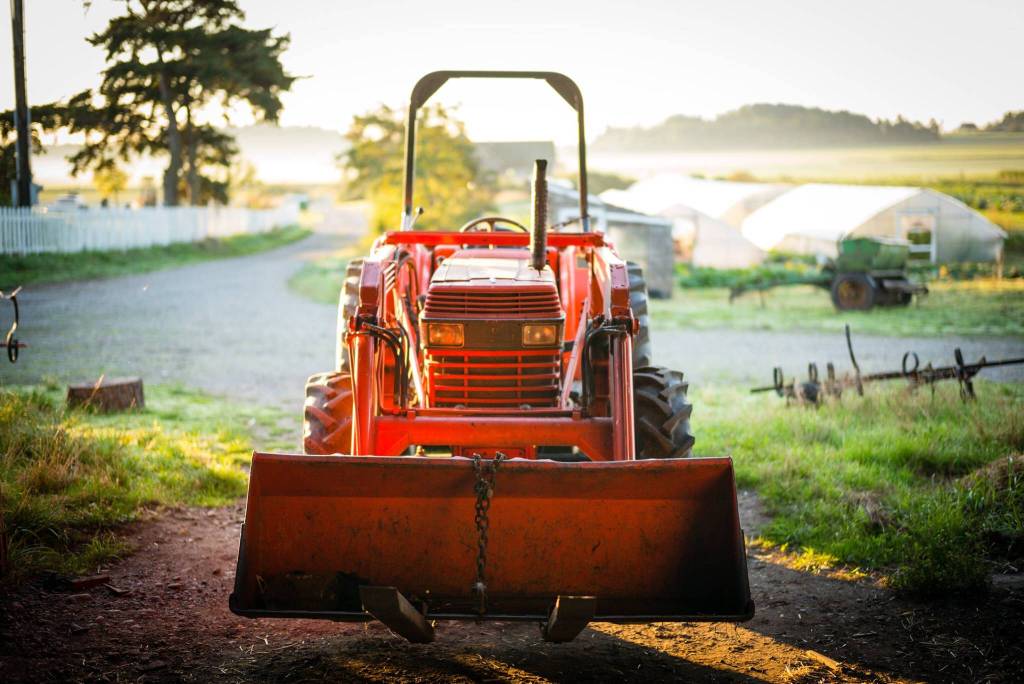
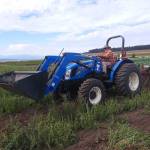
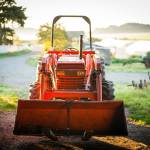
In 2017, the historic barn on the property burned down, simultaneously destroying 90% of Willowood Farm’s tractors and equipment.
The property is now farmed by the Sherman-Bishops. This was a happy outcome for Bill, who said he is too old and tired to farm, and he admires the peaceful setting and the unobstructed view of the ocean.
Today, the beach and the trail leading to Perego’s Lake are managed by the state, though Bill remembers riding his horse there in the old days. The land is now filled with eager tourists and locals who enjoy whale watching, bird sighting, hiking, swimming and more.
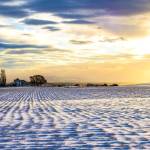
The Gould house, at 399 S. Ebey Road, still stands in white against the open green and yellow fields, a reminder of the island’s agricultural past. Its beauty holds the memory of a working farm that still defines its corner of Whidbey Island. It’s the backdrop for engagements, graduation photo shoots and family gatherings. The house has become a symbol for Coupeville, featured in Goldie’s and the Island County Historical Society Coupeville Museum, among other places across the island — a testament to its ever-lasting charm.