Proposed amendment to property agreement includes ADUs, duplexes
Published 1:30 am Friday, March 13, 2026
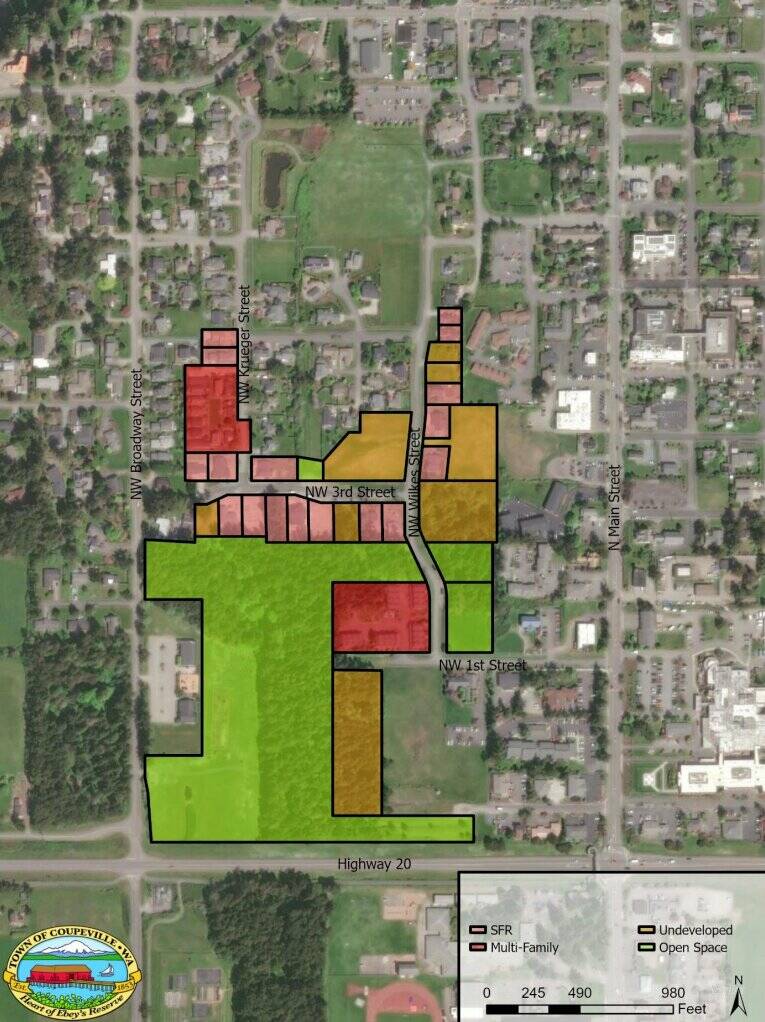
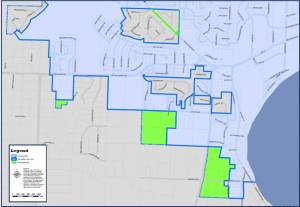
For now, Coupeville officials prefer amending a memorandum of agreement to allow accessible dwelling units and a limited number of duplexes on a 33-acre property north of Highway 20 between Main Street and Broadway Street.
The proposed amendment would grant the property the capacity for a maximum of 49 housing units, including duplexes, beyond the 30 units which the memorandum dictates can still be developed. Additionally, all parcels — developed and undeveloped — could add an ADU.
Council directed staff to continue exploring this option out of six presented during Tuesday’s meeting. Previously, council agreed to seek an amendment which could implement more nuanced zoning regulations.
Made between the town and Cecil and Cheryl K. Stuurmans in 2004, the memorandum intended to guide residential development in a “forward-looking” manner, according to a report by Community Planning Director Josh Pitts. As housing policies, property ownership and development patterns have evolved around it since its implementation, the memorandum is now limited in what it allows today.
A certain number of units can be built on each of the nine subareas comprising the property through the memorandum’s allotment of dwelling credits. A maximum of 108 units can be developed in total, as the property is worth 108 dwelling credits. Thirty credits, associated with two subareas, remain.
Other amendment options include introducing only ADUs to the memorandum, only duplexes or implementing the state’s standards, which would permit one primary residence and two ADUs per parcel.
Maintaining the memorandum means primarily single-family residences would be constructed with the remaining dwelling credits, according to the report. Heeding the state’s standards or extinguishing the memorandum would increase the property’s unit capacity by a maximum of at least 82 units, the largest gain of any option.
Pitts, recalling discussions with the Stuurmans, said extinguishing the memorandum is likely not an option. Conversations could still be had about the possibility, he added.
Coupeville is not necessarily responsible for constructing houses to meet Washington’s affordable housing goals, state law obligates it to “ensure development regulations provide realistic opportunities for housing across income levels,” per the report.
More than 1 million new homes are needed over the next two decades, 650,000 of which should be affordable for low-income households earning below the area median income, Pitts’ report details. It adds that Coupeville is “expected to plan for 351 new households” in that span.
Staff believes the proposed amendment balances housing needs and the preservation of neighborhood character by providing equitable opportunities for ADUs throughout the property and encouraging the controlled development of middle housing, the report explains.
Pitts added that an increased housing supply, better diversity of housing types, more opportunities for multi-generational living and encouraged economic vitality are benefits of the proposed amendment. That an amendment may differ from property owners’ initial expectations of the kind and volume of development within the memorandum area is a major detriment.
Property owner feedback is divided on the matter.
Pitts distributed a survey to 47 property owners residing within the memorandum and received 20 responses. He cautioned that because survey responses are anonymous, he could not verify respondents’ addresses.
Notably, thirteen respondents said they have owned property within the memorandum for less than five years. Nine said they were fully aware of the memorandum when they purchased property, while five were somewhat aware and six were unaware. Respondents conveyed varied familiarity with the memorandum’s dwelling credit system.
Nine respondents support or strongly support allowing single-family residences one ADU, while 10 oppose or strongly oppose it. Choosing from a selection of those presented to the council, 11 respondents said maintaining the memorandum would be the best option.
Eleven respondents said they are uninterested in developing an ADU on their property. Parking, neighborhood character and water and sewer capacity were among respondents’ top concerns about new developments.
Addressing these concerns, Councilmember Evan Henrich pointed out that property values may rise with the higher density residents have come to associate with altered neighborhood character. Pitts, citing Public Works Director Joe Grogan, said the area has water and sewer capacity.
Pitts also presented an analysis of permitting and construction trends throughout Coupeville aligned with survey respondents’ opposition towards ADUs.
Ninety-eight units have been permitted since 2016, but only 55 have been developed. Forty-two of the 55 units were single family residences, five were ADUs, four came from two duplexes and four were multi-family units.