Former Coupeville volleyball coach focuses on girls’ mental health in sports
Published 1:30 am Friday, March 6, 2026


A former Coupeville High School volleyball coach wants to give girls in sports the tools they need to compete mentally as well as physically.
Breanne Smedley is a co-founder of The Elite Competitor, a business offering mental performance training to athletes, their parents and their coaches. Training is geared towards helping young female athletes, a demographic disproportionately at risk of quitting sports earlier due to mental health struggles unique to their playing experiences.
“Girls are quitting sports at two times the rate of boys by the age of 14, is what the stats tell us,” she said. “And for reasons that are preventable, too.”
Athletes are generally eager to learn if there is an opportunity to improve, at least in Smedley’s experience. Over 6,000 families have utilized The Elite Competitor’s athlete program since Smedley and her sister-in-law started their business in 2018, and about 500 coaches have utilized the coaching program it launched a year ago.
One of Smedley’s more popular mental performance tools is called a “snapback routine,” which uses a reset word and breathing to help athletes refrain from fixating on mistakes.
“I ask athletes, ‘Your sport requires you to get over mistakes in 15 seconds. How long does it typically take you to get over a mistake?’” she explained. “And they’re usually like, ‘couple minutes, hours, days. Sometimes I’m still thinking about that thing I did like two days later.’”
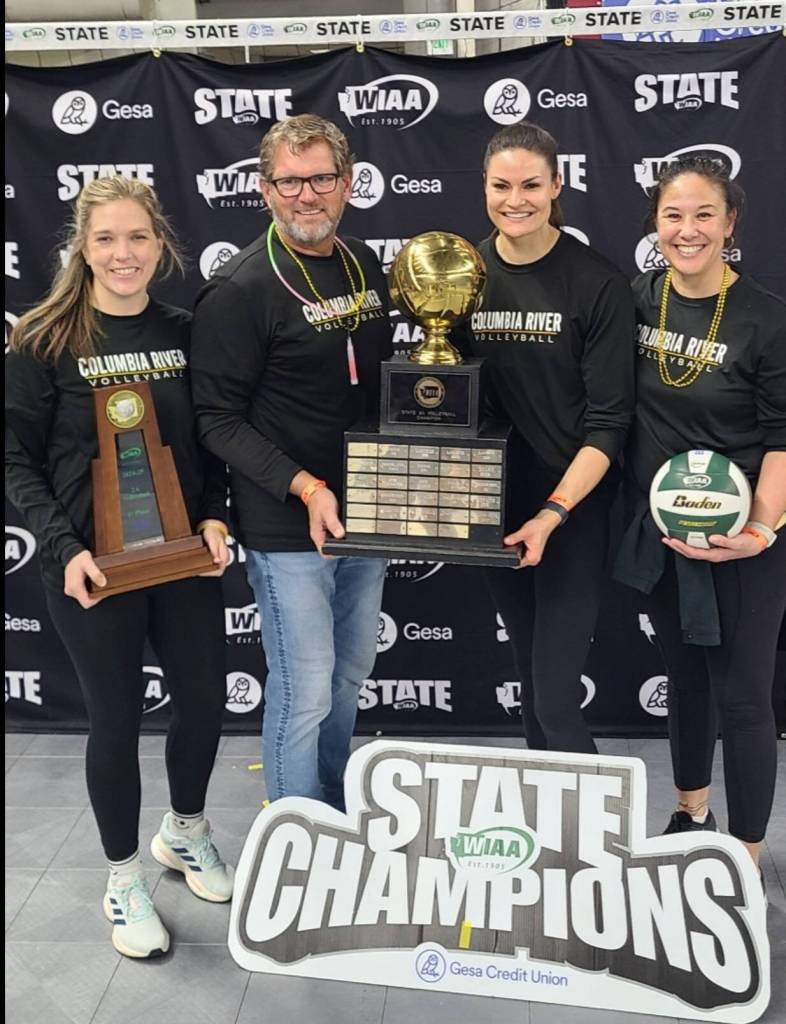
That tactic helped the girls varsity volleyball team she coaches at Columbia River High School in Vancouver, Washington win its fourth consecutive state title 2024.
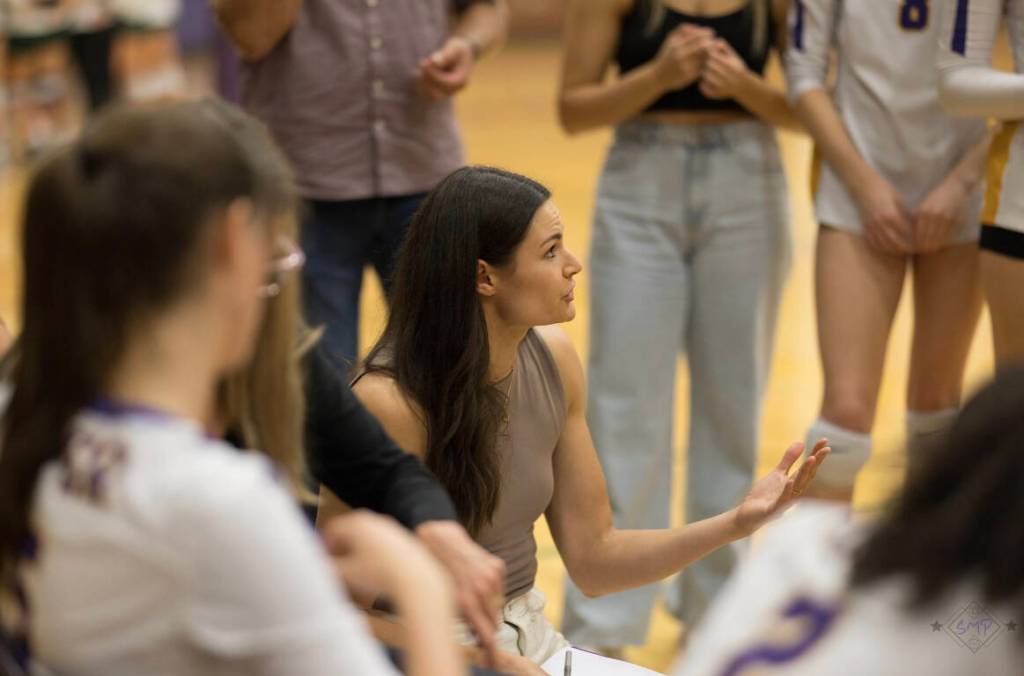
Late in the fourth set and down on the scoreboard in the championship match, Smedley remembered calling a timeout to give her team an opportunity to reset using the snapback routines they practiced throughout the season. When play recommenced, the opposing team — the Ellensburg Bulldogs — made a couple unforced errors and lost the set. Momentum swung in Columbia Rivers’ direction, and they took the fifth set to win the match.
Ellensburg deployed a great team that year, Smedley said, but only one team kept from cracking under the pressure that night. “When talent meets talent,” she added, “talent alone isn’t enough.”
Supporting young female athletes’ mental health is a cause close to Smedley’s heart. She grew up playing sports and fell in love with volleyball. At a certain point, however, competing became about more than just competing. Smedley struggled with perfectionism and put a lot of pressure on herself during the recruitment process her senior year.
“A lot of how I felt about myself was determined by my performance, which is, you know, up and down and all that,” she recalled.
Smedley quit volleyball, but could not stay away long. Attending volleyball games as a student at Western Washington University prompted her to reach out to the head coach, Diane Flick-Williams. She tried out for the team and earned a walk-on spot.
Smedley described Williams as coaching “holistically,” adding she became interested in sports psychology during her time on the team. When she eventually began coaching herself, Smedley realized the importance of mental training.
“I realized, ‘Okay, none of these girls have these skills, either,’” she said. “‘They’re struggling with the same thing. So I gotta figure out how I can teach this to them, too.’”
Her tenure as a volleyball coach at Coupeville High School for the 2014 and 2015 seasons preceded The Elite Competitor, so Smedley did not have a chance to teach her mental performance tools to Coupeville athletes.
But she called her time on Whidbey a “dream,” one which started with her husband taking a teaching job in Coupeville. During her time on the island, she learned a bit about the unique mental challenges young athletes in rural areas face.
Small, tightly-knit communities can provide a consistent source of support for athletes, Smedley explained, but they can also subject athletes to “mindsets that are ingrained for years.” Labels placed on school programs can also be harder to shake, something she said she had to “battle” as an athlete for a bit, too.
Mental training, however, is beneficial to athletes everywhere, Smedley said, and a good way to keep girls in sports.
“These are our leaders,” she said of young female athletes. “This is our future.”