Bathing Whidbey eagle images draw attention
Published 1:30 am Friday, March 6, 2026
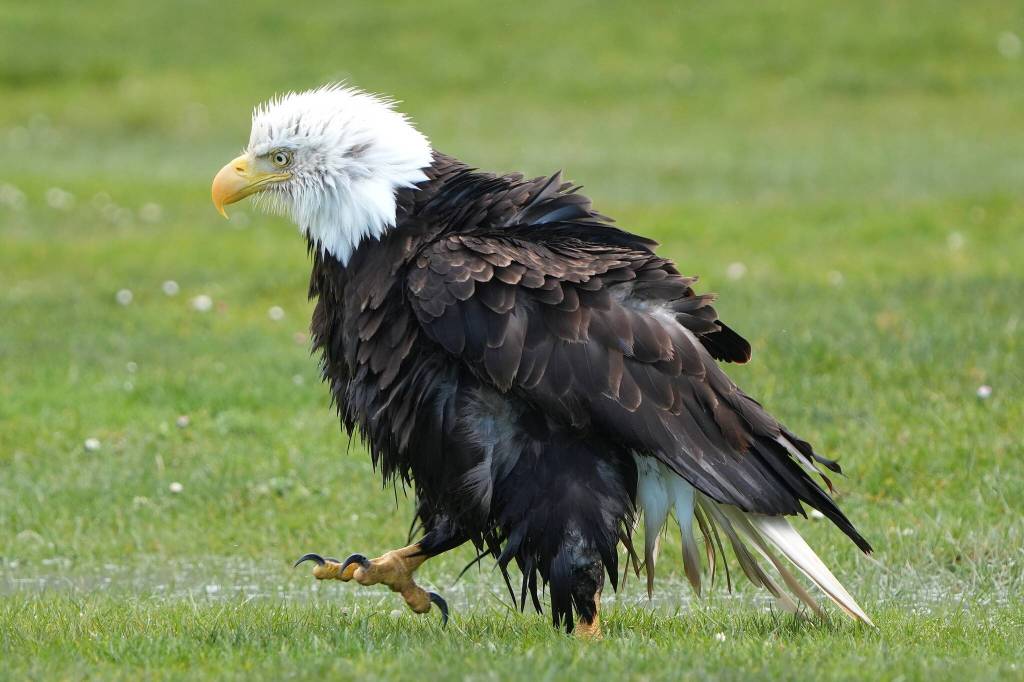
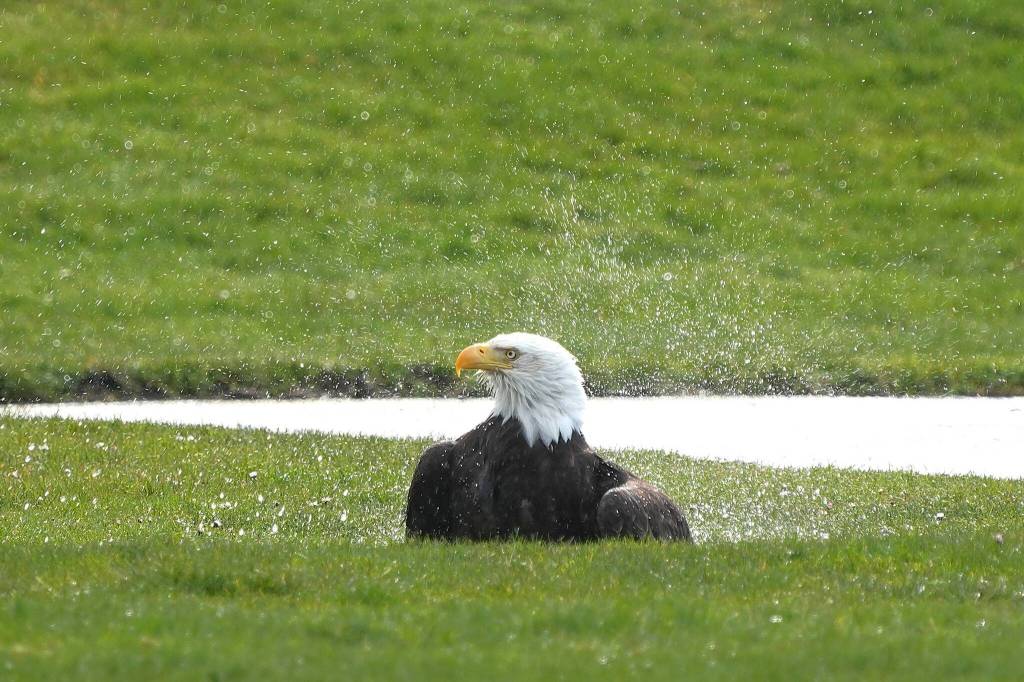
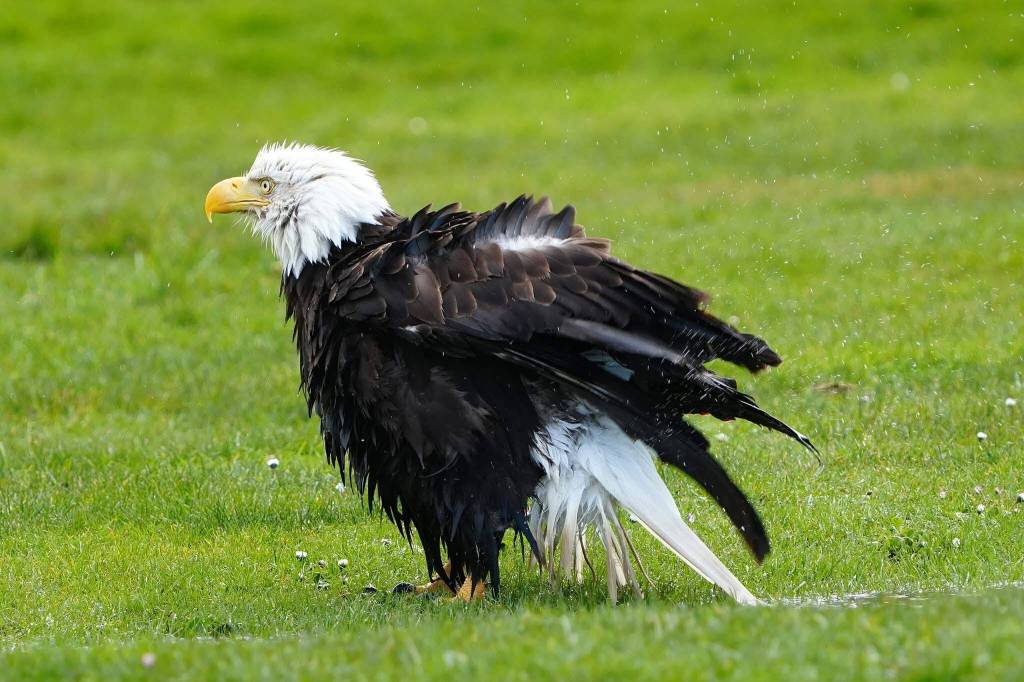
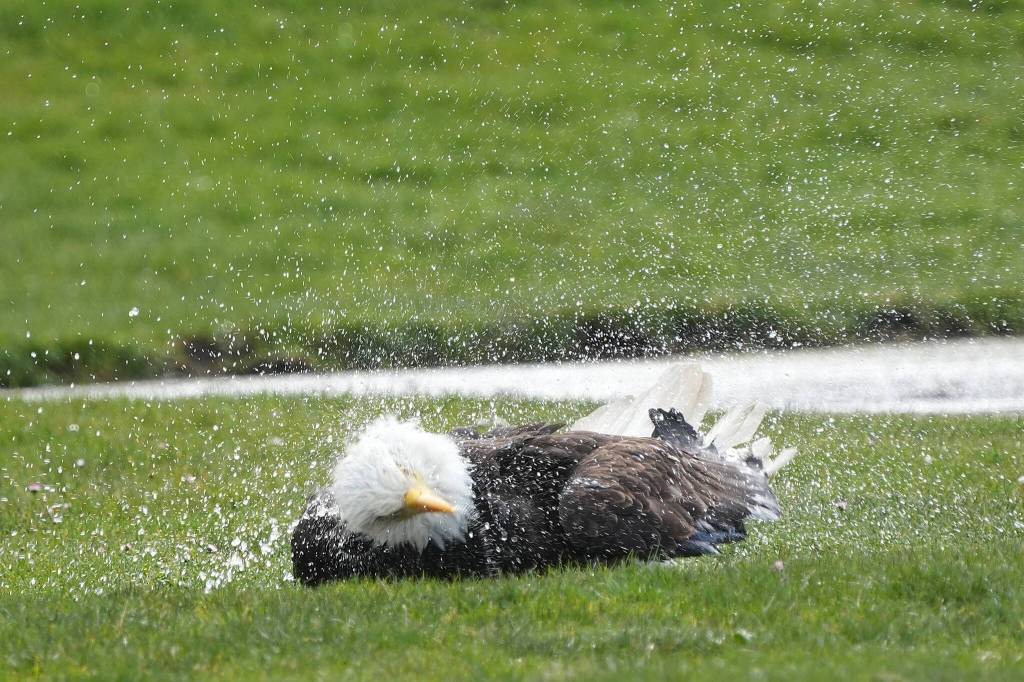
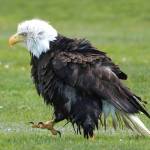
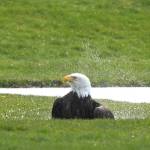
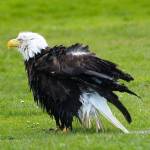
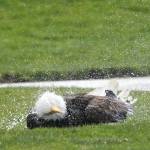
A Mount Vernon woman’s images of a bald eagle living in up, splashing around in Central Whidbey puddles caught a lot of attention online.
Jennifer Landahl received 7,200 reactions on Facebook for her photos of a bald eagle having a great time in a puddle on Feb. 22. She was on a multi-day scrapbooking retreat at Camp Casey, hosted by Photo and Scrapbook Advisor Lisa Espinosa, when her friends spotted an eagle, splashing through wet grass and managing to hit every puddle along the way, she said.
Landahl beelined to the raptor, hoping to photograph it before it flew away. The eagle was in no rush, however, flapping its wings and plunging under the shallow puddle for about 20 minutes, with water droplets spraying all around it.
She snapped over 200 pictures with her Sony camera and long lens, Landahl said, hoping to capture the water droplets catching the sun. The photos that ensued capture the grandeur of the bird and the goofy nature of the occasion.
“It was pretty funny,” Landahl said. “He’d poof out his feathers, look like a drowned rat and then smooth right back out again.”
Eventually the bald eagle flew up into a nest, joining a baby eagle.
The Facebook post garnered hundreds of comments praising the photos.
One viewer shared a video with Landahl of a bald eagle taking a bath four years ago in the same spot, and Landhal believes that it could be the same bird.
This wasn’t the first time, however, that she has captured pictures of birds: she’s an animal lover after all, she explained. Most weekends, Landahl and her husband can be seen driving around, looking for photo opportunities.
“Whidbey Island never fails us,” she said, reminicsing on all the great wildlife she has seen on the island. “I think sometimes we take for granted how lucky we are with what lives right here with us.”
Though Joaqin Sweet, the executive director of the Whidbey Audubon Society, said he hasn’t seen it himself, it isn’t uncommon for bald eagles to bathe every once in a while. They are also known to swim in the water, he said, especially when they catch a particularly heavy fish.
“They usually opt for what looks like a butterfly stroke or breaststroke,” he noted.