Outdoor excursions are back: Out of the classroom, onto the land
Published 1:30 am Tuesday, September 30, 2025
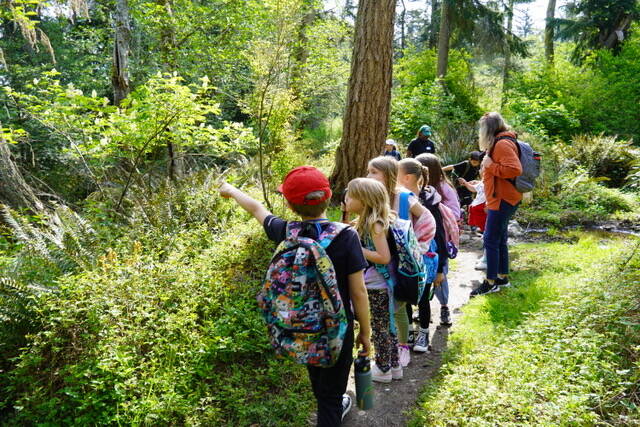





It used to be that kids in schools, particularly in kindergarten through eighth grade would go on an outdoor excursion once or twice during the school year. The idea was to help them better understand nature and their surroundings and also make their classroom lessons more tied to what’s around them.
But a funny thing has happened to schools on Whidbey Island. In recent years there have been very few outdoor excursions, despite the abundance of beautiful spots all around us. The reason? Excursions are expensive and school budgets have no money to pay for the buses to take students to and from the places they visit.
Comes now to the rescue the Whidbey Camano Land Trust, which just happens to have protected more than 11,000 acres of agricultural and open space and created more than 25 miles of walking trails all across Island County. Jennifer Hajny, the Land Trust’s community engagement director, and Andi Kopit, its education coordinator, had been hearing from a number of teachers that would love to expose their students to the gorgeous places around them but their schools couldn’t afford it.
So in the fall of 2024, they created a program called Connecting Kids to Conservation. And, by the end of the school year in June 2025, more than 1,100 kids had been taken on outdoor excursions, all paid for by the Land Trust. The first excursion of this new 2025-26 school year took place on Friday, Sept. 26, when more than 50 kindergarten to twelfth grade students from Oak Harbor homeschool classes spent several hours studying the magnificent sites at the beautiful Keystone Preserve on Central Whidbey.
Since its inception a year ago, students from all three school districts on Whidbey — Coupeville, Oak Harbor and South Whidbey — have gone on Land Trust-sponsored excursions.
“On our excursions, we offer lessons on a lot things,” Kopit said. “These include native plant identification, biodiversity, food webs, patterns, water quality, native history and land stewardship, and the importance of restoration for salmon habitat and climate resiliency.”
Spending time in nature as a young person with passionate and trusted adults who offer their knowledge “is what helps kids build connections to nature that stay with them when they become adults,” she added.
The Land Trust covers all costs — most notably the cost of buses. “We consider this part of our mission to preserve and conserve the beautiful places where we live,” Hajny said.
She said it may cost $400 to $800 or more for buses to bring a group of students to an excursion spot. The Land Trust received a $10,000 grant to pay for buses from a nonprofit called 100 Women Who Care About Whidbey and its members matched it with another $5,000. Then came a grant from Puget Sound Energy and several private donations.
“We are so glad to have enough money to pay for buses through this current school year,” Hajny said.
The schools and teachers themselves make the arrangements by booking a bus and driver through their transportation departments. The Land Trust then pays the invoice. Typically an excursion may last the entire school day, so students and teachers bring a sack lunch and have a picnic at the site.
There are any number of places where excursions can be scheduled. Keystone is among the most popular, as is Strawberry Point on far north Whidbey and the Del Fairfax Preserve off Zylstra Road near Oak Harbor.
“Del Fairfax is a very flat area and so it’s great for those needing ADA-compliant trails,” Hajny said.
The Land Trust tries to make it easy on teachers by suggesting a great excursion idea and assuring them that it will pay for the buses. “It makes it accessible not just for the students but also for the teachers,” Kopit said.
What does the Land Trust get out of its Connecting Kids to Conservation program? “I suppose some might say the Land Trust should not be doing education,” Hajny said. “Our mission is to protect land, but you cannot protect land without stewardship. And you cannot steward land without fostering the knowledge and encouraging the participation of the younger generations.”
More and more teachers are joining the program. Among the first was Sarah Boin, who teaches a split fourth and fifth grade class at Coupeville Elementary School.
Eight years ago, long before the new Land Trust program, Boin worked with Hajny to schedule an excursion for her class at the Admiralty Inlet Preserve. Her students walked two or three miles and spent the whole day outdoors.
“I think it was the first time some of them realized they live on a prairie,” she said. “And we got to examine an old growth forest and lots of plants native to the island. And also to consider how Native Americans took care of the land.”
And why does she love excursions so much?
“It brings all those nuggets I teach in my classroom to real life,” she said. “It turns the classroom lessons into a personal connection to the ecosystem.”
Harry Anderson is a retired journalist who worked for the Los Angeles Times and now lives on Central Whidbey.