Air museum plans reopening at new site
Published 1:30 pm Friday, August 15, 2025




Major transformations have taken place at the Pacific Northwest Naval Air Museum since having settled in its new home on Ault Field Road.
As the North Whidbey museum’s grand re-opening at 11 a.m. on Aug. 21 will demonstrate, the museum holds a plethora of new treasures even for returning visitors.
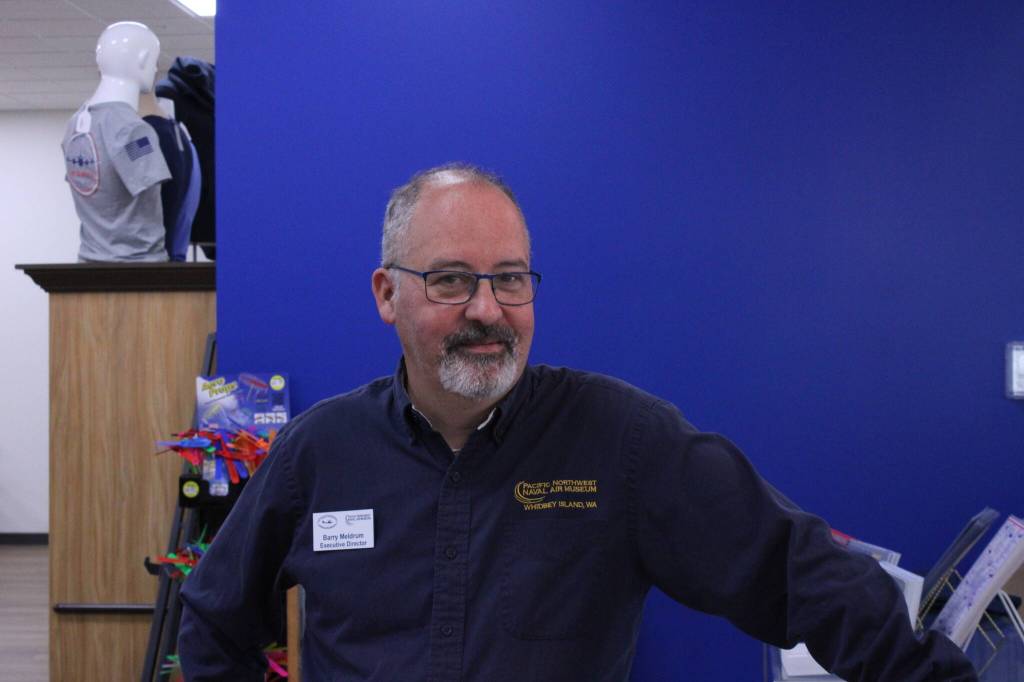
“Even if you think you’ve seen it,” Executive Director Barry Meldrum said, “you haven’t seen it.”
The Naval Air Museum’s new, permanent building is nearly 10,000 square feet — almost double the size of its previous location of 14 years on Pioneer Way — and situated on a five-acre property much closer to NAS Whidbey, the subject of its collection.
As opposed to some displays at other museums, Meldrum explained, the Naval Air Museum’s collection is meant to be authentic rather than merely for appearances.
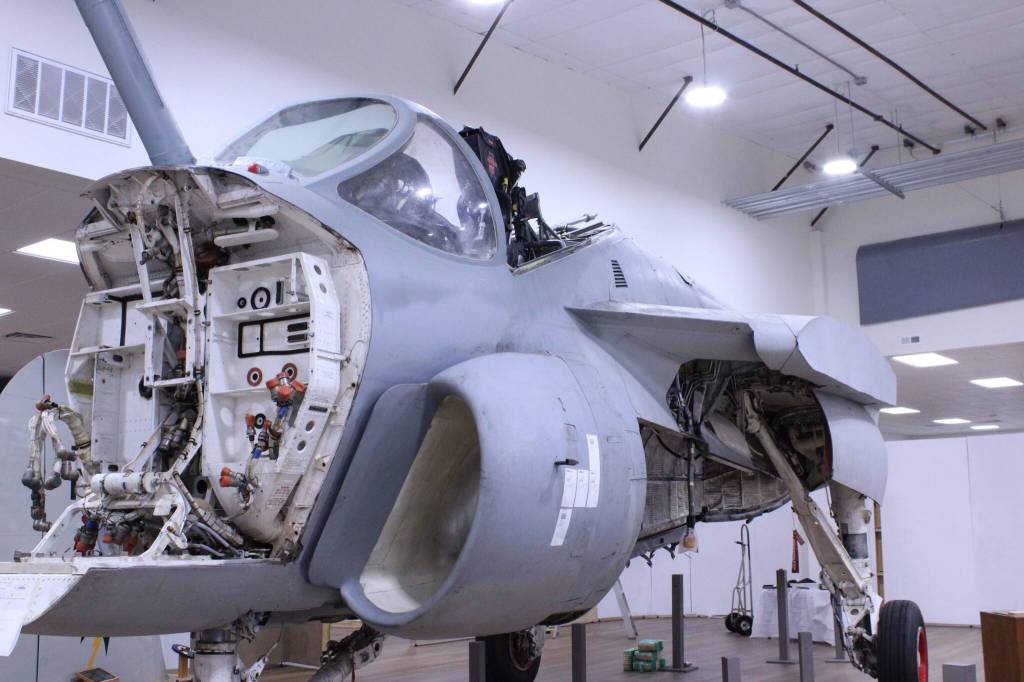
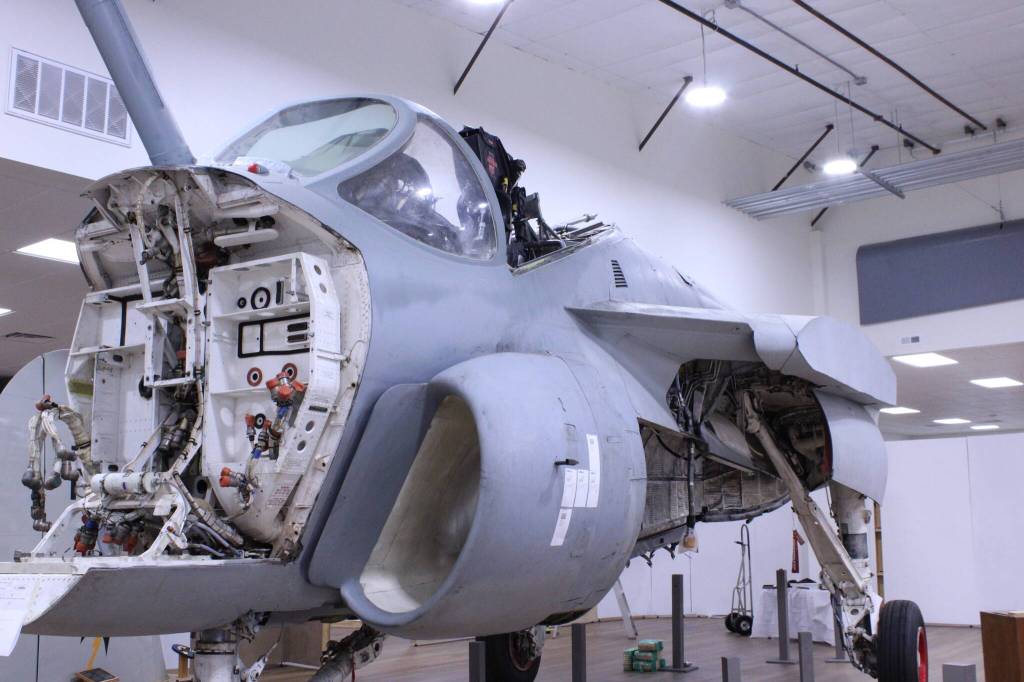
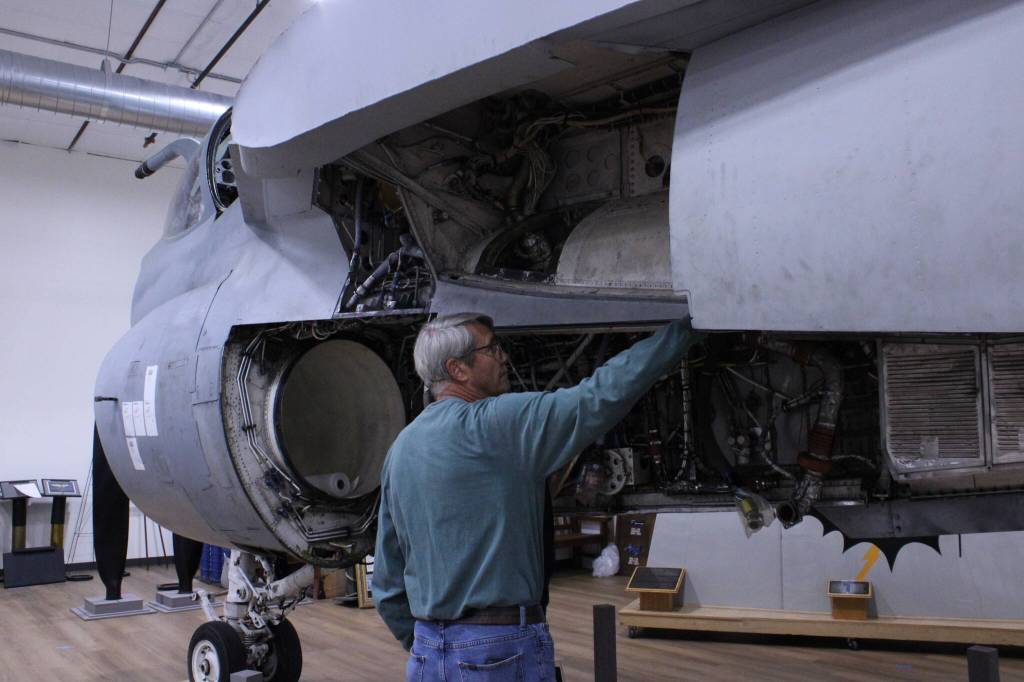
A gift shop and front desk welcome visitors as they arrive at the museum tucked away amidst a warehouse building. The museum features a large central exhibit space shaped by movable walls. There sits an EA-6B service trainer, with its mechanical innards exposed, used to teach Navy mechanics to install the aircraft’s engine at the Center for Naval Aviation Technical Training Unit. Guests can also test out their aviation skills with flight simulators and night vision goggles in rooms dedicated to each activity.
What can be viewed at Thursday’s grand opening, which grants attendees free admission to the museum, is far from the extent of the changes at the Naval Air Museum. A future goal of Meldrum’s is to display aircraft in a hangar, which would require adding more space and more aircraft.
Additionally, Meldrum teased artifacts arriving in October “that will revolutionize our exhibition space again.”
“We’re not making it too permanent now, because I know there’s a couple of things that are on our radar that are going to be amazing,” he added.
For the majority of its 27 years open, the Naval Air Museum had been volunteer-operated, thus rendering it unable to borrow items from the Navy and other organizations for long periods of time. Now, with Meldrum’s hiring in 2023, the museum is recognized as an official borrower by the Naval History Heritage Command in Pensacola, Florida and now able to borrow interesting new artifacts.
Make no mistake, the Naval Air Museum is still heavily reliant upon volunteers to function. According to Kelly Davidson, manager of public programs, 63 volunteers logged 1,300 hours in July. Just last Saturday, 91 chief selectees completed a “mile long” list of tasks at the museum in about two to three hours.
“The community has built this institution,” Meldrum said. “It’s a community space, which is what it should be. It’s not just that we’re housing all these artifacts which we’re protecting and preserving — it’s really a place where the community can come and celebrate their stories and their events.”
While the grand opening, with its red carpet, ribbon-cutting and ceremonial flag raising, is set, one thing is still missing: the museum’s crown jewel, its PBY.
When the Naval Air Museum transported it to its Pioneer Way location, Davidson explained that the tips of the aircraft’s mono wing were removed so it could “roll down the street” easier. “People in town still talk about it,” she added of the spectacle.
Asked if the PBY will be transported in a similar fashion, Davidson left the News-Times hanging.
“We’ll see,” she said. “There’s your teaser.”